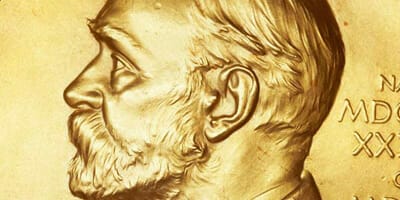
2013 Nobel Prize in economics split three ways

There is no way to predict whether the price of stocks and bonds will go up or down over the next few days or weeks. However, it is quite possible to foresee the broad course of the prices of these assets over longer time periods, such as the next three-to-five years.

These findings, which may seem both surprising and contradictory, were made and analysed by this year’s laureates, Eugene Fama, Lars Peter Hansen and Robert Shiller. Read the winning paper of the 2013 Nobel Prize in Economic Sciences, Trendspotting in asset markets.

Sponsored Content

Leave a Comment

Sort content by

Long-horizon premium: up to 1.5%

A study from the Thinking Ahead Institute finds the premium for long-horizon investing is up to 1.5 per cent a year and identifies eight strategies for reaching that target.

Bloomberg embraces diversity

Head of diversity and inclusion at Bloomberg stresses the benefits of a diverse workforce and says asset owners can highlight areas for improvement in this regard.

Real factors, and how to use them

Factor investing has become a topic du jour, but according to four experts, there are only a handful of factors that are persistent and robust. If used strategically, these can be useful.

No sustainable growth from Trump tweets

US President Trump’s Twitter outbursts can have a big temporary impact on markets, but longer-term results are driven by economic fundamentals, State Street Global Advisors’ Dan Farley says.

UK watchdog set to back pension mergers

The UK Financial Conduct Authority’s upcoming report is expected to call for consolidation in pension funds, tighter controls on active management fees and greater transparency.

Fed official: end reinvestment

The US Federal Reserve’s James Bullard is inclined to let bond buying run off in 2017. He also says higher interest rates are unlikely worldwide and calls the US a relatively closed market.

Previous




