
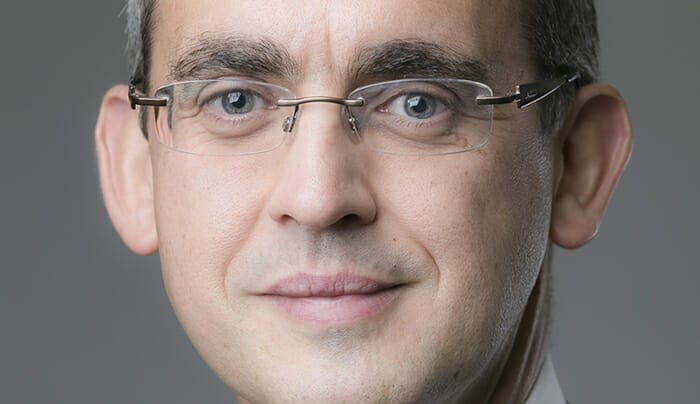

Co-head of the Willis Towers Watson Thinking Ahead Group, Tim Hodgson argues that to solve human issues, such as climate change, investors need to bring their heart as well their head to the job.
For me it happened in a very old room. I was told by the facilitator that the group would now take part in a structured exercise. My role was to say nothing. I sat and listened, and by the end I was angry. I don’t often get angry, but I was Greta Thunberg-level angry. I had passed from head knowledge to heart knowledge. It was May 2019.
I thought I knew about climate change and had already been talking about it as one of the two biggest risks facing humans. But this was only head knowledge. It was an intellectual exercise. I could pick it up and put it down when I chose. Heart knowledge can’t be put down. It can be supressed for a while, but it can’t be ignored indefinitely. Heart knowledge has been internalised. It is now part of who you are.
It is worth stressing that I am in no way suggesting we subjugate our thinking to our feelings or emotions. We are still talking about knowledge. In fact, we are talking about the exact same knowledge. The difference is how the knowledge affects our behaviours. Head knowledge implies rationality and cost-benefit analysis; a careful weighing up of probabilities and consequences and the like. Heart knowledge has access to all this data, but runs it through a new algorithm – call it the ‘love algorithm’, if you like.
Here are a couple of illustrations – one preposterous and the other more reasonable. Imagine one of my three children falls into a dangerous ocean current. Should I use head knowledge to assess the probabilities and consequences, and possibly conclude that being alive for the remaining two is the best course of action? Or should I let love decide for me – use my heart knowledge and jump, whatever the possible cost?
More reasonably, consider a subsistence farmer and her family, somewhere in Africa. Head knowledge recognises that climate change and the associated increase in extreme weather events is going to make her life more difficult. Heart knowledge knows this too, but also feels a twang of pain. In neither case do we immediately change our portfolio. But perhaps we would consider future investment opportunities differently.
What’s driving this thought experiment? I feel frustrated at the lack of movement relative to (my judgement of) the size of the need in respect of climate change and wonder if it is, in part, as a result of head knowledge that hasn’t yet made it to heart knowledge.
Also by reframing climate change as the symptom of a human-built system, I’m led to ask how best to fix a system so that it is fit for human habitation. With head knowledge alone? Or do we need heart knowledge for that too?
Furthermore, we think it is becoming increasingly apparent that individuals want and deserve personal attention from their employers. For their part, employers can become more humanistic and approach every issue from a human angle first. We believe organisations will need to provide purpose and meaning as key attractions for talent. I interpret this as a shift in emphasis – to more fully embracing issues of the heart alongside the traditional strengths of the head.
Then there is the net-zero journey. We foresee that investment decisions are likely to become harder and harder as time passes. If the rate at which I have committed to decarbonise my portfolio is faster than the actual opportunity set, will head knowledge alone show the way forward? Or might heart knowledge make the decision making easier and better?
In her book, Doughnut Economics, Kate Raworth describes five different levels of response a corporate could take in confronting planetary boundaries and social floors, ranging from ‘do the minimum’ through ‘do my fair share’ to ‘be generous’. Head knowledge might, by working very hard on enlightened self-interest, get a bit beyond ‘fair share’ – but the natural domain of head knowledge is ‘fair share’. Being generous is the natural domain of heart knowledge – because love is largely about putting the interests of others above self.
Combining these thoughts suggests that by bringing more of our heart to work, not to replace but to complement our heads, will result in us being more human and effective at solving human-caused problems. Starting with compelling us to spend more of our self in pursuing solutions to climate change.
These thoughts work more logically at an individual level, but they can be mapped to the heart of organisations and their purposes. And increasingly, investment organisations are being drawn by society and their employees to become more purposeful, particularly in response to the climate crisis.
So if you’re not sure what that nagging feeling is at decision-making time perhaps it’s heart knowledge and perhaps, if not surpressed, it will help make for a better choice, and a better organisation, all things considered.
Tim Hodgson is co-head of the Thinking Ahead Group, an independent research team at Willis Towers Watson and executive to the Thinking Ahead Institute (TAI).








Leave a Comment
You must be logged in to post a comment.
Login