
CalSTRS to benchmark using ESG mandates

Hiring specific ESG equity managers provides a benchmark for the California State Teachers’ Retirement System to measure the processes and practices its traditional equity managers use to integrate sustainability.

In October 2016, the $225 billion fund issued a request for proposal (RFP) for up to six managers with a specific ESG focus. It already has two existing ESG mandates, with Generation Investment Management ($622 million) and AGF Investments America ($256 million).

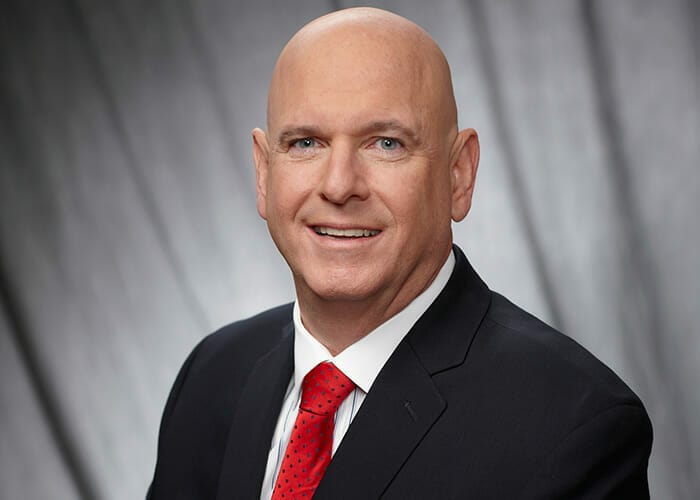
CalSTRS chief investment officer Chris Ailman said part of the motivation for hiring specific environmental, social and governance managers was to compare and contrast their mandates with what its other managers do.

“We have some managers giving us lip service on how much they actually integrate this, I’d call them light green,” Ailman said, speaking at the Sustainability Accounting Standards Board annual conference in a session chaired by Janine Guillot, SASB director of capital markets policy and outreach.

The fund expects all of its 225 fund managers to integrate ESG into the investment process, so there was some debate about whether the fund should issue an RFP for a specific ESG product.

“Of our managers, 93 per cent currently integrate ESG into their process in some way,” says Ailman, who is chair of the SASB investor advisory group. “It’s self-certification, so there are some faults in that. The 7 per cent that don’t are quant managers and don’t have those as reliable factors to integrate into their models.”

Sponsored Content

He says most of the fund’s traditional managers are trained to look at the financials first and then at long-term business risk, which is what he wants, but the fund decided to do an RFP for those that put ESG first and integrate it into everything they do.

“Some of our oldest managers, that we’ve had for 25 years and they’ve been around for 100 years, won’t use the words ESG but when we look at the way they analyse and do deep research, it’s on everything that is E, S and G – it’s business risk,” he says.

In the search for specific ESG mandates, the fund started with 200 ESG products from 100 managers, and quickly whittled that down to under 20.

“We are now at due diligence stage of visiting them and saying show us what you do and prove to me that you ask companies these questions and how do you integrate it into your process.

“I can’t stand when a company says we have a responsible investor and it’s one person. Is everyone else irresponsible? It’s a concern that too many companies have a specific product and then everyone else doesn’t think about it. We want it to be integrated into the investment process as part of the risk due diligence on any company, any investment.”

Internally, CalSTRS has a comprehensive approach to ESG across all asset classes.

It has environmental teams, social teams and governance teams, in separate committees, with one staff member from every asset class as lead and then someone else as backup.

In 2016, CalSTRS made it mandatory for every one of its investment professionals to attend a session on what ESG integration means at the fund.

He wants to have up to 10,000 companies using SASB metrics by the end of 2018.

“I’d like to get the corporate board to care about it and think about long-term operational business risk, and get the standards out there,” he said. “We talk about [ESG factors] as long-term operational business risk; if we use this language, then the CFOs get it and are willing to talk about it.”

Leave a Comment

La Caisse’s oil exit pays off as renewables portfolio pulls ahead of fossil fuels

La Caisse’s oil exit pays off as renewables portfolio pulls ahead of fossil fuels

Divesting from the oil sector has been a boon for La Caisse’s performance, as the Canadian pension giant says its energy investments have earned billions in value-add compared to the benchmark since the inception of its climate strategy. Head of sustainability Bertrand Millot unpacks the fund’s approach in an interview with Top1000funds.com.

Sort content by

CalPERS’ plan to generate alpha from climate investments

CalPERS’ sustainable investment strategy is predicated on a belief it can generate outperformance by investing in climate solutions – with $100 billion to be allocated by 2030. Peter Cashion, managing investment director for sustainable investments tells Amanda White why, and how, it looks for climate alpha opportunities.

Brightwell focuses sustainability on equality and natural capital

Brightwell, the £37 billion new asset manager for the BT Pension Scheme, lays out why it is focusing on equality and natural capital in its first sustainability report.

‘Nothing will stop this trend’: Investing in the energy transition

The energy transition is happening; the only question is the pace at which it takes place. In assessing the investment opportunities, it helps to break the transition down into easily digestible segments. Top1000funds.com explores the opportunity set for investors, including the need to think about cross-disciplinary risks and to specialise.

Investors must (creatively) make room for sustainable assets in portfolios

The investment path to net zero may not always be clear. With no dedicated asset class and shifting risk profiles for energy transition-critical assets, the Fiduciary Investors Symposium heard that asset owners need to be flexible and ready to creatively make room in their portfolios when the right opportunities arise.

Dutch fund PGB ups ESG ante for a livable world

Pensioenfonds PGB (PGB), the Netherlands €32 billion industry-wide pension fund, has rewritten its sustainable investment strategy with far reaching ESG commitments.

Church of England: Why merger of miners would be bad for investors

The prospect of consolidation in the mining industry is a source of concern for Church of England Pensions Board's chief responsible investment officer. He explains why.

Previous




