
PKA seeks to satisfy its infrastructure hunger

The DKK200-billion ($35-billion) Danish medical professionals pension fund grouping, PKA, wants its government to help satisfy its appetite for investing in major infrastructure projects.

Frank Jensen, an analyst on its asset strategy team, says PKA “is eager to get started” on sealing public-private partnerships with the Danish government, but its plans “have not come as far as expected.”

Jensen says that “we are at the starting line with other funds ready to move on, but the government is waiting to see if it fully supports the idea”. Fears that the Copenhagen government might seek cheaper sources of private finance than the country’s pension capital are a cause of frustration.

Government backing would make direct investment in the complex realm of infrastructure “much easier”, according to Jensen.

Banding together

Despite the apparent obstacles in PKA’s public-private-partnership drive, the issue has at least fostered a real spirit of cooperation among Denmark’s pension funds. PKA has teamed up with ATP, Sampension, PensionDanmark and PFA to form a working group on the potential for public-private deals. “We don’t really have to compete with the other funds as our membership pool is defined by professional groupings,” Jensen says. “Collaborating can help access projects that are too large in themselves for us and make marketing and lobbying more cost-efficient.”

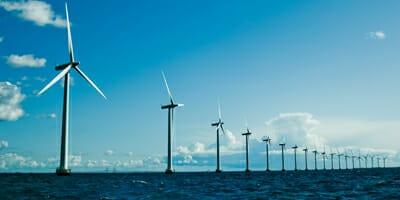
Another Danish pension fund, Industriens Pension, recently joined PKA in taking a $130-million stake in a planned offshore wind farm in the German North Sea.

Sponsored Content

The deal extends PKA’s involvement in offshore wind – a new form of infrastructure that Danish firms have helped to pioneer. In 2011 a larger investment of $450 million was made in a 25-per-cent share of a Danish wind farm planned to be one of the world’s largest.

The fund’s social responsibility in nurturing Denmark’s energy future was cited at the time as a reason for investing, but Jensen explains that attractive return prospects were also very much a consideration. Although the investment made a loss in 2011 as the tricky task of erecting giant turbines in the sea began, Jensen says PKA expects the Scandinavian winds to deliver a return of around 7 per cent for the 20 years of the project’s operation.

Relying on familiar vehicles

With those kind of figures promised, it is little wonder that Jensen feels infrastructure is a “perfect match” for PKA as an alternative to fixed income under Denmark’s strict pension solvency regulations.

In 2012 PKA made a signal of its intent to pursue the infrastructure alternative by setting up a subsidiary focused on investing $2.1 billion. While government backing will help its domestic infrastructure drive, PKA has relied on the more familiar vehicles such as fund of funds and private equity structures for its overseas infrastructure investments.

Needing to keep a close eye on infrastructure ventures means PKA does not expect to make direct overseas infrastructure investments, but Jensen says it is contemplating investing in mines in Greenland, an autonomous and distant part of Denmark.

Private equity is a more established alternative in PKA’s holdings, at the end of 2011 occupying close to 10 per cent of the portfolio of the group’s biggest pension fund, the State Registered Nurses’ Pension Fund. The newly established alternatives subsidiary has allowed PKA to “move quicker to act on what we see in the market”, in Jensen’s view.

Timber and agriculture are new additions to the group’s alternatives holdings, although its experience in these asset classes has been mixed. Jensen says PKA has found it difficult to locate suitable agriculture funds, while timber investments have not worked as well as expected. “Timber works as an inflation hedge and diversification factor,” he says, “but we need some return along the way, and we have not been satisfied – this year at least.”

From Denmark to Deutschland

However, distinct satisfaction is being felt at PKA over the performance of its bond portfolio, which forms the core of its five pension funds, taking a fraction over half of the space in the State Registered Nurses’ fund at the end of 2011.

Nominal bonds returned some 10.4 per cent for PKA in 2012. Jensen explains that a desire to look beyond Denmark’s borders helped.

“The outlook for Danish bonds really wasn’t that good, so we have very few left. If we need safe bonds, we felt we might as well go for German government bonds as they look like they will return better,” Jensen says.

A hunt for high-yielding debt seems to have paid off for PKA. At the end of 2011 it had a portfolio of global mortgage credit bonds almost half the size of its government bond holdings – this returned 16 per cent in 2012.

Even better returns were recorded by a substantial holding of peripheral European government debt – issued by the likes of Ireland, Portugal and Italy.

Jensen says PKA’s exposure to higher yielding bonds of all forms is about half that to core government bonds, which is about 26 per cent of its overall portfolio. “I think other pension funds have more than that in ‘safe bonds’”, says Jensen, who reckons underweighting Europe’s core “is the best thing PKA did in 2012”.

Jensen concedes that the impact of the recent election in Italy shows that “the euro crisis could rebound on Italy. It is not as huge as the US though, so everyone is still looking across the Atlantic to see what is going on over there.”

Jensen says that the persistence of current low interest rates for a number of years is PKA’s greatest fear.

The Danish investor has been doing its best, however, to use the post-crisis investing environment to its advantage. For instance, it has bought more than $520 million worth of real estate in recent years as prices have dropped.

As for equity holdings, cost efficiency has been the mantra recently, with passive investment favoured for US and European equities. It has also been seeking to implement its own absolute return strategy to compliment its equity portfolio, with return and dividend swaps acquired to reduce exposure to equity market volatility.

Leave a Comment

How CPP is evolving risk management for a faster, more interconnected world

How CPP is evolving risk management for a faster, more interconnected world

In an environment where multiple risks are emerging and their effects are compounding on the portfolio, CPP Investments' chief risk officer Priti Singh says the $572 billion fund is rethinking risk management from the ground up, shifting from reaction to preparation and embedding risk thinking earlier in investment decisions. She speaks to Amanda White about the fund's risk approach.

Sort content by

Why Norges Bank leads the world in transparency

Norges Bank has taken the top spot again in the Global Pension Transparency Benchmark. But perhaps even more extraordinary than the consistency and continuous improvement, this year the fund was awarded a perfect score of 100. Amanda White spoke to CEO Nicolai Tangen on how the fund improved transparency.

Canada’s HOOPP: Is China even investable for long term investors?

Geopolitical risk could make China un-investable for long term investors says Jeff Wendling outgoing president and chief executive of HOOPP as he reflects on a 30-year career.

Stewardship: BCI plays the long game

BCI's global head of ESG, Jennifer Coulson, explains why there is no magic bullet for engagement, making it critical for investors to take a multi-faceted approach and reinforce the same outcomes with both corporates and policymakers.

Low risk start for Ireland’s new sovereign funds, but more to come

Long-term strategies for Ireland’s new SWFs, expected to grow to €100 billion by 2035, will be designed and allocated in the next nine months including the appointment of an investment committee and custodian. For now it will invest in low-risk allocations to high credit quality Euro-area sovereign and quasi-sovereign bonds.

How an iterative strategy shapes success at Baylor university endowment

David Morehead, chief investment officer of Baylor University endowment in Texas explains why he's concerned about too much diversification and why the rewards of interest rate cuts will be most keenly felt in small cap equities.

PUBLICA builds alternatives through partnerships

In the latest development of its private market portfolio, Swiss pension fund PUBLICA is investing in infrastructure equity in a partnership with three other Swiss pension funds and Dutch pension investor APG.

Previous



