
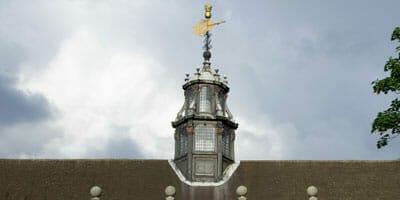

Received financial wisdom holds that the price of virtue for ethical investors is lower returns. It all depends on the time frame, argues Tom Joy, director of investment for Britain’s Church Commissioners, who manage the Church of England’s £5.2-billion ($8.38 billion) pension fund.
The Church Commissioners, as fund managers who are ultimately accountable to God, abide by strict ethical guidelines. They cannot invest in a range of sectors, from tobacco and alcohol to defence and pornography. In the short term, the guidelines make the fund more vulnerable to market “headwinds”, says Joy, but they also create a “liberating” long-term investing horizon, “especially in terms of taking on much more illiquidity in assets like property, timber and private equity.”
The Church Commissioners’ accounts provide some support for Joy’s theory. Over the past 20 years, the fund’s assets have grown in value by an average 9.5 per cent per year, compared with average annual UK inflation of 2.9 per cent. From this relatively long-term perspective, the fund has comfortably beaten its strategic target of a return at least 5 per cent higher than inflation. In the past decade, Joy estimates that ethical exclusions have on average clipped about 0.5 per cent per year off the fund’s returns, which makes the performance even more respectable. However, since the 2008–9 financial crisis, exclusions have cost the fund far more in lost investment opportunities, because – put crudely – cigarettes, drink and other addictive human vices are strong defensive stocks in a downturn. In 2011, the commissioners reported that exclusions reduced the return from the global equity portfolio by 1 per cent, and the return from UK stocks (where the fund is more exposed) by 2 per cent. Set in that context, the fund did well to make a total return of 2.9 per cent last year.
An income defined by history
A few lean years are not going to deter the commissioners from their mission to observe exemplary ethical investing standards while distributing about $322 million annually to help fund clerical pensions and support other church needs, such as the upkeep of cathedrals.
“Our added value is that we are not just another ESG fund that generally raises issues on sustainability or governance grounds,’’ says Edward Mason, secretary of the church’s Ethical Investment Advisory Group (EIAG). “We take a distinctively ethical approach when we engage with companies, and focus on what is right and wrong.”
Given this approach, it is ironic that history, far more than Christian morality, has defined the overall shape of the fund today. When Henry VIII broke with Rome in the 1530s, the English Crown seized clerical taxes previously paid to the Pope. In 1704 Queen Anne transferred this income to a charity to relieve clerical poverty, which forms one of the modern fund’s inherited income streams. Another source of income is real estate, with the fund exploiting freeholds and leaseholds that in some cases have been owned by the church since before the Reformation.
Property has in fact been the fund’s saving grace in recent years. The real estate portfolio accounts for about 30 per cent of its total value and ranges from historic church estates such as the Old Bishop’s Palace at Ely, near Cambridge, through about 1800 residential and commercial properties close to Hyde Park in London, to more recent investments like the Metrocentre in northeast England, Europe’s largest shopping mall. In addition, the commissioners own about 105,000 acres of mostly prime English farmland and more than 40 mineral-extraction leases.
In total, property assets delivered a 13.1-per-cent return in 2011, boosted by substantial international demand for the fund’s upmarket residential properties in central London.
… and theology
Meanwhile, equity investments, representing about one-third of the fund’s total value, provide the main testing ground for the Church Commissioner’s ethical guidelines. The EIAG’s exclusion check list for equities, which is reviewed four times a year, is both wide-ranging and specific.
Arms manufacturers are always excluded if they produce “indiscriminate” weapons liable to kill civilians, from landmines to nuclear bombs. Yet the fund is allowed to buy stakes in companies that make conventional weapons, provided military sales do not amount to more than 10 per cent of turnover.
“As Christians, we recognise that the world is imperfect and that war may be justified in certain circumstances, according to the theology of a just war,” says Mason, whose group also advises two smaller Church of England investment funds.
The fund cannot invest in companies that publish or distribute pornography, defined as material “with the primary, proximate aim, and reasonable hope, of eliciting significant sexual arousal on the part of the consumer.” This blanket interdiction covers everything from Playboy to hard-core material that cannot be described in a family-friendly publication like top1000funds.com. Any company “substantially involved” in alcohol, tobacco or gambling is out, and the fund has given advance notice that it will never invest in a bioscience firm that researches or develops human embryonic cloning.
With missionary zeal, the EIAG – whose members range from theologians to lay Anglicans with business expertise – tries to convert invested companies to the Church’s ethical position. In 2011, the EIAG held 35 “engagement meetings” with companies, focused on the fund’s 20 largest holdings, mostly in Britain. They included BP, which the EIAG took to task for safety and risk management failures in the Deepwater Horizon oil spill, and News Corp, which the EIAG castigated for lax corporate governance during the phone hacking scandal. In News Corp’s case (but not BP’s), the fund sold its $3.1-billion stake because the EIAG felt the company had not responded adequately to its criticisms.
Omnipresent influence
There is, in short, hardly a corner of the investment universe that is not subjected to the EIAG’s moral scrutiny. For instance, the EIAG disapproves of hedge funds that engage in overly aggressive short-selling, mineral companies that operate dangerous or dirty mines, “payday” loan businesses that charge steep borrowing rates and any firm that pays its executives too much. (In the UK last year, the commissioners voted for barely one-third of all remuneration reports at invested companies.)
It is arguable, though, that the fund’s ethical lobbying and exclusion is wasted effort for two reasons. Firstly, the fund, while substantial, is hardly a global investing giant. So why would companies pay much attention to what it does or says? Mason counters that the fund punches (ethically) above its weight because it represents the church, and furthermore, often acts in concert with other ethical investors like Norway’s sovereign wealth fund and the US Interfaith Center on Corporate Responsibility.
A second, more profound objection is that the fund cannot truly be ethical if it embraces “big capital” – for example, by investing in the same banks that precipitated the worldwide financial meltdown in 2008. “The Church Commissioners should start taking their money out of big international banks and consider placing it with alternative banks that make small loans for the greater social good,” argues Jonathan Bartley, co-founder of Ekklesia, a Christian think tank in London. Bartley, who co-wrote a recent paper criticising the fund, adds that the commissioners need a “complete rethink” of their strategy.
Mason responds that the EIAG “puts an awful amount of thought into what it means to be an ethical investor, with a view to coming up with a distinctly Christian approach to the issue.”
Like the Bible itself, that approach also appears open to widely varying Christian interpretations.








Leave a Comment
You must be logged in to post a comment.
Login