

The DKK269.6 billion ($44.5 billion) Danish pension fund Pensionskassernes Administration A/S (PKA), which administers four Danish labour market schemes in the social and healthcare sectors, has rapidly increased its allocation to renewable energy in recent years.
It has piled into wind parks in Denmark and across Europe in search of long-term, fixed returns uncorrelated to financial markets, while also steadily divesting from fossil fuels. In the middle of last year, PKA divested from five Canadian oil companies, bringing the total number of fossil fuel-related firms it has excluded from its investment universe in the last two years to 53.
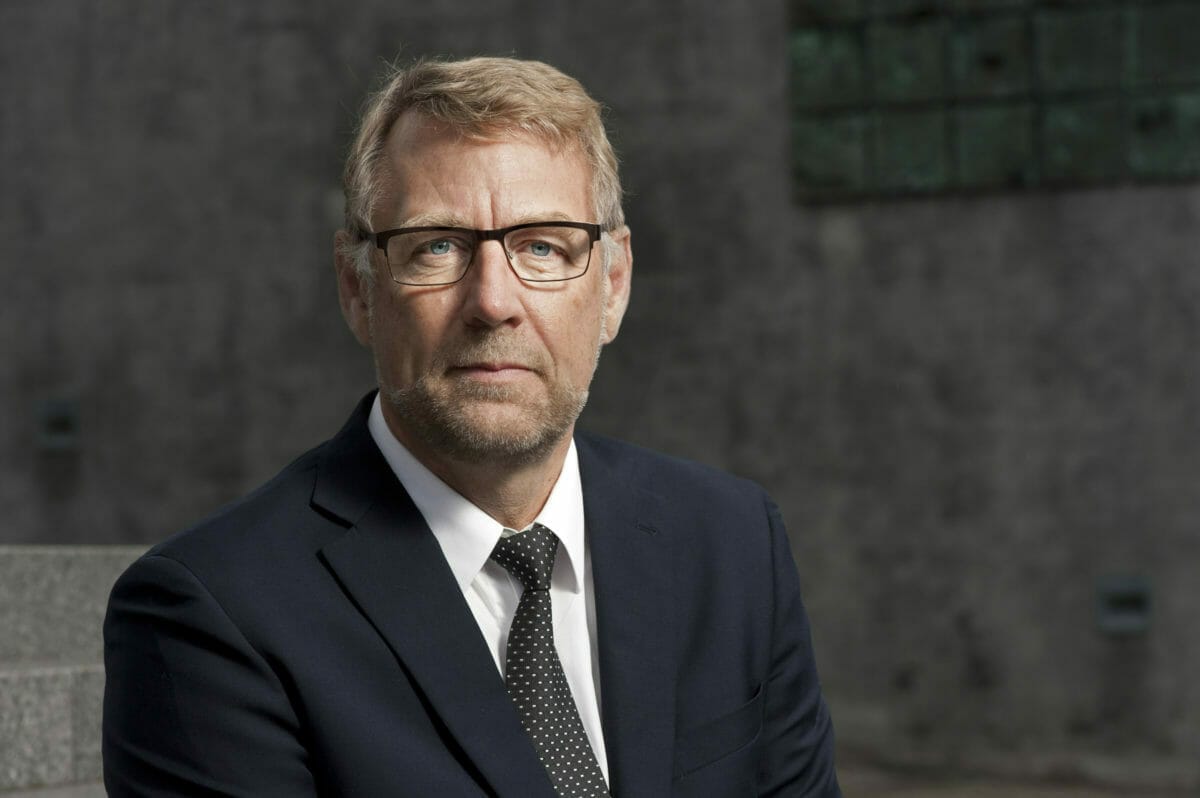
“We have already done a great deal in offshore wind and we are going to build out this part of the portfolio more,” chief executive Peter Damgaard Jensen says. “We are also going to do more in onshore wind.”
PKA does invest in some renewable assets via funds; for example, it is a regular investor with Macquarie, a manager that has put about $20 billion into renewable energy since 2010. But the fund also has about $2 billion to $3 billion in various direct renewable investments and it is this part of the portfolio that will grow most in coming years, Damgaard Jensen says.
The focus will be on acting alongside other institutional investors and local and European utilities such as Denmark’s Ørsted, formerly DONG Energy. Most recently, PKA bought a 50 per cent stake in the UK’s Walney Extension Offshore Wind Farm with Danish pension fund PFA. Walney Extension will be the world’s largest offshore wind farm when commissioned in the second half of 2018.
One reason for the push to invest directly is a desire to cut costs. Damgaard Jensen estimates investing directly saves about a quarter, or even a third, on a wind project over the long term.
Going direct has involved recruiting a team of 10, which he says will grow to between 15 and 20 over the next three years. It is an expansion the pension fund has paid for by switching most of its equity to passive strategies. PKA gets involved in projects only once a tender is won, and Damgaard Jensen tries to ensure that other partners bear all the construction risk.
“We try to structure the deal to ensure construction risk is under the utility, because they have the expertise,” he says.
On ungeared wind projects, he expects a return of 5 per cent to 8 per cent.
Once a project is up and running, operational and political risk still need navigating; wind power is intermittent and the government subsidies that underpin wind farm investment can change.
“We diversify the risk by investing in different countries, all with stable political systems,” Damgaard Jensen says. He navigates market risk – the chance of electricity prices falling – by deliberately factoring low power prices into investment returns.
“We are very conservative about long-term electricity prices,” he says.
PKA maintains a willingness to sell its wind farms when the price is right. In 2016, the fund made a return of nearly DKK1 billion ($165 million) on the sale of its stake in the Butendiek German offshore wind farm to a consortium led by Japan’s ITOCHU group. PKA bought the wind farm in 2013, when it was at the planning stage, and achieved an annual return of about 25 per cent for its members.
Other alternatives
Wind farms and other renewable energy sources make up a large portion of PKA’s 10 per cent allocation to infrastructure. This sits in an alternatives portfolio that now accounts for 30 per cent of AUM. That is a bigger alternatives allocation than at ATP, PFA, Danica or Sampension – Denmark’s other top-five funds.
The alternatives portfolio is run by PKA’s dedicated alternative investment arm, PKA AIP, and has been steadily built-up ever since the financial crisis.
“In 2008, we learnt that having too much in equity made us vulnerable in a financial crisis,” Damgaard Jensen explains. “We are not expecting another 2008, but there will be another crisis of some kind in years to come and alternatives give us the diversification we need.”
In addition to renewables, the alternatives allocation includes a 10 per cent to 12 per cent investment to real estate, and a 7 per cent to 8 per cent allocation to private equity, in co-investments and fund investment. The rest is in forestry and absolute return strategies, targeting uncorrelated returns.
In the real-estate allocation, there is a heavy home bias, where PKA has built up an expertise over the last 25 years.
The fund aims to invest DKK2 billion to DKK3 billion in Danish real estate every year. New aspects of the strategy include investing in projects a “little earlier” and large-scale developments. Rather than just a single building, the pension fund is now targeting whole areas, like the ongoing redevelopment of the former Carlsberg brewery site in the west of the Danish capital, and Enghave Brygge district in Copenhagen’s Sydhavn area.
“It takes three to four years to build up whole new areas,” Damgaard Jensen says.
The absolute return portfolio is managed internally but the strategies are developed and honed with support from managers. It includes hedging strategies such as catastrophe bonds but also long/ short hedge fund strategies structured to perform well in a downturn.
“We will know if we’ve got it right when we see some headwinds,” Damgaard Jensen says. “We work with banks and product managers to develop a product that fits us.”
The allocation is run by a team of five to seven, in a dynamic setting where staff are given the freedom to craft and establish the strategies themselves.
“I believe this makes it interesting and is a reason to stay with PKA. It is intellectually attractive and an opportunity for some of our younger employees,” Damgaard Jensen says. The fierce competition for talent in Denmark’s pension sector leads to regular movement of staff between rival firms.








Leave a Comment
You must be logged in to post a comment.
Login