
Looking for illiquidity

No one can pretend the last few years have been boring. The period I’ve overseen since starting at the National Employment Savings Trust (NEST) has covered some of the most unusual events many investment professionals have seen in their careers.

From major shake-ups in politics, historically low interest rates, turbulent commodities markets and big shifts in long-term trends like climate change, we’ve coped with plenty over the last eight years. This is why it’s so important for us at NEST, as long-term investors, to have a strategic view of where we’re trying to go and not get blown off course by short-term events.

Having steadily diversified our portfolio as funds under management have grown, we’re doing all we can to mitigate the kind of turbulence we’ve seen over the last few years.

We’re invested in a wide range of asset classes, from equities to debt to property. We’ve just seeded a new climate-aware equities fund and are about to add high-yield bonds to our universe. It’s a pretty good range but it can’t stop there.

Our assets are going to continue growing exponentially over the next few years. We’re projected to be one of the biggest pension funds in the UK, if not internationally, by 2030. Our challenge is where to put the money. We need a large asset allocation toolbox to give us a choice of where to invest at any one time.

That’s why I’m going to be spending much time this year looking into alternative or private-market investments.

Sponsored Content

I want to know how we can access, within a defined contribution (DC) framework, things like infrastructure, private debt, private equity, renewable energy and timber.

We’ve got three main reasons for this. Firstly, we need the additional diversification. Secondly, we want the extra returns the illiquidity premium should provide. And thirdly, lower volatility assets like these sit well with our long-term strategic aims.

When we reach scale, our peers will be large, defined benefit or superannuation schemes, which are already far more diversified than most UK DC pension schemes.

It’s where we’re heading, and as we get larger, the constraints that often come with DC will be less of an issue. But we still need to work with the asset-management industry to access these alternative classes in ways that are cost effective.

Extra return, lower volatility

We know, for example, that we can get an extra return for money that’s tied up for a long time. And because we’ve got a lot of money coming in, we can take advantage of that. If you’re a 25-year-old and you’re in NEST, you don’t mind tying up your money for 10, 20, 30 years.

Most private market funds at the moment have a limited life, so after 10 or 15 years, the fund shuts and investors get paid out. We need longer time horizons than that and we need to be able to add an ongoing flow of money as our assets grow.

That means we’ll need customised funds that are focused on our specific requirements and can start small but essentially be an evergreen portfolio. These are long-term opportunities that make sense for long-term investors, like us.

Illiquid private-market assets also often have lower volatility, at least reported volatility, than more publicly traded securities.

Our long-term strategic aim is to increase members’ money as much as possible without exposing it to unnecessary volatility. We want to avoid volatility drag and, as best we can, manage sequencing risk. But, in particular, we want our members to feel confident in saving, and our research shows that excessive volatility is likely to discourage them.

Our members are relatively risk averse. They would probably be scared off by big falls in their pots. That’s particularly true for our younger members but the bottom line is, no one likes losing money.

Having a highly skilled and experienced in-house team is critical to allowing NEST to make these types of strategic investments in line with our members’ interests.

One of the first decisions we had to make when setting up NEST was what to outsource and what to do ourselves.

Academic evidence shows that the majority of the variation in returns comes from asset allocation, so it was important to us to keep that in-house, where we understand our members’ needs and expectations best. That’s ultimately why we’re here – to find the right solutions, so our members see steady returns, regardless of what’s happening around the world.

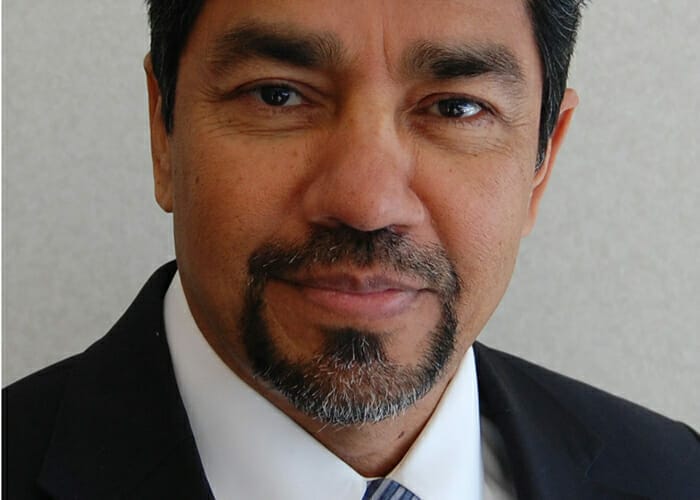
 Mark Fawcett is chief investment officer at NEST.

Leave a Comment

Allocation changes are optional

Allocation changes are optional

The $12.5 billion School Employees Retirement System of Ohio decided realigning its portfolio was a better path to its goals than new asset allocation, CIO Farouki Majeed writes.

Sort content by

Nationwide ignores disruptions, succeeds

The Nationwide Pension Fund restructured its C&D section with a strategy that slowly cut risk over time and ignored the many recent disruptions to global markets. The results were impressive.

The trust effect

Successful investment management comes from a culture that supports and nurtures talent. This requires functional governance built on trust between the board and the investment team.

Relatively simple

Family dynamics are complex enough. Without simple, straightforward discussions and clarity of mission that resist the allure of complexity, the family office will struggle to achieve its goals.

Active? Only when necessary

High management margins and low returns will continue to push owners towards passive investments. But active managers can add value in asset classes that require special expertise or access.

Risk management’s next level

UC Regents’ Risk Management 3.0 aims to be a better predictor of financial crises, by going beyond historical trends and stress testing, to look at how people and systems behave under pressure.

Playing a game to learn what works

Chief investment officer of the Public Employees Retirement Association of New Mexico, Jon Grabel, discusses the camaraderie and insights his team gains from a virtual portfolio competition.