
Why active investment is a zero sum game

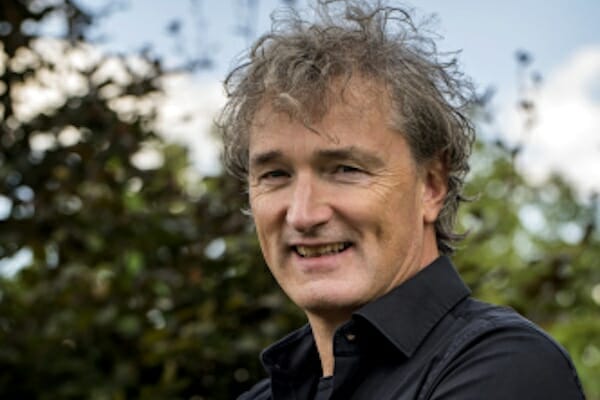
Asset owners are increasingly under pressure to find alpha via active management because of declines in beta, but active investment may not offer a holy grail.  Speaking at FIS Maastricht, Rob Bauer, Professor of Finance, Institutional Investors chair; director of the European Centre for Sustainable Finance; Maastricht University highlighted challenges in active management around returns and fees.

Drawing on key points from research published earlier this year of which he was co-author, that looked at the active management strategies of the largest sovereign wealth fund in the world, Norway’s Government Pension Fund Global, Bauer argued that NBIM’s 200-odd active strategies weren’t making sufficient returns. Despite NBIM’s low active risk profile, many people work across the active programme in a complex process, but returns at the fund mostly derived from market beta.

NBIM’s active strategies also introduced a conflict of interest, he continued. For example, the sovereign wealth fund was seeking to beat the benchmark but also engage with companies to decrease carbon emissions. This typically leads to underweighting a company and therefore lower returns compared to the benchmark. “It is a trade-off – where do you use your resources?”

Arguing that academic evidence suggests it is very difficult to beat the benchmark in fixed income or equity allocations, Bauer warned investors active management is a “zero-sum game, minus costs.” Still, he noted that incentives for asset owners to adopt active strategies abound. Asset managers busily market active management, but there is little feed back via public statements on what these strategies have actually achieved.

Asset owners tend to mandate to active managers that have done well in the past but where performance subsequently declines. “After a period [managers] reverse to the mean,” he said. Typically, asset owners then take their money out and reinvest with better performing funds. “You end up with one flower in a field of flowers that don’t look so well,” he said.

The conversation also turned to the importance of asset managers measuring alpha against a fixed time horizon.  Manager selection is often based on three years, yet active strategies should match the time horizon of the strategy. Moreover, outsourcing active investment can amount to passing the buck – investors still need to understand the mechanics behind their active strategy.

Sponsored Content

Beliefs and testing

Fellow panellist Peter Kolthof, chief investment officer, PGB, countered that even small returns in active management can make a difference and are relevant. He noted that active investment involves consistency and should start with beliefs; it involves regularly testing assumptions in an approach that should be implemented throughout the portfolio, consistently monitored and results published. “It’s easy to generate outperformance if you don’t have a relevant benchmark,” he said.

Asset owners in the Netherlands are renowned for developing low cost, passive strategies. They are similarly renowned for developing numerous benchmarks, driven by ambitions to integrate ESG and reflect the wishes of participants, said Kolthof. The process raises questions about whether these strategies are still passive – after all ESG integration is an active decision to make the portfolio more sustainable. “These benchmarks make it subjective, and you get to a point where each fund has its own benchmark,” he said. “If you put more choices into the benchmark, what is left for active?” He noted that benchmarks can be implemented by third parties in cost effective strategies and bought off the shelf.

Still, he reasoned that the most important element is for asset owners to create a benchmark that incorporates all elements of their decision-making process. “To me, it doesn’t matter if it is active or not.” This approach allows investors to monitor and evaluate the investment process and consistently implement. Delegates concluded that labelling these strategies active or passive lies in the eye of the beholder.

Private markets

Investors are increasingly switching to private markets to access alpha, adding segments to their allocations that are outside the benchmark. Investing in private markets requires skill – and investing in fund of funds means investors risk losing the extra return in fees. Bauer also warned delegates to be careful interpreting private equity numbers; ask GPs how they calculate their return and if the IRR makes sense. Delegates also discussed the importance of valuing private market allocations correctly. Private markets lag public markets values and are likely to fall in line with lower public market valuations.

PGB is currently building out its private equity allocation in the hunt for niches and corners of the market it is difficult to access via the listed market. “We won’t seek exposure to segments that are available in listed markets,” said Kolthof.

Elsewhere, delegates questioned the extent to which UK pension funds will continue to move into private markets. The rise in bond yields has improved the funded status of many pension funds, meaning that they may reassess their private market allocations – high solvency levels could focus minds on getting rid of private market exposure.

Leave a Comment

Finland’s Elo: Larger equity allocations promise new media scrutiny

Finland’s Elo: Larger equity allocations promise new media scrutiny

As Finland's pension funds prepare to increase their equity allocations to unprecedented levels compared to global peers, they must also navigate a new and unfamiliar risk. Elo's chief investment officer Jonna Ryhänen explains the fund's investment approach going forward and how it will manage stakeholder and media scrutiny as they react to swinging volatility and returns.

Sort content by

Austria’s VBV strives to give young savers more risk exposure

Günther Schiendl, chair of Austria's VBV Pension Fund board explains how he's enabling younger savers to access more equity investment. However, despite long-held plans to develop the allocation to private equity, US tariff and trade policy has halted the strategy for now.

Maryland’s Andrew Palmer reflects on 40 years in investment industry

After a decade in the top investment job at the $69 billion Maryland State Retirement Fund, Andrew Palmer will retire at the end of June. He speaks to Amanda White about his achievements and reflections on an industry where he has worked for 40 years.

UK fixed income investor PIC ponders the long term risk of government debt

Rob Groves, CIO of the UK's Pension Insurance Corporation, describes a cautious, heavily regulated strategy focused on fixed income. PIC is on the look out for undervalued corporate credit opportunities appearing in the current market, but few opportunities have appeared yet.

Arizona navigates spike in capital calls in uncertain private equity market

The recent market volatility has put the brakes on any pickup in private equity distributions LPs had hoped for in 2025. A board meeting of Arizona State Retirement System heard that IPO activity remains muted and the majority of exits are concentrated in sponsor-to-sponsor deals and strategic sales.

GIC, Temasek eye trillions of growth in climate adaptation market

Singapore’s two largest asset owners, GIC and Temasek, see attractive opportunities in climate adaptation solutions – a relatively underfunded area compared to decarbonisation. The former has already made selective adaptation investments and said the opportunity set across public and private debt and equity could increase to $9 trillion by 2050.

Kentucky CERS: Trustees push back on hurried oil and gas investment

The board of trustees for the $10 billion Kentucky County Employees Retirement System has knocked back the fund's request to invest in an oil and gas fund. It also expressed frustrations that a specially convened board meeting was called on short notice.

Previous



