
Focus on engagement to drive faltering climate transition

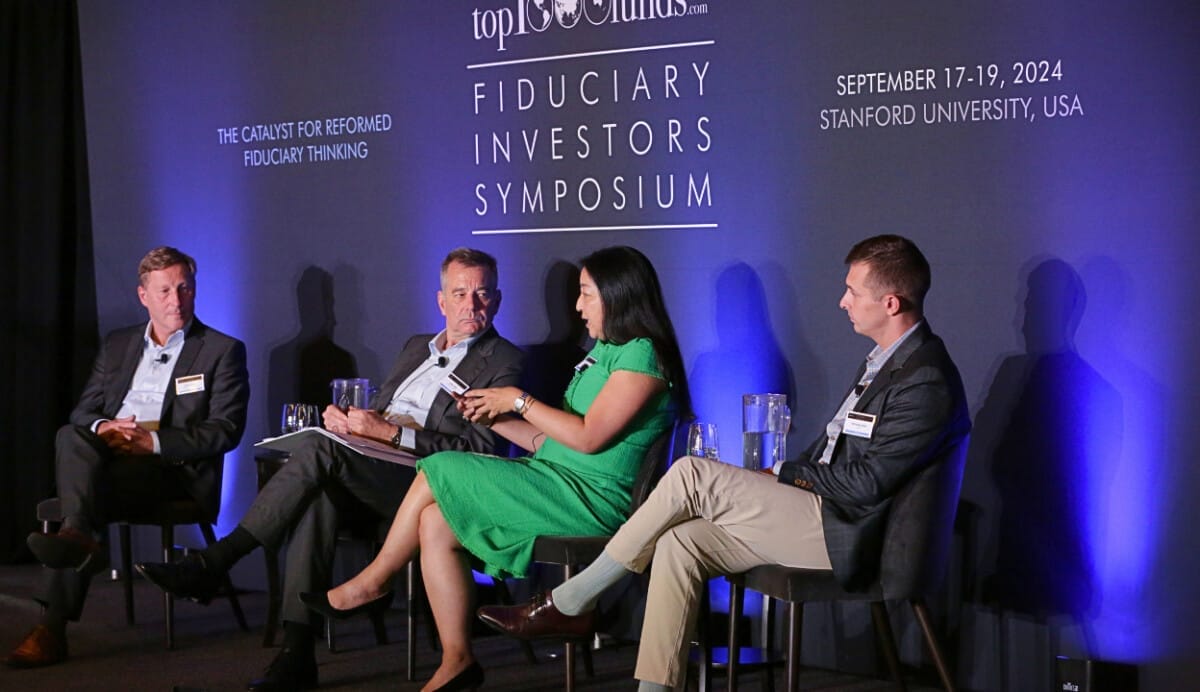
L-R: Peter Kolthof, Colin Tate (Conexus Financial), Yuko Takano, Nick Abel. Image: Jack Smith.

As the global fight against climate change shows signs of slowing down, some large asset owners are taking a more pragmatic approach to investment returns from the transition by focusing on more targeted engagement in order to drive more lasting impact.

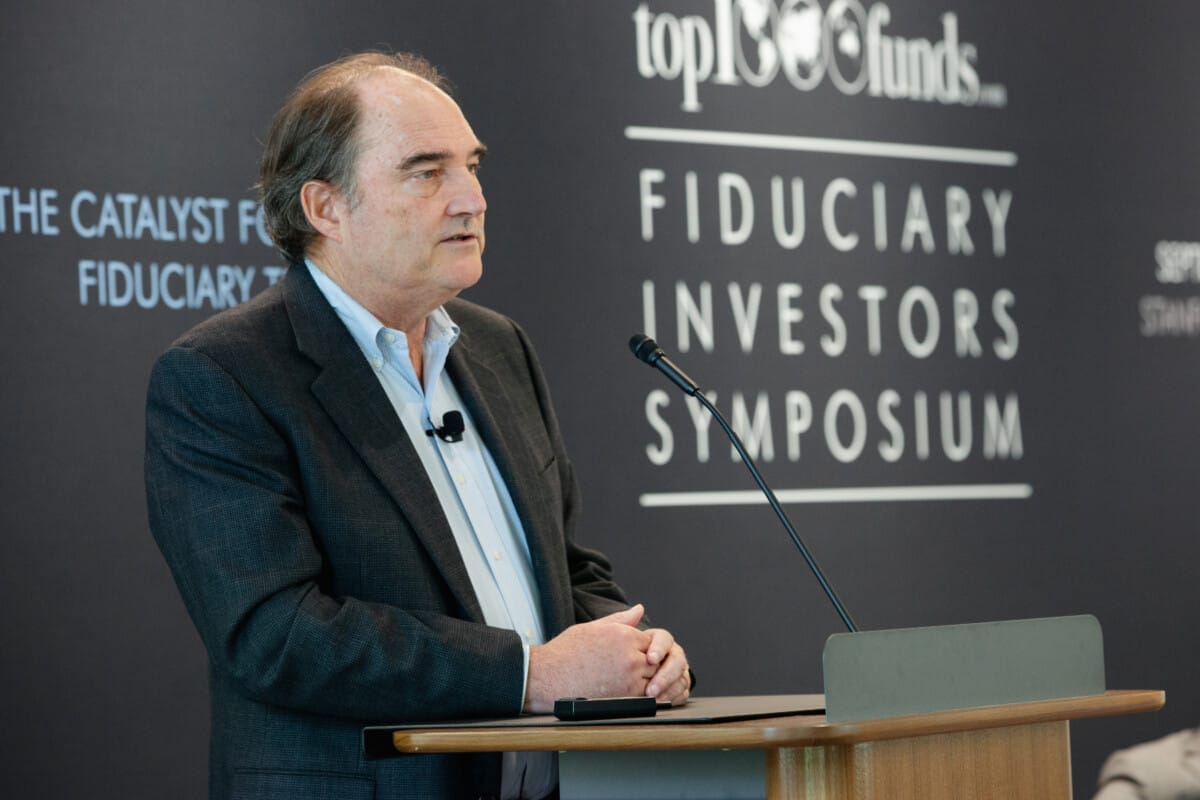
In a discussion at the Fiduciary Investors Symposium at Stanford University, PGB chief investment officer Peter Kolthof gave the example of the Dutch pension fund industry, which has made sustainability an explicit objective by framing its ambition to provide a decent return for all its pensioners, but also to do so in a world they find valuable living in.

Kolthof says the $35 billion fund follows a three-stage approach to climate targets: exclusion, engagement and intentionality.

“First, we look at things that we absolutely don’t want to have any exposure to, and we exclude that – cluster munitions, or the tobacco industry, for example,” he said.

In the next stage, the fund looks to put some influence in its portfolio, either by trying to change the companies themselves through engagement, or by adopting a best-in-class approach to gain exposure to the good things related to water, waste and climate.  Finally, it uses impact investing to also pick businesses that show pure intention to contribute to energy transition or sustainability.

Kolthof said PGB does not try to exclude fossil fuel investments, stemming from the belief that it should actually contribute to a better world, rather than leaving the damaged goods for somebody else to solve.

Sponsored Content

“I’d rather go for a best-in-class approach for those because there’s also the belief that these will be significant contributors to the energy transition, and we’re going to have fossil fuels for quite some time, so somebody needs to produce them and export and exploit them in a sustainable way,” he said.

Positive Change

A slightly different approach is followed by Yuko Takano, who runs the Positive Change portfolio at Pictet Asset Management.

“In a nutshell, we invest in the transition, and that can be anything from climate transition to social transition, but engagement is a core part of our strategy,” she said.

“We believe one of the main areas that we can differentiate is through that active engagement with managements.”

One of the successful engagements the team has had is with global auto giant Toyota. The Pictet fund saw a valuation opportunity in the company because while the markets largely deemed Toyota as not having any concrete battery EV strategy, it had taken a multi-pronged approach and was a front runner in terms of hybrid and plug in hybrids.

Takano said when Pictet approached the company and asked it to disclose more of its ex-China EV opportunities, it was pretty reluctant to engage. But there was a step change when Toyota announced its new CEO last year, and the company started taking in recommendations from investors.

It eventually came out with a concrete and more enhanced battery EV target, boosting its share price.

Sustainable Investments

While the $350 billion California State Teachers’ Retirement System has a net zero objective as a strategic priority, the giant fund also has a $6.5 billion sustainable investments portfolio within that focused on public and private markets.

Nick Abel, who co-manages CalSTRS sustainable investments portfolio, said that when large asset owners talk about targeted engagement, they really only need to focus on 250 companies that make up 75 per cent of the emissions profile of ACWI MSCI.

“When you start shortlisting down that, there’s only about 45 companies that CalSTRS can meaningfully focus on to start moving the needle when it comes from emission reductions in decarbonisation, while focusing on positive shareholder value creation,” he said,

Abel said it was relevant asking companies about climate exposure and how it affects their strategy, at one point of time, but public markets have since evolved.

“That was appropriate at one point in time, but now we’re starting to get into an implementation phase where it’s a lot more meaningful for our stewardship team to have conversations with CFOs about marginal cost abatement for carbon and how they can improve shareholder value,” he said.

On the private markets side, it is investing in companies that are creating unique technologies with the potential to scale, such as those that use AI and robots to sort municipal solid waste and upcycle recycling capabilities, or closed loop battery recycling businesses.

Leave a Comment

The ‘most momentous’ in living memory: The 2024 US presidential election

The ‘most momentous’ in living memory: The 2024 US presidential election

Douglas Rivers, chief scientist at pollster YouGov, said data coming out of the current US presidential election confirms significant cultural and demographic shifts that are reshaping the political map. Rivers told the Fiduciary Investors Symposium that the once-popular “demographics is destiny” mantra predicting permanent centre-left majorities has lost meaning in the Trump era.

Sort content by

Winds of change blowing through private credit markets

The influx of capital and interest into the private credit market has spawned new managers and offerings, but asset owners are increasingly alert to the fact that not every one of them is built equal, and even tiny losses during the credit cycle can eat significantly into long-term returns.

Changing geopolitical risks are getting harder to manage – but here’s how

The changing nature of geopolitical risks has made them harder to manage, even though the adversaries to an American-led world order have remained nearly the same over the decades. The Fiduciary Investors Symposium heard a key difference is that everything that happens everywhere is now interconnected.

Macro risks, opportunities prompt rethink of portfolios

Investment heads at large global funds are cutting down on risk, making higher allocations to equities and shifting focus to absolute returns as they reorganise portfolios to future-proof against global macro risks on the horizon, and to take advantage of potential opportunities, the Fiduciary Investors Symposium has heard.

Nobel laureate advises a different focus on risk to enhance returns

Nobel Prize-winning economist Myron Scholes advises investors to think differently about risk to improve the way it is managed, to help boost returns. He told the Fiduciary Investors Symposium the focus of asset owners should shift from thinking of risk as a constant to considering how risks are changing.

Flawed Fed encouraging excessive risk taking

An increasing willingness of regulators to bail out investors at times of crises is reducing the competitive environment in which banks and financial institutions operate, the Fiduciary investors Symposium at Stanford University has heard. It is also encouraging more risky behaviour, and creating a fragile system in the longer run.

FIS Stanford 2024 Gallery

mrec4inarticleinline Sponsored Content scnative1 scnative2 scnative3