
Railpen talks risks and opportunities in trade upheaval

Amidst managing liquidity and risk levels, investors have also been looking for opportunities to deploy capital into the market. Investment team meetings at Railpen, asset manager for the £34 billion pension scheme for employees of the UK’s railway, have involved rattling a tree and seeing what comes down.

Investing in currencies has landed in the opportunities bucket, as well as long short equity strategies given the emergence of corporate winners and losers as tariffs drag down revenues for some companies more than others.

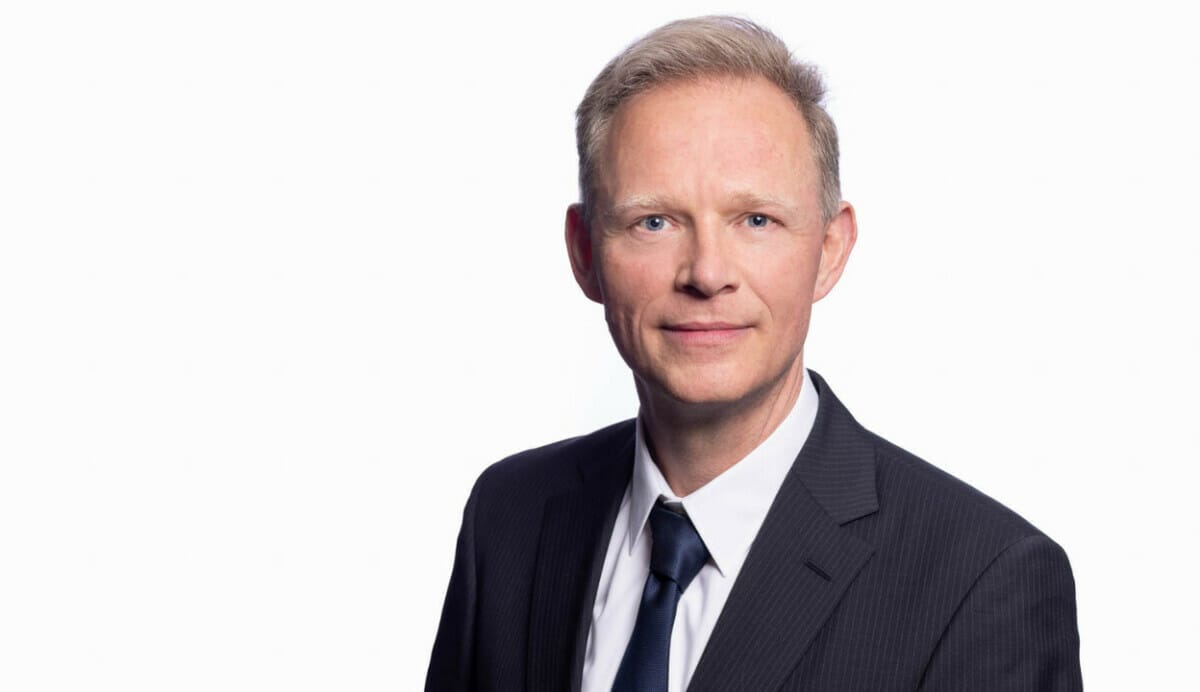
“Currencies move in this space,” Mads Gosvig, chief officer, fiduciary and investment management tells Top1000funds.com, adding although it’s difficult to see the long-term impact on the dollar’s safe-haven status through the noise “the suppression of the dollar could be one theme [of the Trump administration].”

Longer-term, the team is also exploring whether to have the same reliance on the US in a portfolio that invests around 44 per cent of assets in equities.

“The MSCI benchmark has around a 60 per cent weighting to the US. Is this a good idea or would it be better to skew the weight to other regions? European equity has already outperformed US equity this year,” he says.

In uncertain economic times, he is also increasingly wary of private debt where looser lending standards and a vast amount of capital has flooded in recent years, worrying investors.

Sponsored Content

Over the past five years, Railpen has gradually built out its interest rate/credit exposure in the portfolio and the externally managed allocation will be rolled out further.

“Some of the returns in private debt are almost just as good as what we have seen in private equity. Investors get the same type of promises in a trend that is being driven by the way managers structure these portfolios and develop the underlying exposure. It is interesting to see how this will develop.”

Yet his enthusiasm is tempered by concerns that private credit which took off after banks retreated from lending post GFC has never experienced a full-blown crisis like 2008. “Private debt remains untested. I think there are probably many private debt providers out there, big and small, that if there was some kind of crisis would fall off,” he says.

In today’s challenging economic climate he is also concerned about long-term growth prospects in the UK where Railpen invests around one third of its assets (£11 billion) across stocks, private equity and infrastructure. Echoing concerns voiced by other large UK investors like £45 billion LGPS pool Border to Coast, he reflects that small and mid market businesses that have proved themselves are struggling to access the capital they need to grow.

“To create growth, capital must flow to where it is most needed. UK and foreign capital is flowing down into the system, but it is still not reaching right down to the lowest level like start- ups that need £5-20 million to capitalize on all their good ideas. We need intermediation on how capital gets to where it is needed most to create a system that is more efficient.”

Client focused approach

Railpen undergoes an actuarial evaluation every three years and is approaching its next one. The process is a chance to adjust the asset allocation and this time around the team are particularly focused on taking down the risk level of some of the well-funded, mature and closed DB pensions in the pool.

“Amongst our client group we have mature, closed defined benefit pensions. They are now well enough funded to take off risk, and we want them to consider moving towards buy-in or buy- out. We are currently adjusting the portfolio to be able to deliver on the needs of this group.”

Meanwhile with the open sections, his focus is on ensuring access to illiquid and liquid growth assets in a process that involves repositioning what it is in the portfolio to deliver to different needs, rather than “buying new things.”

Other focus areas include enhancing efficiency in the liquid multi asset pools that account for around £22 billion, fine tuning FX hedging and rebalancing stratgies, for example.

Elsewhere, he is working on improving processes in public equity. For example, a quant solutions team is exploring new technology. “They are working on different ways to apply newer tech. It’s not as sophisticated as AI, but we are running models and improving and enhancing our quant processes.”


Leave a Comment

How CPP is evolving risk management for a faster, more interconnected world

How CPP is evolving risk management for a faster, more interconnected world

In an environment where multiple risks are emerging and their effects are compounding on the portfolio, CPP Investments' chief risk officer Priti Singh says the $572 billion fund is rethinking risk management from the ground up, shifting from reaction to preparation and embedding risk thinking earlier in investment decisions. She speaks to Amanda White about the fund's risk approach.

Sort content by

Funds SA cuts active risk as CIO puts stable beta first

Australia’s $36 billion Funds SA has slashed tracking error in its equities book and is reorienting its philosophy around stable beta, as chief investment officer Con Michalakis argues the role of alpha in a multi-asset portfolio needs a fundamental rethink.

La Caisse’s oil exit pays off as renewables portfolio pulls ahead of fossil fuels

Divesting from the oil sector has been a boon for La Caisse’s performance, as the Canadian pension giant says its energy investments have earned billions in value-add compared to the benchmark since the inception of its climate strategy. Head of sustainability Bertrand Millot unpacks the fund’s approach in an interview with Top1000funds.com.

OPTrust: hiking rates because of the oil shock is a mistake

To navigate rates and inflation uncertainty, OPTrust is leaning into dynamic portfolio construction, actively managed options, and a total portfolio approach supporting the belief that inflation resilience is built into how portfolios are constructed not an individual asset or exposure.

Nest favours institutional-first managers as retail exodus pressures private credit

Nest, the largest workplace pension in the UK, says that private credit managers who prioritise institutional clients will be more favourably viewed. The £61 billion ($82 billion) fund has awarded a £450 million ($605 million) US direct lending mandate to Crescent Capital this month, citing the manager's institutional-client-first approach as a key attraction.

PKA ups the risk; builds out infrastructure

PKA, one of Denmark’s largest pension service providers, is exploring whether to increase its risk budget by 10 per cent to boost returns. Michael Flycht, deputy director of equities and liquid alternatives at PKA, outlines why the fund is achieving this objective via leverage rather than direct exposures, and where it's allocating towards in hedge funds and infrastructure.

Chicago Teachers leans into diverse managers; exceeds targets

Chicago Teachers is bullish on allocating to diverse managers, more than doubling its target allocation to more than half of the fund's AUM. Its CIO explains how the strategy adds value through access to differentiated strategies and competitive fee structures.



