

New rules that could allow pension fund beneficiaries in South Africa to access their savings ahead of retirement hold important implications for South Africa’s largest pension fund the R2.3 trillion ($0.12 trillion) Government Employees’ Pension Fund, GEPF, and it’s ability to invest in illiquid assets.
Reforms currently going through the legislative process under the Revenue Laws Amendment Bill will enable South Africans to access up to a third of their net retirement savings early, while ringfencing the remainder for retirement over the long-term.
The rationale behind the so-called ‘two-pot’ system is that it will actually encourage members to preserve their pension by making it more flexible to accommodate the unforeseen financial pressures many face in their working life, stalling a trend that sees workers resign from their job to access their retirement fund.
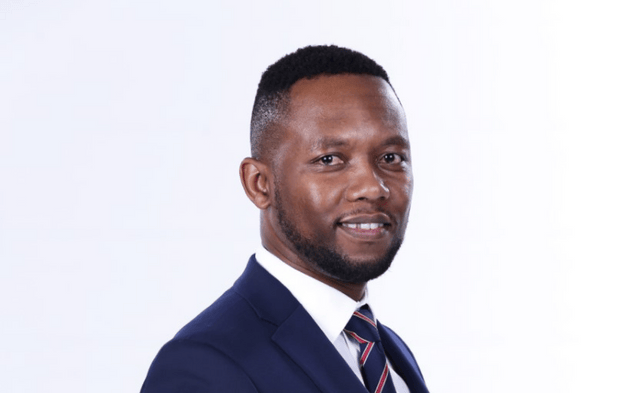
“Instead of waiting until they retire or resign, the regulation will allow people to access annual withdrawal amounts if they choose. The industry is really grappling with these proposals,” explains Sifiso Sibiya, head of investments at GEPF. “It is existential for the entire retirement funds industry and will have an impact on how investment strategies are executed once regulations are finalised within the next six months. If you have to increase the amount of liquidity available there will be less assets for long term investment.”
His chief concern is how the fund will ensure sufficient liquidity on hand to pay beneficiaries seeking an early payout and the implications for long-term investment.
He is also mindful of the amount of liquidity GEPF will need to make available, warning getting it wrong could trigger “a market event.”
Sibiya also predicts that the implications will be keenly felt in GEPF’s administrative department where colleagues will need to deal with new pressures around cash flow management, ensuring the fund can absorb the volume of payments expected, as well as keep track of what has been paid out, accounting for money already withdrawn.
As soon as the legislation is passed, he says the investment team will start putting contingencies in place.
Monitoring the PIC
For now, he continues to spend most of his time focused on governance and enhanced monitoring of GEPF’s primary asset manager the government-owned Public Investment Corporation. The PIC is responsible for investing around R2-trillion on behalf of the GEPF, but the relationship came under strain due to political interference at the PIC during Jacob Zuma’s presidency.
In 2021 GEPF revised its mandate with the PIC, drawing up new conditions that included stipulations around consequence management that leave the PIC liable in the event of inappropriate investment decisions; better disclosure of the PIC’s investment decision making processes and ESG integration, and scrutiny of its fee model in the unlisted portfolio.
Now, mandate compliance and monitoring performance around benchmarks is a crucial element of Sibiya’s role. “We are transitioning into a new mandate [with the PIC] that governs our processes and there are more eyes on what we are doing to enhance the effectiveness of our oversight,” says Sibiya.
Tightening GEPF’s organizational capabilities and oversight structures has involved doubling the internal oversight team to six where the focus is ensuring the PIC implements GEPF’s strategy to the letter.
“Research indicates that at least 80 per cent of investment outcome is attributed to asset allocation and we are intent on ensuring our asset allocations are adhered to in order to achieve our set objectives,” he says, continuing “we have added capacity to the team to enhance our effectiveness when it comes to governance around the application of our strategic asset allocation.”
GEPF sets its asset allocation based on an asset liability model and PIC is responsible for implementation and selecting the securities.
Elsewhere, GEPF continues to fill its target 15 per cent allocation to global equity (and a little fixed income) recently increased from 10 per cent. Mandated to managers including JP Morgan, Goldmans and BlackRock, Sibiya says the allocation is bringing important diversification benefits, particularly acting as a buffer against rand volatility and allowing GEPF to tap into dollar returns, and other geographies, at a time growth in South Africa remains challenged.
“The rand is a volatile, emerging market currency and is expected to devalue over the medium to long term based on purchase power parity measures. As a result when South African investors allocate overseas, the currency depreciation translates into an additional return that may act as a buffer, especially if local assets underperform.” Still, he says GEPF won’t push its global allocation beyond 15 per cent of AUM. “This is our targeted allocation and is not expected to change.”
In another seam of the portfolio GEPF targets 5 per cent in unlisted African investments. Of this, it manages a tiny 1 per cent allocation to private equity across Africa internally and the rest is mandated to PIC which in turn allocates to external managers.
Spread across 50-odd countries Africa’s unlisted market is attracting flows from global investors, drawn to new opportunities like infrastructure as high inflation and interest rates impact their portfolios at home. Investing in Africa also holds compelling SDG and ESG opportunities. US public pension funds (where a government initiative aims to foster trade and investment between Africa and the US) have invested in private equity funds run by African Development Partners, for example.
Does GEPF’s experience offer insights for these investors? Above all, Sibiya counsels on the importance of hard currency revenues wherever possible to protect against a currency squeeze impacting returns.
“African currencies are generally volatile despite some being pegged to hard currencies and sharp devaluations can catch you by surprise. Assets may perform in local currency, but when they are converted into dollars it becomes something different and they may underperform. Measures can be put in place to mitigate against currency risk on portfolio returns like structuring portfolio companies with business models that generate hard currency revenues.”








Leave a Comment
You must be logged in to post a comment.
Login