


The spotlight on artificial intelligence has already fuelled astonishing valuations for companies like Nvidia, but long-term tech investors expect an abundance of investment opportunities in the sector in coming years as innovations appear on the horizon.
The biggest paradigm shifts in technology history – the internet and cloud computing – both had common characteristics, in that there was initially a cycle of investment in infrastructure before the applications were delivered to consumers, according to John Donnelly, managing director at Jennison Associates.
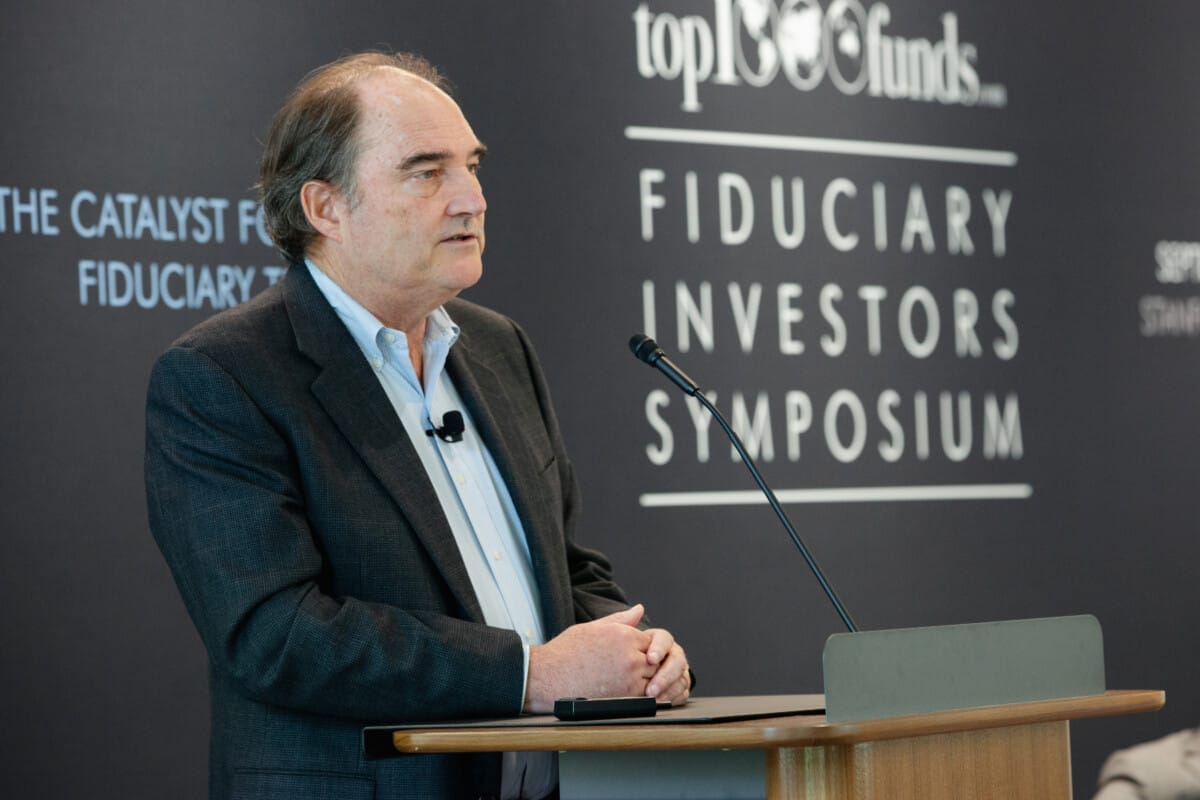
“We don’t think AI is going to be any different,” he told the Fiduciary Investors Symposium at Stanford University. “There’s going to be an infrastructure cycle that is going to create great investment opportunities, and there’s going to be an application cycle that also does that.”
Donnelly says chipmaker Nvidia and ChatGPT founder OpenAI have been instrumental in the current infrastructure phase. But while graphics processing units such as the ones developed by Nvidia have increased speeds 50 times in the past couple years, data centre speeds haven’t been able to keep up, creating a real bottleneck, and creating potential investment opportunities.
“The risk is that the rest of the supply chain can’t keep up, and so we have to really watch companies evolve, because the technology transformation is happening so rapidly,” Donnelly said.
“Nvidia is way ahead on the computing side, but networking and storage need a lot of work, so there’s going to be some great companies that will solve problems in those areas.”
Market challenge
Nvidia has seen its share price surge since 2022 to its current valuation of around $3 trillion, making it the third-most valuable company in the world.
The challenge for public market investors, though, is that there are not a lot of opportunities, says Angus Botterell, senior managing director at Canada’s $77 billion Investment Management Corporation of Ontario.
“There’s Nvidia, and then there are some smaller companies that have exposure, but they’re not pure plays on AI,” he said.
“And I’m not sure we actually know how AI is going to play out. We don’t know who the winner is going to be.”
IMCO has chosen to play the sector through a hybrid investment strategy where it holds data centre investments in its infrastructure group, and also owns a stake in company called CoreWeave, which does actual computing.
“You’re going to start with investing in the infrastructure, and ultimately there will be consumer facing applications,” Botterell said.
“Given that consumers are two-thirds of all the economy, that’s where the real money will be made.”
It’s a sentiment shared by Prabhu Palani, an investment industry veteran who is currently chief investment officer at the City of San Jose, part of the Silicon Valley.
He said that while the hype is real, because many of these early AI companies are doing transformational work investors don’t want to be caught up in the hype in terms of valuation.
Palani pointed out that startup funding has fallen off a cliff since equity markets saw the tech-wreck phase in 2022, with AI now dominating funding.
“But I have to say we have been slow in deployment,” he said.
“You want to be careful. You want to be cautious and and the way to access these companies is through funds. We rarely make direct investments.”
Consumer Transformation
The rapid pace of development in artificial intelligence and the shift towards consumer applications means it is difficult to pick winners from the Magnificent Seven technology stocks that currently dominate equity markets.
“The incumbents don’t usually win in any major paradigm shift,” Jennison’s Donnelly said.
“And so the new companies probably haven’t even been founded yet. The infrastructure companies probably have, but the consumer companies probably haven’t.
“Secondly, consumer is the biggest AI market it’s going to be, and we haven’t even started yet.”
On the question of whether the development of AI will result in loss of employment in parts of the economy, Palani said many positives will also come out of it and it’s better to not put barriers on the development of technology. Instead, the focus should be on developing safeguards around it.
“With any technology, once it’s unleashed, there’s no way to put it back in the bottle. And so the consequences will be the consequences, hard to predict those although that does worry me,” he said.
IMCO’s Botterell said one of the issues with the evolving sector is the potential for market concentration, given that data is the foundation of AI, and the more data you have, the better your AI is, resulting in kind of virtuous circle.
“We’re trying to be cognizant that, if you pick a winner now, it might end up being the ‘one app to rule them all’ sort of thing in the future,” he said.
“The other big questions we’re asking ourselves is regulatory pushback, regulatory issues as well as data privacy. Those are sort of the big things on our radar screen as we’re thinking about it going forward.”







Leave a Comment
You must be logged in to post a comment.
Login