
Catching up with reality: Investment beliefs need a rethink

I don’t know you, so what I say next may not be true … but here goes anyway: your investment beliefs are probably out of date.

If you have revised your beliefs within the last 12 months and have factored in the tsunami of pain that climate change will bring, then please forgive me. You are off the hook.

If, however, your investment beliefs were set five, or more, years ago – when net-zero wasn’t even a ‘thing’ – then I will argue that they need to catch up with a fast-moving reality[1].

In 2022 TAI published a paper titled Pay now or pay later?, which was one of the first papers to argue that climate change was going to hurt portfolio values, whatever we chose to do. Given that kicking the proverbial can down the road appears to be a bankable human trait, we suggested the likely outcome was a rise in temperature of +2.7 to +3C, and a consequent hit to portfolio values of 50-60 per cent.

If that sounds somewhat alarmist consider that “There is a level of warming that will cause a 100 per cent loss of GDP[2], and therefore a complete loss of portfolio value, even if we don’t know what that level of warming is.

In 2023 we ran an investing for tomorrow working group to delve deeper into these matters. The resulting output was a significantly deepened understanding of climate science, climate scenarios, and the understatement of risk in most of them. In 2024 we ran a ‘sprint’ working group to develop a survey tool that investment organisations can use to determine whether, or not, they need to revisit their investment beliefs.

Sponsored Content

In addition to a deeper understanding of climate change, we have continued to apply ourselves to the study of systems. We first wrote about complex adaptive systems in 2008 and so have 15 years or so under our belts. We now consider it an idea whose time has very much come. In 2023 we wrote two papers on systemic risk[3], and in 2024, we have launched our systems curriculum to explore the intricacies of interconnected systems and gain valuable insights into how they shape our world[4]. This advance in systems thinking and the assessment of systemic risk is a further argument for a revisit, and possible refresh, of investment beliefs.

So there are two main arguments behind my assertion that most investment beliefs need to catch up with reality: our understanding of climate, systems and risk has taken a big step forward, and, reality is changing rapidly.

To quote from our paper alluded to above, reality “is simply too big and too complex to understand. And so we build models of it, and in understanding the models, we pretend that we understand reality”[5].

Our investment beliefs are a form of model, in that they are a series of statements that seek to explain how (the investment part of) reality works. Unless those statements are freshly agreed it is unlikely they reflect our current (and partial) understanding of climate risk, biodiversity loss, artificial intelligence, interconnectedness and systemic risk.

If we single out climate, then we can also ask whether any public net-zero pledge your organisation has made should also be reviewed. Why? Is it not widely agreed that the world is heading to net-zero emissions by 2050?

Well, on the one hand, it is true that 196 nations ratified the Paris Agreement, which is legally binding. On the other hand, a 2024 survey showed 77 per cent of climate experts (lead authors or review editors of IPCC reports since 2018) believe the world will warm by at least +2.5C[6]. In other words, they do not see the necessary level of action despite it being legally binding. I assume these climate scientists have a better grasp of current climate reality than I do, and so I can use their knowledge to help my own catch up.

In the investment world we then need to translate that knowledge into a form that is more meaningful for our management of portfolios. The expected temperature rise is essentially the same as the scenario I quoted above from Pay now or pay later?, so is TAI’s heroic estimate of a 50-60 per cent portfolio loss (by 2100) our best guide? I was one of the authors of that paper, and we wrote it two years ago. I can’t speak for all the authors, but I know that my own thinking has moved on in that time. I now see systemic risk as a bigger threat than I did back then, and so I would probably factor in the possibility of even bigger losses.

The point here is not what I think, but what you think. I would therefore encourage all investment organisations to ask themselves whether they need to revisit their beliefs and, possibly, any net-zero pledge. We have a survey tool that could help here. I would also encourage everyone to at least check out our systems curriculum materials. As Buddha told us, “what you think, you become” – and we all need to become better systems thinkers.

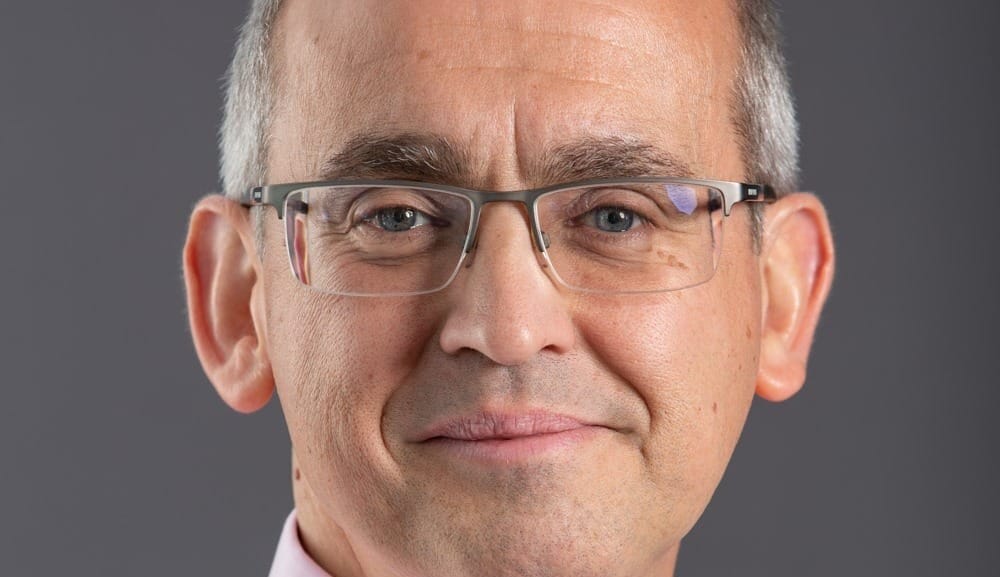
Tim Hodgson is co-founder of The Thinking Ahead Institute.

Leave a Comment

The ‘space economy’ is a legal and literal vacuum for investors

The ‘space economy’ is a legal and literal vacuum for investors

The looming SpaceX IPO has put the spotlight firmly on the so-called ‘space economy’, but asset owners have been urged to exercise caution about investing in a sector that still resembles the wild west, with no legal or governance framework to protect capital. That’s not to say money will not be made, but it might not be in the areas investors first expect.

Sort content by

Investors head back to EM as US tech capex bill mounts

US tech mega caps are grappling with surging capital expenditure, casting doubt on whether the premium attached to these stocks in the AI super cycle has become detached from fundamentals. Investors are now turning their attention to emerging markets equities where they have the opportunity to buy into the AI hype at a much lower price.

China tech rivalry is ‘existential’ for the US – and diversification

Decades of US economic and financial supremacy have made diversification away from it a drag on returns for many investors, but the forces that have underpinned that supremacy may now be coming to an end.

AustralianSuper built scale – now its new CIO needs to make it work

The $295 billion AustralianSuper has spent two decades building scale, but Shaun Manuell's task as the fund's new chief investment officer is to ensure Australia's largest pension fund can operate effectively with it. As short-term performance pressure mounts on the fund and its assets set to hit A$1 trillion ($718 billion) by 2035, the local equities boss-turned-CIO will see his legacy defined by whether he can transform AustralianSuper from a domestic giant to a global leader.

Why Asian equities’ growth will outlast the AI-driven semiconductor cycle

In the latest episode of the Fiduciary Investors Series, Liao spoke with Top1000funds.com Asia Pacific correspondent Darcy Song on why the convergence of innovation, demographics and improving shareholder returns makes Asian equities an increasingly compelling diversification trade for asset owners navigating a geopolitically fractured world.

How CPP is evolving risk management for a faster, more interconnected world

In an environment where multiple risks are emerging and their effects are compounding on the portfolio, CPP Investments' chief risk officer Priti Singh says the $572 billion fund is rethinking risk management from the ground up, shifting from reaction to preparation and embedding risk thinking earlier in investment decisions. She speaks to Amanda White about the fund's risk approach.

Pension funds confront the question of who owns AI

As the use of AI within asset owners evolves, organisations are grappling with the governance question of where the strategy and accountability sit. Darcy Song looks at the treatment of AI organisationally within a number of high-profile funds, including OTPP, AustralianSuper, CPP and Norges Bank.



