
QSuper: standing out from the crowd

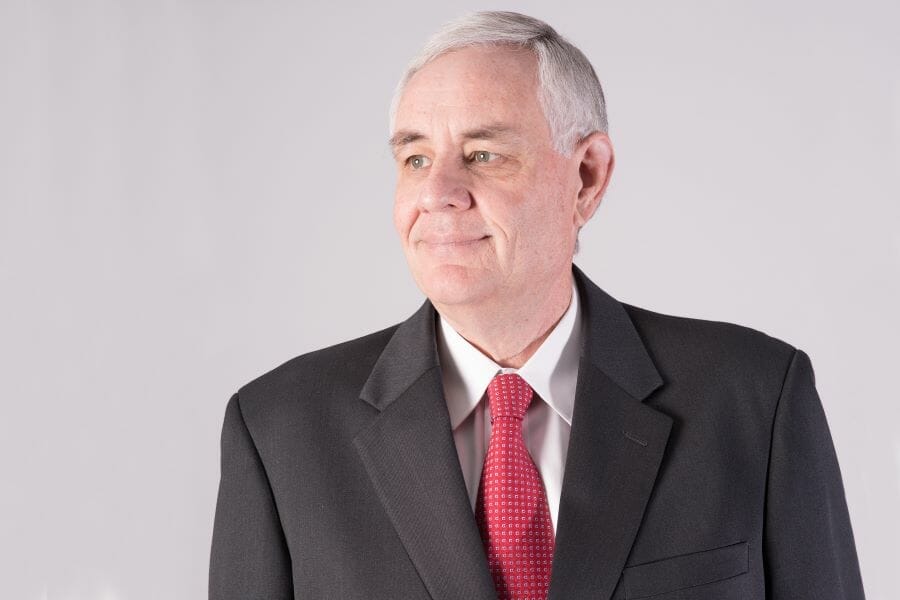
QSuper CIO, Brad Holzberger, has long stood out from his peers by loading up on long-term government bonds and even the recent sudden collapse of yields, as investors started pricing in slower growth, hasn’t deterred him from sticking with this asset class.

“It doesn’t, it hasn’t and the reason it hasn’t is that the influence of falling bond yields affects all other assets,” he said. “Despite the recent fall in yields, the more strategic issue is that they have been falling for 20 years.”

Holzberger who has served as CIO since 2009, and will retire in September, admits to having “fewer positive expectations” of returns than previously but claims his balanced portfolio is essentially unchanged. “We made only very minor changes to the allocation and the mix of bonds held and those changes do not mask the strategic consistency,” he says. “We are often asked about our allocation choice but our answer can only be understood properly when we say we are equally concerned about the future for equity returns, unlisted assets and bonds.”

Given the weakening global growth outlook, the investment chief is more committed to diversification than ever and holding on to bonds is part of that strategy.

In practice, the fund’s portfolio reflects exactly that. The superannuation fund has allocated a solid 25 per cent of its $82 billion to fixed interest investment in complete contrast to the average balanced fund which holds a lower weight and is generally concentrated in credit exposure, rather than government bonds.

Outlier

Sponsored Content

Holzberger concedes QSuper has  been something of an outlier in the Australian superannuation industry since 2011 when apprehension over the spectre of QE drove it to adopt a highly-diversified strategy. Before that, like most other super funds at that time, he measured investment performance by how QSuper funds performed against its peers. That changed the moment QSuper’s balanced fund booked a negative return for the year, even though the fund beat its rivals.

Holzberger swung into action by slashing equities by half, to 28 per cent of the portfolio, and bolstering the fund’s exposure to high-duration bonds. His focus turned to achieving CPI plus returns, rather than being consumed by peer relative returns.

“We concluded that doing so required a different investment approach, one that could provide strong returns coupled with lower risk, as defined by annual volatility of returns. The previous, conventional way was much more equity reliant for performance, whereas way we’ve invested since 2011 is truly diversified by risk,” he notes.

“Our fund has looked noticeably different to the other balanced option funds in asset allocation terms for a good while now,” he adds.

QSuper has done very well through owning long-term government bonds. In 2018, the fixed interest portfolio delivered a return of more than 10 per cent, of which about 7 per cent was achieved through the jump in bond prices and the consequent capital gain as rates dropped.

The big question is what happens now that yield curves are flat?

“Lower yields and flatter yield curves suggest lower fixed income returns going forward, but that’s probably the case for most asset classes, he goes on to say, while conceding that yields may continue to stay low for years.

“We scour fixed income markets to ensure exposure that is most likely to achieve our return and diversification objectives. For instance, we don’t currently have exposure to Japanese bonds and favour Australian and US bonds, where yields are higher.”

Rising uncertainty

QSuper’s “risk balanced” investment approach was adopted because of heightened uncertainty. And uncertainty remains high.

“In fact, the singular word I would use about our future view is uncertainty. We have never been more uncertain than we are now.”  And as an investor looking out at the sea of assets that you are able to buy; they are difficult to understand. Moreover, the only reaction that we can sensibly think of is to remain very diversified and ensure that no particular action in any particular market or any particular assets class will strike success or failure for us because we can’t pick it.”

More recently, he says, the super fund has started increasing weights to non-core markets. “This encompass a range of developing markets, but also other developed markets that tend to be underrepresented (or non-core) in standard market-cap benchmarks. We expect to continue to increase allocations to these countries but do not see such exposures as a golden bullet to a low return environment.”

QSuper holds no corporate debt – since Holzberger regards corporate paper as non-diversifying asset and if he is going to hold interest rate exposure, he prefers sovereign bonds. Given that, he claims not to have any insight into any potential financial system crash caused by the massive growth of triple-B rated bonds.

But he is worried about the wider credit backdrop.

“We have unprecedented financial conditions, rates are at their lower bounds in many countries, we have a very unstable geopolitical situation,” he said. Add into the mix, he said the fact there are many democratic counties whose governments have forfeited their mandate and are unable to take strong actions. “Political views are polarising and becoming extreme and people are being given choices between these extremes which in turn means you get more extreme financial and political reactions to these circumstances.”

Plus, he has never seen the world this indebted. “We live in a world where households, governments and corporates have unprecedented debt levels and that must affect the quality of that debt and even though rates are very low for those entities, the very volume of debt concerns us. And we are very uncertain as to how it will play out.”

Since QSuper’s portfolio is already diversified he is not being forced to buy highly-priced private equity, infrastructure and property assets other than to maintain existing allocation when inflows are high. In fact, according to Holzberger, QSuper is approaching its illiquidity limit.

Aside from the 30 per cent of funds allocated to equities, 27.5 per cent is invested in unlisted assets, including stakes in Heathrow and Edinburgh airports and the Port of Brisbane.

Like his counterparts, Holzberger expects the private markets to provide an edge and funds can amplify that edge by taking big positions which are more likely to “move the needle”. He is a big believer in exploiting idiosyncratic risks in private markets where disclosure can be poor. “By bringing very strong due diligence, strong negotiating skills, and strong management skills, you can influence the assets which you can’t do in other spaces.”

Clearly, unlisted assets have done well because of falling interest rates. “People now say they don’t look so expensive because rates are so low but the relativities haven’t changed much.  Unlisted assets have done as well as bonds over the last ten years. We think the relativities look about the same.”

Like other investors, he is trying to get used to what the future holds when facing a decade of ultra-low rates and mediocre growth. Ask Holzberger if he would change his allocation now and he will say only if valuations were to change drastically in one asset class and he sees that as unlikely.


Leave a Comment

CalPERS touts fixed income wins, gears up for TPA

CalPERS touts fixed income wins, gears up for TPA

At the annual review of its fixed income portfolio, CalPERS staff explain how active management, value-add strategies and the hunt for alpha are paying off, with ESG integration giving it a valuable edge and informing it to invest in companies under pressure like Boeing at the right time.

Sort content by

Real assets a haven in likely stagflationary environment

An overweight position in real assets and private equity, and an underweight to equities and bonds positioned the Ohio School Employees Retirement System for success in the last year but CIO Farouki Majeed is now even more convinced a stagflationary environment is likely and is positioning the fund accordingly.

NBIM charts 25 years of investing in fixed income

The $1.23 trillion Norwegian sovereign wealth fund celebrates 25 years of investing in fixed income. Sarah Rundell looks at some of the highs and lows of its fixed income portfolio which makes up around 30 per cent of fund.

Braving the unknown: high yield debt

Option-adjusted spreads for US high yield are above 700 basis points, a stress event threshold only breached four other times in the last two decades.  Mercer's Nathan Struemph examines the considerations for investors looking at these investments including the range of return outcomes in prior stress events, the path investors had to experience in reaching those outcomes, and the impact of implementation timeliness on returns.

Dislocated credit market opportunities

Credit opportunities within long-only fixed income, hedge funds and private markets are broad and likely to expand as the economic impact of COVID-19 is reflected in corporate earnings and balance sheets. This type of environment has historically led to investment opportunities for long-term investors across the credit spectrum. Investors seeking to benefit from credit dislocation should ensure that suitable portfolio allocations are in place.

APG China strategy: In-house with E Fund

APG's capacity to carry out its own research has meant it is ahead of the curve in allocation millions to its first local currency China fixed income strategy. APG is also setting itself up to be a catalyst for change and aims to set new standards on ESG in China.

OTPP bucks trend, keeps buying bonds

Just as some of the world’s largest pensions funds sell down their fixed income holdings in favour of equities and private assets, Ontario Teachers’ Pension Plan has been buying more in 2019 as it seeks to rebalance the portfolio in the event of an economic downturn.

Previous