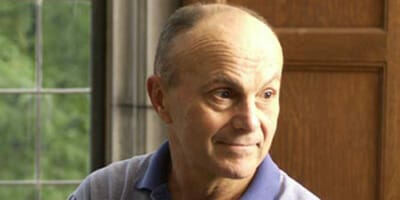
The Fama of modern finance

When Eugene Fama enrolled at Chicago Booth School of Business in 1960, “finance was a joke”, he says in a candid and fascinating insight into his more than 50 years as a student, academic and teacher at the university.

The essay, published by Chicago Booth’s Capital Ideas, details Fama’s own history but also a short history of finance including how the efficient-market hypothesis was born.

Fama, who is often called the “father of modern finance”, calls the Black-Scholes paper on option pricing the most important paper in economics of the twentieth century.

“No other paper has to be learned by every single economist getting a PhD and has also created an industry – the derivatives industry.”

Fama, who also got into Harvard, chose to go to Chicago because he was advised that “it was more academically oriented than Harvard”.

He is the Robert R McCormick Distinguished Service Professor of Finance, and received a MBA and PhD from the University of Chicago Booth School of Business

Sponsored Content

“I love my work,” he says in the essay. “I have no intention of stopping as long as I’m breathing – and I may even do it after that.”

To read the full essay, click here.

Leave a Comment

Sort content by

ESG here to stay

Anyone who thought ESG was a passing fad can think again. The announcement this week that Mercer, which has led the consulting industry on standalone ESG ratings, will now integrate those factors across its ratings process has cemented ESG as an important investment risk and return consideration. The consultant rates more than 20,000 investment strategies

Mercer integrates ESG

Mercer will integrate its proprietary environmental, social and governance (ESG) ratings across all of its manager-search and performance data, cementing ESG as a key investment consideration. The consultant rates more than 20,000 strategies, oversees more than $5 trillion of assets under advice and has $60 billion in its multi-manager products. Mercer has led the consulting

Modern portfolio theory, risk and fiduciary duty

It was only a few decades ago that trustees in many jurisdictions were restricted from investing in certain assets. Fiduciary duty has evolved as the thinking about investments has changed. This is true, then, of how trustees should be applying fiduciary duty to current day investment challenges, including systemic risk and climate change risk. Ed

Singapore’s GIC stashes cash

The Government of Singapore Investment Corporation (GIC) is stockpiling cash as it positions itself to take advantage of any potential opportunities, lifting its cash allocation from 3 per cent at the start of 2011 to 11 per cent of its total portfolio by the earlier part of this year. The sovereign wealth fund’s chief investment

GMO boss warns of food crisis

Global investors should have as much as 30 per cent of their portfolios exposed to natural resources, more than double the current market average, because of a burgeoning worldwide food crisis, GMO’s Jeremy Grantham says. The droughts afflicting farmers in the US and the subsequent spike in food commodity prices are just forerunners to the

Academics and industry unite

The gargantuan impact of systemic risk in global financial markets has been corroborated by a consortium of industry and academics collaborating to provide independent quantitative research, insight and leadership on systemic risk. Driven by director of MIT’s Laboratory for Financial Engineering,  Andrew Lo, senior managing director at State Street Global Markets, Jessica Donohue, and managing

Previous




