Sustainability among key industry’s tagged for China’s growth

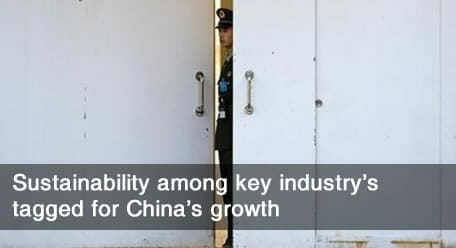
It’s not very salubrious but it’s secure. The four-star Jingxi Hotel in Beijing (pictured), which is owned by the People’s Liberation Army, hosted the annual plenum of the Communist Party’s Central Committee to draft the country’s next five-year plan.

The 12th five-year plan, nutted out by about 300 committee members, will be put to the National People’s Congress in March for ratification. The key themes in the latest plan are sustainability and reducing inequalities between provinces.

Analysts are predicting a lower GDP-growth target to be discussed between now and March, with details of the plan coinciding with a surprise 25bps point rise in the official interest rate last week – the first in China for three years.

A research note from HSBC Global Banking and Markets says more growth is likely to have to come from private consumption which has dropped from 50 per cent of total GDP to an estimated 36 per cent in the past 20 years.

“Expect further efforts to boost household incomes, primarily through higher minimum wages, as well as lower personal taxes,” the bank says.

Notwithstanding the stated concern for poorer provinces, the latest plan intends to speed the demographic shift to the cities, which will further boost consumption.

Sponsored Content

After the meeting, the Government confirmed a list of emerging strategic industries to be at the forefront of a “higher quality” of economic growth. They are: energy-saving and environmental protection firms, next generation IT, biotech, high-end manufacturing, new energy, new materials and composites, and clean-energy cars.

According to Shanghai Securities News, the group of industries currently make up only 3 per cent of GDP but are expected to contribute at least 15 per cent by 2020.


Leave a Comment

Sort content by

Three-way shift in investor behaviour

There are three major behavioural shifts occurring among investors that will have significant impact on asset allocation in the next 10 years, according to a year-long study by global head of research at State Street’s Center for Applied Research, Suzanne Duncan. An increase in investor sophistication, re-evaluation of the risk/return trade-off and more discernment over

How the Future Fund found agility

Using a fund of funds enabled the Future Fund to build a large exposure to hedge funds quickly during the global financial crisis.

Quant models limber up for change

Active quant strategies came in for criticism after the global financial crisis, with a number of models seen as lacking both the appropriate diversification and the dynamism necessary to react to major market events. While acknowledging the need to rethink quant models, global head of active equities for developed markets at State Street Global Advisor

POLL RESULTS: Will you allocate more to infrastructure outside your home country?

mrec4inarticleinline Sponsored Content scnative1 scnative2 scnative3

Collaboration keep deals on tap

As British Columbia Investment Management Corporation (BCIMC) moves towards its target of having 30 per cent of its portfolio exposed to real assets, it is seeking collaborative opportunities with similar large institutional investors. The investment manager is on the lookout for other like-minded investors and has already made significant co-investments in recent years. This year

Defensive setting, anaemic growth

Global pension funds continue to have a defensive asset allocation, reflected in the anaemic growth in the total assets of the world’s largest 300 pension funds by less than 2 per cent in 2011, new Towers Watson research reveals. The P&I/ Towers Watson Global 300 research reveals that concerns about ongoing uncertainty in global markets

Previous



