Sustainability among key industry’s tagged for China’s growth

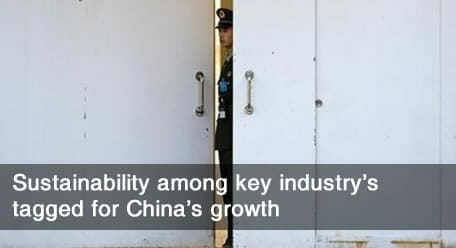
It’s not very salubrious but it’s secure. The four-star Jingxi Hotel in Beijing (pictured), which is owned by the People’s Liberation Army, hosted the annual plenum of the Communist Party’s Central Committee to draft the country’s next five-year plan.

The 12th five-year plan, nutted out by about 300 committee members, will be put to the National People’s Congress in March for ratification. The key themes in the latest plan are sustainability and reducing inequalities between provinces.

Analysts are predicting a lower GDP-growth target to be discussed between now and March, with details of the plan coinciding with a surprise 25bps point rise in the official interest rate last week – the first in China for three years.

A research note from HSBC Global Banking and Markets says more growth is likely to have to come from private consumption which has dropped from 50 per cent of total GDP to an estimated 36 per cent in the past 20 years.

“Expect further efforts to boost household incomes, primarily through higher minimum wages, as well as lower personal taxes,” the bank says.

Notwithstanding the stated concern for poorer provinces, the latest plan intends to speed the demographic shift to the cities, which will further boost consumption.

Sponsored Content

After the meeting, the Government confirmed a list of emerging strategic industries to be at the forefront of a “higher quality” of economic growth. They are: energy-saving and environmental protection firms, next generation IT, biotech, high-end manufacturing, new energy, new materials and composites, and clean-energy cars.

According to Shanghai Securities News, the group of industries currently make up only 3 per cent of GDP but are expected to contribute at least 15 per cent by 2020.


Leave a Comment

Sort content by

Poll results: Do CIOs of US public pension funds get paid adequately?

  mrec4inarticleinline Sponsored Content scnative1 scnative2 scnative3

The Caisse, Future Fund into infrastructure

Two of the world’s biggest institutional investors have recently made significant forays into Australian infrastructure, seeing opportunities in the country across a wide array of assets. Canada’s second largest pool of pension assets, la Caisse de dépôt et placement du Québec (the Caisse), has made a $139.2-million investment in five projects. Macky Tall, the fund’s

Cal pension reforms set to pass

Governor of California, Edmund G Brown Jr, has announced proposed legislation that outlines sweeping reforms to the state’s pension system, but appears to have stepped back from a proposal to create a hybrid pension plan. The hybrid defined-contribution/defined-benefit plan was proposed last year when Brown launched a 12-point reform package. It was widely opposed by

DB plans continue to slide

The funded status of US defined-benefit corporate-pension plans continued to worsen last year, despite plan sponsors increasing contributions by $70 billion, a new Mercer study reveals. Mercer found funding levels have slipped to 2009 levels, with the outlook for 2012 likely to extend the bleak news for plan sponsors. The funded status of pension plans

Super standard risk measure

Australian superannuation funds are now required to disclose a measurement of risk to fund members, with trustees encouraged to use a standardised measurement backed by regulators and industry peak bodies. The Standard Risk Measure will provide a rating of a fund’s investment option based on the likely number of negative returns this option is predicted

Robert Merton: the individual plan man

A retirement solution that focuses on outcomes and is customised for each participant cannot be met by existing defined-contribution designs, according to Nobel Prize-winning economist, Robert Merton, who advocates a “next-generation DC solution”. Merton, who is the Massachusetts Institute of Technology Sloan School of Management’s distinguished professor of finance and resident scientist at Dimensional Fund

Previous



