Sustainability among key industry’s tagged for China’s growth

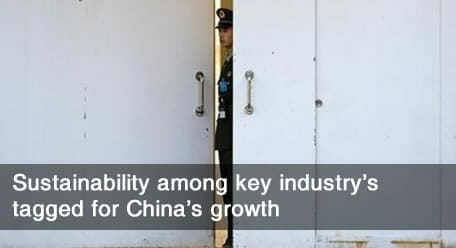
It’s not very salubrious but it’s secure. The four-star Jingxi Hotel in Beijing (pictured), which is owned by the People’s Liberation Army, hosted the annual plenum of the Communist Party’s Central Committee to draft the country’s next five-year plan.

The 12th five-year plan, nutted out by about 300 committee members, will be put to the National People’s Congress in March for ratification. The key themes in the latest plan are sustainability and reducing inequalities between provinces.

Analysts are predicting a lower GDP-growth target to be discussed between now and March, with details of the plan coinciding with a surprise 25bps point rise in the official interest rate last week – the first in China for three years.

A research note from HSBC Global Banking and Markets says more growth is likely to have to come from private consumption which has dropped from 50 per cent of total GDP to an estimated 36 per cent in the past 20 years.

“Expect further efforts to boost household incomes, primarily through higher minimum wages, as well as lower personal taxes,” the bank says.

Notwithstanding the stated concern for poorer provinces, the latest plan intends to speed the demographic shift to the cities, which will further boost consumption.

Sponsored Content

After the meeting, the Government confirmed a list of emerging strategic industries to be at the forefront of a “higher quality” of economic growth. They are: energy-saving and environmental protection firms, next generation IT, biotech, high-end manufacturing, new energy, new materials and composites, and clean-energy cars.

According to Shanghai Securities News, the group of industries currently make up only 3 per cent of GDP but are expected to contribute at least 15 per cent by 2020.


Leave a Comment

Sort content by

UK’s NAPF conference focuses on three issues

The agenda at the United Kingdom’s National Association of Pension Funds (NAPF) annual shindig in Liverpool’s Echo Arena on the banks of the Mersey couldn’t have been broader. From early analysis of auto-enrolment, the biggest shake-up of the industry in a generation and just days old, to life expectancy, Britain’s role in the European Union,

Brussels ‘cooking up real estate shock’

The European Union is threatening to drive pension funds out of real estate investments, experts warn. That could be one of the undesirable results of plans to put pension funds under new risk regulations akin to the Solvency II requirements for the continent’s insurers. What most concerns John Forbes, a PriceWaterhouseCoopers real estate expert, is

Size and scalability up, fees down

The world’s largest asset managers should be using the advantages of their size and scalability to adjust their fee structures, according to Craig Baker, the global head of manager research at Towers Watson, which just released this year’s Pensions & Investments/Towers Watson World 500. “The advantage of large managers is [that] they could structure their

300 Club roots for stewardship over salesmanship

The 300 Club is a rare group that combines long-term thinking and asset management provision. Taking on an industry that is evolving from client-driven to product-driven, the 300 Club is proposing a fundamental mindset shift from short-term salesmanship to long-term stewardship. In this paper, chief investment officer of Kempen Capital Management in the Netherlands, Lars

Aligning asset owners and managers

Delegation is a fundamental obstacle to the alignment of asset-owner and asset-manager goals. However, Sebastien Pouget, professor of finance at the University of Toulouse, believes a combination of customised performance benchmarks and a dual short and long-term fee incentive can help overcome the problems of the principal/agent relationship. Pouget, who spoke at the recent United

Danish pension is gold

Denmark has blitzed the pension-system competition, being awarded the first Mercer Global Pension Index A grading. In the process, it has relegated the Dutch and Australian systems to second and third places, respectively, after four years. Mercer senior partner and report author, David Knox, says the reasons for awarding Denmark the top grade were clear.

Previous



