Sustainability among key industry’s tagged for China’s growth

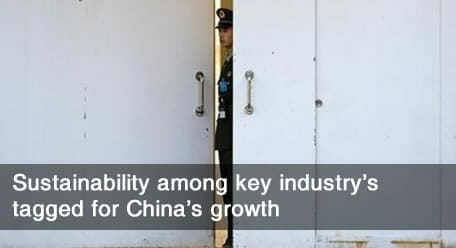
It’s not very salubrious but it’s secure. The four-star Jingxi Hotel in Beijing (pictured), which is owned by the People’s Liberation Army, hosted the annual plenum of the Communist Party’s Central Committee to draft the country’s next five-year plan.

The 12th five-year plan, nutted out by about 300 committee members, will be put to the National People’s Congress in March for ratification. The key themes in the latest plan are sustainability and reducing inequalities between provinces.

Analysts are predicting a lower GDP-growth target to be discussed between now and March, with details of the plan coinciding with a surprise 25bps point rise in the official interest rate last week – the first in China for three years.

A research note from HSBC Global Banking and Markets says more growth is likely to have to come from private consumption which has dropped from 50 per cent of total GDP to an estimated 36 per cent in the past 20 years.

“Expect further efforts to boost household incomes, primarily through higher minimum wages, as well as lower personal taxes,” the bank says.

Notwithstanding the stated concern for poorer provinces, the latest plan intends to speed the demographic shift to the cities, which will further boost consumption.

Sponsored Content

After the meeting, the Government confirmed a list of emerging strategic industries to be at the forefront of a “higher quality” of economic growth. They are: energy-saving and environmental protection firms, next generation IT, biotech, high-end manufacturing, new energy, new materials and composites, and clean-energy cars.

According to Shanghai Securities News, the group of industries currently make up only 3 per cent of GDP but are expected to contribute at least 15 per cent by 2020.


Leave a Comment

Sort content by

CalPERS: a new framework of economy

CalPERS has adopted 10 preliminary investment principles following a board offsite in July, but a number of topics, including the role of active management, are still under debate ahead of the September board meeting that is the deadline for the principles’ adoption. The $266-billion Californian fund began the process for establishing investment principles in January

Social networks in the investment web

Reels of financial data and analysis coupled with the occasional piece of market gossip or personal hunch are the time-honoured tools investors rely on in building an active portfolio. More recently, an element of sustainability or corporate governance analysis has tried to muscle into the process. Soon there will be another revolutionary option complementing financial

Eijffinger’s decade of financial repression

Financial repression will define the economic landscape for at least another decade, according to professor of financial economics at Tilburg University, Sylvester Eijffinger, which has serious implications for institutional investors. Eijffinger, who also is also a visiting professor at Harvard, sits on the monetary experts panel of the European Union and is an adviser to

Is reviving Europe a suspended apparition?

Getting Europe’s swelling institutional capital to support long-term projects that could benefit its uninspired economies was an idea that sent heads nodding around the continent as it suffered the brunt of the financial crisis. Get pension, insurance and foundation money into where it is most needed with the attraction of reliable long-term cash flows and

Let’s talk about underfunding

Even using the assets of the pension plan was not enough of a leg-up to save the city of Detroit from bankruptcy. As the last words in the song Put your hands up for Detroit by Fedde Le Grand say, it is system shutdown. The fiscal demise of this city may be a lesson for

Johnson urges pension simplicity

There is a David-and-Goliath feeling to the battle Michael Johnson, a research fellow at the London-based think tank the Centre for Policy Studies, is waging against the pension industry. His research, which lays out the case for radically simplifying all aspects of the United Kingdom’s pension sector, has earned him a reputation as a maverick.

Previous



