Sustainability among key industry’s tagged for China’s growth

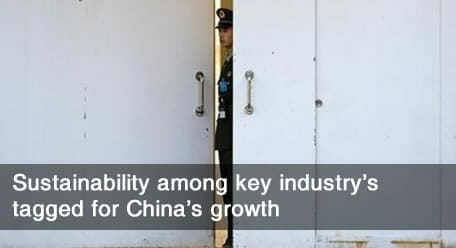
It’s not very salubrious but it’s secure. The four-star Jingxi Hotel in Beijing (pictured), which is owned by the People’s Liberation Army, hosted the annual plenum of the Communist Party’s Central Committee to draft the country’s next five-year plan.

The 12th five-year plan, nutted out by about 300 committee members, will be put to the National People’s Congress in March for ratification. The key themes in the latest plan are sustainability and reducing inequalities between provinces.

Analysts are predicting a lower GDP-growth target to be discussed between now and March, with details of the plan coinciding with a surprise 25bps point rise in the official interest rate last week – the first in China for three years.

A research note from HSBC Global Banking and Markets says more growth is likely to have to come from private consumption which has dropped from 50 per cent of total GDP to an estimated 36 per cent in the past 20 years.

“Expect further efforts to boost household incomes, primarily through higher minimum wages, as well as lower personal taxes,” the bank says.

Notwithstanding the stated concern for poorer provinces, the latest plan intends to speed the demographic shift to the cities, which will further boost consumption.

Sponsored Content

After the meeting, the Government confirmed a list of emerging strategic industries to be at the forefront of a “higher quality” of economic growth. They are: energy-saving and environmental protection firms, next generation IT, biotech, high-end manufacturing, new energy, new materials and composites, and clean-energy cars.

According to Shanghai Securities News, the group of industries currently make up only 3 per cent of GDP but are expected to contribute at least 15 per cent by 2020.


Leave a Comment

Sort content by

Disparity in policy portfolio risk profiles

A policy portfolio is a poor reflection of investor preferences, argued Peter Bernstein. This philosophical question has now been empirically tested by MIT’s Mark Kritzman, who shows the inter-temporal disparity of a policy portfolio’s risk profile. He suggests a simple framework for addressing this deficiency. Kritzman encourages investors to replace rigid policy portfolios with flexible investment policies.

Ventures on the risk spectrum

Hershel Harper received an early education in finance when he used to read Business Week in High School. The 43-year old now at the helm of the $27-billion South Carolina Retirement Systems, investing on behalf of South Carolina’s 350,000 public sector workers, says he knew back then he wanted to manage money: “I really am

Getting the commodities mix just right

While commodities are a controversial and problematic asset class to some investors, for others they are an ideal diversifier looking more attractive than ever. A mini-revival in commodity investing among US pension funds suggests the asset class may be enjoying a resurgence. The Los Angeles Fire and Police Pension System, Municipal Retirement System of Michigan

The end of beauty contest active management?

Designing and implementing concentrated, long-horizon investment mandates would support longer term thinking, align pension organisation’s goals with its stakeholders, and reduce transaction costs. This was one of the recommendations of a two-day workshop in Toronto last month, attended by a delegation of 80 pension fund executives from around the globe. Aimed at uncovering the meaning

Italian fund rides out crisis in style

The wrath of the European sovereign debt crisis may have left its mark on Italy in more ways than one, with both its financial and political scenes regularly sliding into crisis mode for the past year or two. However, the nation’s largest private pension investor, the €7.75-billion ($10.1-billion) Cometa fund, has firmly kept on track

Paul Marsh: live with low returns

The London Business School’s emeritus professor of finance Paul Marsh admits that you have to be slightly mad to embark on the kind of research detailed in the latest edition of Global Investment Returns Yearbook. This year Marsh and colleagues Elroy Dimson and Mike Staunton – Marsh describes the three of them, pictured below, as

Previous



