Sustainability among key industry’s tagged for China’s growth

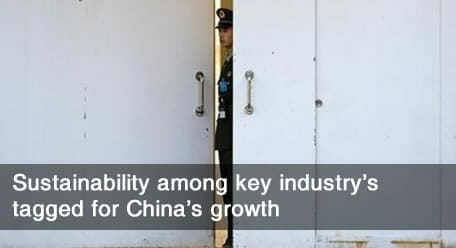
It’s not very salubrious but it’s secure. The four-star Jingxi Hotel in Beijing (pictured), which is owned by the People’s Liberation Army, hosted the annual plenum of the Communist Party’s Central Committee to draft the country’s next five-year plan.

The 12th five-year plan, nutted out by about 300 committee members, will be put to the National People’s Congress in March for ratification. The key themes in the latest plan are sustainability and reducing inequalities between provinces.

Analysts are predicting a lower GDP-growth target to be discussed between now and March, with details of the plan coinciding with a surprise 25bps point rise in the official interest rate last week – the first in China for three years.

A research note from HSBC Global Banking and Markets says more growth is likely to have to come from private consumption which has dropped from 50 per cent of total GDP to an estimated 36 per cent in the past 20 years.

“Expect further efforts to boost household incomes, primarily through higher minimum wages, as well as lower personal taxes,” the bank says.

Notwithstanding the stated concern for poorer provinces, the latest plan intends to speed the demographic shift to the cities, which will further boost consumption.

Sponsored Content

After the meeting, the Government confirmed a list of emerging strategic industries to be at the forefront of a “higher quality” of economic growth. They are: energy-saving and environmental protection firms, next generation IT, biotech, high-end manufacturing, new energy, new materials and composites, and clean-energy cars.

According to Shanghai Securities News, the group of industries currently make up only 3 per cent of GDP but are expected to contribute at least 15 per cent by 2020.


Leave a Comment

Sort content by

Integrating ESG at Norway’s giant SWF

Behind the Strategy Council’s report to the Norwegian Ministry of Finance on responsible investment for the Norwegian Government Pension Fund Global.

Defining fiduciary duty

What constitutes fiduciary duty is an ongoing discussion in the pension sector. The UK Law Commission has weighed in on the debate with its own interpretation.     Pension funds mulling the definition and obligations of their fiduciary duty can now refer to a consultation paper from the Law Commission, Fiduciary Duties of Investment Intermediaries.

Investors call for conflict of interest code

As an outsourced provider, fund managers make a series of promises to investors. Anything that tempts the promise to be broken is a conflict of interest, according to chief executive of Carne Group, John Donohoe, whose organisation has conducted a survey of institutional investors’ attitudes to conflicts of interest. In a survey of global allocators

Stock exchanges ‘need nudge on sustainability disclosure’

 A study ranking the world’s stock exchanges against disclosure on sustainability themes ranks the BME Spanish Exchange at the top. But the study’s author managing director of CK Capital, Doug Morrow, says stock exchanges need a nudge by regulators to enforce tougher disclosure standards.   The world’s stock exchanges “need a bit of a nudge”

Dry up: how investors assess water risks

The world is running short of water, but what does that mean for investors? Asset owners in the Netherlands and Norway assess and manage the water-related risks in their portfolios, including the measurement of portfolio companies’ water dependence and water security. The drought hitting South Africa’s North West Province sounds another warning shot around the

Serving itself: why the financial services industry needs reform

What would the financial services industry look like if it was structured to service the non-financial services sector, rather than itself? Economist John Kay, author of the Kay Review into short termism in UK equity markets, aims to find out.   In an ideal world there would be one, maybe two, intermediaries between the saver

Previous



