Sustainability among key industry’s tagged for China’s growth

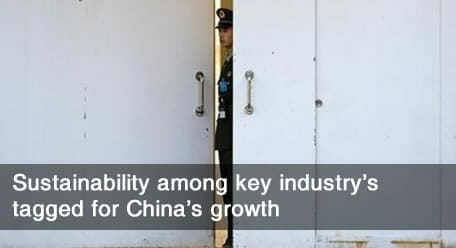
It’s not very salubrious but it’s secure. The four-star Jingxi Hotel in Beijing (pictured), which is owned by the People’s Liberation Army, hosted the annual plenum of the Communist Party’s Central Committee to draft the country’s next five-year plan.

The 12th five-year plan, nutted out by about 300 committee members, will be put to the National People’s Congress in March for ratification. The key themes in the latest plan are sustainability and reducing inequalities between provinces.

Analysts are predicting a lower GDP-growth target to be discussed between now and March, with details of the plan coinciding with a surprise 25bps point rise in the official interest rate last week – the first in China for three years.

A research note from HSBC Global Banking and Markets says more growth is likely to have to come from private consumption which has dropped from 50 per cent of total GDP to an estimated 36 per cent in the past 20 years.

“Expect further efforts to boost household incomes, primarily through higher minimum wages, as well as lower personal taxes,” the bank says.

Notwithstanding the stated concern for poorer provinces, the latest plan intends to speed the demographic shift to the cities, which will further boost consumption.

Sponsored Content

After the meeting, the Government confirmed a list of emerging strategic industries to be at the forefront of a “higher quality” of economic growth. They are: energy-saving and environmental protection firms, next generation IT, biotech, high-end manufacturing, new energy, new materials and composites, and clean-energy cars.

According to Shanghai Securities News, the group of industries currently make up only 3 per cent of GDP but are expected to contribute at least 15 per cent by 2020.


Leave a Comment

Sort content by

New ICGN Principles shift focus to behaviour

The International Corporate Governance Network (ICGN) has revised its Principles for the first time since 2005, shifting the focus from structures to behaviour and culture, as well as adding two new Principles, including risk management, as a result of the financial crisis. mrec4inarticleinline Sponsored Content scnative1 scnative2 scnative3

CalPERS gives external managers one more year, pending review

CalPERS has extended the mandates of its external global equities managers by one year to enable staff to complete the asset class review, which will produce a recommendation about the role of external managers in the portfolio. mrec4inarticleinline Sponsored Content scnative1 scnative2 scnative3

Global flow data shows investor caution

Institutional investors have taken their feet off the gas, with the latest data from State Street Global Markets showing a “neutral” reading for cross-border flows and consensus views on global markets. mrec4inarticleinline Sponsored Content scnative1 scnative2 scnative3

CalPERS reviews consultant requirements as it goes to tender

CalPERS has expanded the scope of services required by its primary pension consultant, including the provision of more strategic advice and better communication between board and staff, as part of an RFP for a general consultant to be released in December. The contract with Wilshire Associates, the fund’s consultant since 1983, is due to expire

CPPIB chief calls for infrastructure privatisation

The chief executive of the C$117 billion ($111 billion) Canada Pension Plan Investment Board, David Denison, has urged the Canadian government to keep pace with the privatisation of assets in other jurisdictions such as the UK, Australia and to some extent the US, as it looks to increase beyond the combined $16.1 billion already invested

Maryland moves to strategic allocations profiting private equity and commodities

The $32 billion Maryland State Retirement System is searching for advisers in real estate and private equity, as it moves toward its strategic asset allocation target that sits signficantly distant from its actual investments at the end of September, requiring a quadrupling of its private equity investments and new allocations to real return assets. mrec4inarticleinline

Previous



