Sustainability among key industry’s tagged for China’s growth

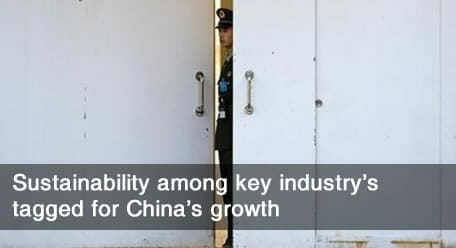
It’s not very salubrious but it’s secure. The four-star Jingxi Hotel in Beijing (pictured), which is owned by the People’s Liberation Army, hosted the annual plenum of the Communist Party’s Central Committee to draft the country’s next five-year plan.

The 12th five-year plan, nutted out by about 300 committee members, will be put to the National People’s Congress in March for ratification. The key themes in the latest plan are sustainability and reducing inequalities between provinces.

Analysts are predicting a lower GDP-growth target to be discussed between now and March, with details of the plan coinciding with a surprise 25bps point rise in the official interest rate last week – the first in China for three years.

A research note from HSBC Global Banking and Markets says more growth is likely to have to come from private consumption which has dropped from 50 per cent of total GDP to an estimated 36 per cent in the past 20 years.

“Expect further efforts to boost household incomes, primarily through higher minimum wages, as well as lower personal taxes,” the bank says.

Notwithstanding the stated concern for poorer provinces, the latest plan intends to speed the demographic shift to the cities, which will further boost consumption.

Sponsored Content

After the meeting, the Government confirmed a list of emerging strategic industries to be at the forefront of a “higher quality” of economic growth. They are: energy-saving and environmental protection firms, next generation IT, biotech, high-end manufacturing, new energy, new materials and composites, and clean-energy cars.

According to Shanghai Securities News, the group of industries currently make up only 3 per cent of GDP but are expected to contribute at least 15 per cent by 2020.


Leave a Comment

Sort content by

Japan’s pension giant hires, fires managers while buying up domestic bonds

The world’s largest institutional investor, the Â¥122,100 billion ($1.4 trillion) Government Pension Investment Fund of Japan (GPIF), has increased its allocation to domestic bonds and short-term assets at the expense of international bonds and domestic and international equities in the six months since the end of its fiscal year, a period which saw 12 managers

Around the world with 12 themes

The stockpicking view of Mark Tinker, global portfolio manager of Axa Framlington, has been greatly influenced by his career on the sell side of the investment management business. He spoke to Amanda White about a thematic approach to global equities and why, uniquely, two new themes have emerged in the wake of the financial crisis

Bahrain SWF may sell 25pc of Gulf Air

The $9 billion Mumtalakat, Bahrain’s sovereign wealth fund, is considering selling a stake in national carrier Gulf Air as it eyes more liquid investments. mrec4inarticleinline Sponsored Content scnative1 scnative2 scnative3

Mubadala builds stadium for Abu Dhabi

Mubadala Development, the $14 billion strategic investment arm of the Abu Dhabi, has invited contractors to submit design and construction plans for a 65,000-seat sports stadium in the United Arab Emirates (UAE) capital. mrec4inarticleinline Sponsored Content scnative1 scnative2 scnative3

CalPERS backs internal, external FI managers amid liquidity ‘conundrum’

After missing the strong rally in the US high yield debt market, the $201.3 billion CalPERS’ global fixed income program, which manages about a quarter of the fund’s assets, has extended its mandates with external managers and will continue actively managing its US debt portfolio internally. mrec4inarticleinline Sponsored Content scnative1 scnative2 scnative3

Florida benefits from equities overweights

The $110 billion Florida Retirement System Pension Plan (FRS PP) outperformed its policy benchmark by 10 basis points in the September quarter, thanks to overweight allocations to domestic and international equities. mrec4inarticleinline Sponsored Content scnative1 scnative2 scnative3

Previous



