Sustainability among key industry’s tagged for China’s growth

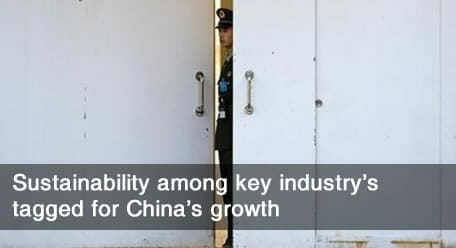
It’s not very salubrious but it’s secure. The four-star Jingxi Hotel in Beijing (pictured), which is owned by the People’s Liberation Army, hosted the annual plenum of the Communist Party’s Central Committee to draft the country’s next five-year plan.

The 12th five-year plan, nutted out by about 300 committee members, will be put to the National People’s Congress in March for ratification. The key themes in the latest plan are sustainability and reducing inequalities between provinces.

Analysts are predicting a lower GDP-growth target to be discussed between now and March, with details of the plan coinciding with a surprise 25bps point rise in the official interest rate last week – the first in China for three years.

A research note from HSBC Global Banking and Markets says more growth is likely to have to come from private consumption which has dropped from 50 per cent of total GDP to an estimated 36 per cent in the past 20 years.

“Expect further efforts to boost household incomes, primarily through higher minimum wages, as well as lower personal taxes,” the bank says.

Notwithstanding the stated concern for poorer provinces, the latest plan intends to speed the demographic shift to the cities, which will further boost consumption.

Sponsored Content

After the meeting, the Government confirmed a list of emerging strategic industries to be at the forefront of a “higher quality” of economic growth. They are: energy-saving and environmental protection firms, next generation IT, biotech, high-end manufacturing, new energy, new materials and composites, and clean-energy cars.

According to Shanghai Securities News, the group of industries currently make up only 3 per cent of GDP but are expected to contribute at least 15 per cent by 2020.


Leave a Comment

Sort content by

Asian equities no longer an asset class?

One of the ironies about the way big pension funds are rethinking their asset allocation strategies is that regional specialisation appears to be becoming less popular, even for the world’s fastest-growing region.mrec4inarticleinline Sponsored Content scnative1 scnative2 scnative3

CalPERS to finalise alternative asset classifications

CalPERS’s investment committee is expected to make a decision on its alternative asset classification at a November asset liability management workshop.mrec4inarticleinline Sponsored Content scnative1 scnative2 scnative3

Investors must lift ESG reporting standards: MSCI

As MSCI moves to expand its sustainability research capability to emerging markets, its global head of index and ESG research, Remy Briand, has urged investors to dramatically improve their reporting standards to make good on their ESG cause.mrec4inarticleinline Sponsored Content scnative1 scnative2 scnative3

The nemesis of cap-weighted indexing turn attention to bonds

First he convinced some of us that cap-weighted indexing doesn’t work, now Rob Arnott, the founder of Research Affiliates, is back with more bombshells – that the equity risk premium, as we came to know it, is gone and not hurrying back; and that emerging market debt is “objectively a better credit risk” than US

Ontario enters second phase of reform

Local pension plans have warmly greeted the second phase of pension reform in Ontario, Canada, through a bill which contains provisions such as restrictions on benefit improvements where amendments will compromise a plan’s funded position. mrec4inarticleinline Sponsored Content scnative1 scnative2 scnative3

The challenges of a low return environment

Institutional investors are again in a situation where virtually any combination of publicly traded investments will not meet their return goals, according to director of research at Wurts and Associates, Eric Petroff. So what should they do now?mrec4inarticleinline Sponsored Content scnative1 scnative2 scnative3

Previous



