Sustainability among key industry’s tagged for China’s growth

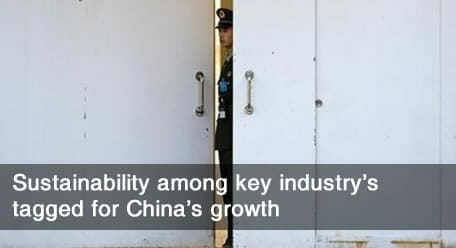
It’s not very salubrious but it’s secure. The four-star Jingxi Hotel in Beijing (pictured), which is owned by the People’s Liberation Army, hosted the annual plenum of the Communist Party’s Central Committee to draft the country’s next five-year plan.

The 12th five-year plan, nutted out by about 300 committee members, will be put to the National People’s Congress in March for ratification. The key themes in the latest plan are sustainability and reducing inequalities between provinces.

Analysts are predicting a lower GDP-growth target to be discussed between now and March, with details of the plan coinciding with a surprise 25bps point rise in the official interest rate last week – the first in China for three years.

A research note from HSBC Global Banking and Markets says more growth is likely to have to come from private consumption which has dropped from 50 per cent of total GDP to an estimated 36 per cent in the past 20 years.

“Expect further efforts to boost household incomes, primarily through higher minimum wages, as well as lower personal taxes,” the bank says.

Notwithstanding the stated concern for poorer provinces, the latest plan intends to speed the demographic shift to the cities, which will further boost consumption.

Sponsored Content

After the meeting, the Government confirmed a list of emerging strategic industries to be at the forefront of a “higher quality” of economic growth. They are: energy-saving and environmental protection firms, next generation IT, biotech, high-end manufacturing, new energy, new materials and composites, and clean-energy cars.

According to Shanghai Securities News, the group of industries currently make up only 3 per cent of GDP but are expected to contribute at least 15 per cent by 2020.


Leave a Comment

Sort content by

A 22-year love affair transforms KIC

Everyone asks Scott Kalb, the chief investment officer for the $37 billion Korean Investment Corporation, how he got the job. Scott, as his name suggests, is not Korean. Well, it’s a long story.mrec4inarticleinline Sponsored Content scnative1 scnative2 scnative3

GIC adopts dynamic asset allocation

The Government of Singapore Investment Corporation (GIC) has made changes to its investment policy introducing a ‘facility for medium-term strategy with regard to asset allocation’, as its allocation to developed market equities increase from 28 to 41 per cent in the past financial year.mrec4inarticleinline Sponsored Content scnative1 scnative2 scnative3

Five big issues for all pension funds

The academic world has not really been attracted to the pension fund world as a field of study. Most academic research, by a wide margin, usually goes into the workings of the capital markets rather than the workings of the pension fund participants in those markets.mrec4inarticleinline Sponsored Content scnative1 scnative2 scnative3

Hedging pays off for Future Fund

The Australian Future Fund’s policy of hedging its foreign currency exposures so that 80 per cent of the portfolio is held in Australian dollars has resulted in large inflows due to the AUD’s recent appreciation. mrec4inarticleinline Sponsored Content scnative1 scnative2 scnative3

Stock exchange merger would end Australia’s ‘inward focus’

Australia’s financial sector would be strengthened if the proposed merger between its national stock exchange and the Singapore Exchange gained political approval, the Australian Centre for Financial Studies (ACFS) has argued.mrec4inarticleinline Sponsored Content scnative1 scnative2 scnative3

Coming out for gay and lesbian themes

With the return to favour of top-down equities management and renewed focus by pension funds on their asset allocation and beta exposures, there has consequently been a resurgence in thematic investment styles and products.mrec4inarticleinline Sponsored Content scnative1 scnative2 scnative3

Previous



