Sustainability among key industry’s tagged for China’s growth

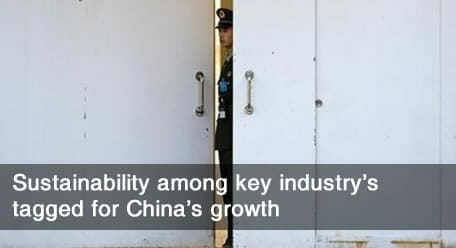
It’s not very salubrious but it’s secure. The four-star Jingxi Hotel in Beijing (pictured), which is owned by the People’s Liberation Army, hosted the annual plenum of the Communist Party’s Central Committee to draft the country’s next five-year plan.

The 12th five-year plan, nutted out by about 300 committee members, will be put to the National People’s Congress in March for ratification. The key themes in the latest plan are sustainability and reducing inequalities between provinces.

Analysts are predicting a lower GDP-growth target to be discussed between now and March, with details of the plan coinciding with a surprise 25bps point rise in the official interest rate last week – the first in China for three years.

A research note from HSBC Global Banking and Markets says more growth is likely to have to come from private consumption which has dropped from 50 per cent of total GDP to an estimated 36 per cent in the past 20 years.

“Expect further efforts to boost household incomes, primarily through higher minimum wages, as well as lower personal taxes,” the bank says.

Notwithstanding the stated concern for poorer provinces, the latest plan intends to speed the demographic shift to the cities, which will further boost consumption.

Sponsored Content

After the meeting, the Government confirmed a list of emerging strategic industries to be at the forefront of a “higher quality” of economic growth. They are: energy-saving and environmental protection firms, next generation IT, biotech, high-end manufacturing, new energy, new materials and composites, and clean-energy cars.

According to Shanghai Securities News, the group of industries currently make up only 3 per cent of GDP but are expected to contribute at least 15 per cent by 2020.


Leave a Comment

Sort content by

Specialised short positions challenge beta behaviour

Long/short funds with specialised short positions have greater beta convexity and present greater liquidity strain in rebalancing, according to new research by Morgan Stanley.mrec4inarticleinline Sponsored Content scnative1 scnative2 scnative3

Danger signs surround quantitative easing solution

If the unavailability of credit is not the source of the US economy’s problems then the quantitative easing solution put forward by the US Federal Reserve could be ineffective at best, and at worst full of danger, according to broker and quantitative research firm, H.C. Wainwright & Co Economics.mrec4inarticleinline Sponsored Content scnative1 scnative2 scnative3

Fear the Boom and Bust

With a festive tongue firmly in cheek, this video may provide a welcome smile at the end of a challenging year for many fiduciary investors. The global financial crisis triggered a revival in the popularity of interventionist Keynesian economics – but the free marketeers of Friedrich Hayek’s Austrian School won’t give ground easily. Here, Keynes

Agency risk at the fund level … and happy holidays!

If this is a time of year for reflection on a personal level, perhaps with some plans for self-improvement over the next year, whether it be more time with the family, get fit, etc, then it may also be a good time to consider the human element in the management of a fiduciary fund. mrec4inarticleinline

NEST broods on SRI choice

The UK’s National Employment Savings Trust (NEST) will offer members a socially responsible investment fund, one of the first investment decisions the trustee board has made as it finalises its investment strategy.mrec4inarticleinline Sponsored Content scnative1 scnative2 scnative3

Now this is a merger: NZ mulls mega-fund

The New Zealand government could create a single NZ$40 billion ($30 billion) fund under a proposal mooted in its inaugural ‘Investment Statement’ published this month. mrec4inarticleinline Sponsored Content scnative1 scnative2 scnative3

Previous



