Sustainability among key industry’s tagged for China’s growth

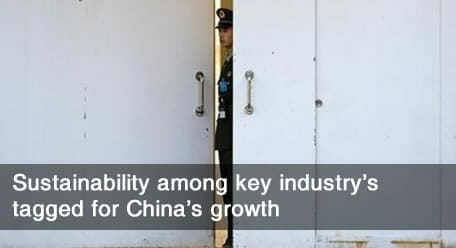
It’s not very salubrious but it’s secure. The four-star Jingxi Hotel in Beijing (pictured), which is owned by the People’s Liberation Army, hosted the annual plenum of the Communist Party’s Central Committee to draft the country’s next five-year plan.

The 12th five-year plan, nutted out by about 300 committee members, will be put to the National People’s Congress in March for ratification. The key themes in the latest plan are sustainability and reducing inequalities between provinces.

Analysts are predicting a lower GDP-growth target to be discussed between now and March, with details of the plan coinciding with a surprise 25bps point rise in the official interest rate last week – the first in China for three years.

A research note from HSBC Global Banking and Markets says more growth is likely to have to come from private consumption which has dropped from 50 per cent of total GDP to an estimated 36 per cent in the past 20 years.

“Expect further efforts to boost household incomes, primarily through higher minimum wages, as well as lower personal taxes,” the bank says.

Notwithstanding the stated concern for poorer provinces, the latest plan intends to speed the demographic shift to the cities, which will further boost consumption.

Sponsored Content

After the meeting, the Government confirmed a list of emerging strategic industries to be at the forefront of a “higher quality” of economic growth. They are: energy-saving and environmental protection firms, next generation IT, biotech, high-end manufacturing, new energy, new materials and composites, and clean-energy cars.

According to Shanghai Securities News, the group of industries currently make up only 3 per cent of GDP but are expected to contribute at least 15 per cent by 2020.


Leave a Comment

Sort content by

Tips for DC plan design

As more plan sponsors consider introducing defined contribution plans, Towers Watson encourages the deliberation of plan design, with the ideal scheme encouraging engagement, managing savings rates and investment elections as well as expenses and communication.mrec4inarticleinline Sponsored Content scnative1 scnative2 scnative3

Hong Kong still has it: CIC recognises Hong Kong’s international finance status with subsidiary

The China Investment Corporation has recognised Hong Kong’s international position by establishing a wholly-owned subsidiary, Hong Kong-CIC International (Hong Kong) Co., Limited. mrec4inarticleinline Sponsored Content scnative1 scnative2 scnative3

Credit overweight pushes Texas to top spot, performance pay reinstated

The 108 investment staff of the Teacher Retirement System of Texas (TRS) have had their performance incentive awards reinstated, and will receive $9.7 million between them, after a year which saw the fund outperform its benchmark by 240 basis points making it the best performing public pension fund in the US.mrec4inarticleinline Sponsored Content scnative1 scnative2

New decision making parameters for Alaska’s investments

The $38.5 billion Alaska Permanent Fund Corporation (APFC) has made further enhancements to its unique approach to investment decision making, clarifying procedures relating to risk guidelines in its investment policy. mrec4inarticleinline Sponsored Content scnative1 scnative2 scnative3

Emerging and frontier markets continue darling run

Global equity markets significantly underperformed emerging and frontier markets in 2010, evidenced by MSCI Indices end of  year data, with some emerging markets returning as much as 50 per cent and some frontier markest returning 70 per cent for the year.mrec4inarticleinline Sponsored Content scnative1 scnative2 scnative3

Japan fund reduces domestic bond weighting

The world’s largest investor, the ¥117,643 billion ($1.43 trillion) Government Pension Investment Fund of Japan (GPIF) has reduced its weighting to domestic bonds by more than 1 per cent, moving the money into short term assets.mrec4inarticleinline Sponsored Content scnative1 scnative2 scnative3

Previous



