Sustainability among key industry’s tagged for China’s growth

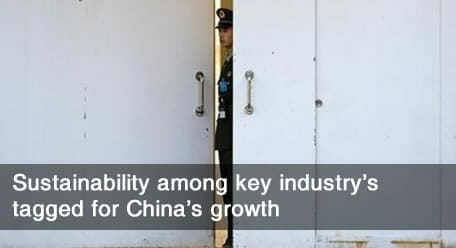
It’s not very salubrious but it’s secure. The four-star Jingxi Hotel in Beijing (pictured), which is owned by the People’s Liberation Army, hosted the annual plenum of the Communist Party’s Central Committee to draft the country’s next five-year plan.

The 12th five-year plan, nutted out by about 300 committee members, will be put to the National People’s Congress in March for ratification. The key themes in the latest plan are sustainability and reducing inequalities between provinces.

Analysts are predicting a lower GDP-growth target to be discussed between now and March, with details of the plan coinciding with a surprise 25bps point rise in the official interest rate last week – the first in China for three years.

A research note from HSBC Global Banking and Markets says more growth is likely to have to come from private consumption which has dropped from 50 per cent of total GDP to an estimated 36 per cent in the past 20 years.

“Expect further efforts to boost household incomes, primarily through higher minimum wages, as well as lower personal taxes,” the bank says.

Notwithstanding the stated concern for poorer provinces, the latest plan intends to speed the demographic shift to the cities, which will further boost consumption.

Sponsored Content

After the meeting, the Government confirmed a list of emerging strategic industries to be at the forefront of a “higher quality” of economic growth. They are: energy-saving and environmental protection firms, next generation IT, biotech, high-end manufacturing, new energy, new materials and composites, and clean-energy cars.

According to Shanghai Securities News, the group of industries currently make up only 3 per cent of GDP but are expected to contribute at least 15 per cent by 2020.


Leave a Comment

Sort content by

Cancun does not solve key issues: Sorensen

The international climate process survived at COP16, but the  UN Cancun Agreement does not solve key issues such as legally binding emission targets and carbon pricing, according to chair of the Institutional Investors Group on Climate Change, Ole Beier Sorensen.mrec4inarticleinline Sponsored Content scnative1 scnative2 scnative3

Resentment builds over AIFM Directive

Two-thirds of Europe’s alternative assets fund managers oppose the AIFM Directive, with the EU passport and disclosure requirements topping the list of concerns.mrec4inarticleinline Sponsored Content scnative1 scnative2 scnative3

Clarifying the concept of risk management

Scientific director at EDHEC-Risk Institute Lionel Martellini, reminds investors of the difference between risk management and risk measurement, highlighting there are some limits to risk diversification.mrec4inarticleinline Sponsored Content scnative1 scnative2 scnative3

The big issues for pension funds in 2011

Mercer Investment Consulting has published its predicted top trends for pension funds in 2011. With continued economic uncertainty around the world, Mercer expects further tight credit markets, a re-evaluation of the equity risk premium, concern about currency risk, and further allocations to emerging markets.mrec4inarticleinline Sponsored Content scnative1 scnative2 scnative3

Cambridge to lift Asian presence with Beijing office

Cambridge Associates, the US-based asset consultancy, is to open a Beijing office – its third office in the Asia Pacific region – and is sending a private equity specialist there from London.mrec4inarticleinline Sponsored Content scnative1 scnative2 scnative3

As themes take hold: the trick is not to pay too much

Thematic investment strategies are easy enough to understand but not so easy to implement. The curse of the thematic manager is the curse of overpaying.mrec4inarticleinline Sponsored Content scnative1 scnative2 scnative3

Previous



