Sustainability among key industry’s tagged for China’s growth

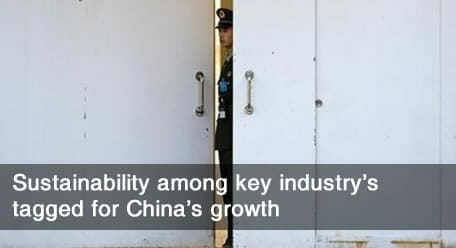
It’s not very salubrious but it’s secure. The four-star Jingxi Hotel in Beijing (pictured), which is owned by the People’s Liberation Army, hosted the annual plenum of the Communist Party’s Central Committee to draft the country’s next five-year plan.

The 12th five-year plan, nutted out by about 300 committee members, will be put to the National People’s Congress in March for ratification. The key themes in the latest plan are sustainability and reducing inequalities between provinces.

Analysts are predicting a lower GDP-growth target to be discussed between now and March, with details of the plan coinciding with a surprise 25bps point rise in the official interest rate last week – the first in China for three years.

A research note from HSBC Global Banking and Markets says more growth is likely to have to come from private consumption which has dropped from 50 per cent of total GDP to an estimated 36 per cent in the past 20 years.

“Expect further efforts to boost household incomes, primarily through higher minimum wages, as well as lower personal taxes,” the bank says.

Notwithstanding the stated concern for poorer provinces, the latest plan intends to speed the demographic shift to the cities, which will further boost consumption.

Sponsored Content

After the meeting, the Government confirmed a list of emerging strategic industries to be at the forefront of a “higher quality” of economic growth. They are: energy-saving and environmental protection firms, next generation IT, biotech, high-end manufacturing, new energy, new materials and composites, and clean-energy cars.

According to Shanghai Securities News, the group of industries currently make up only 3 per cent of GDP but are expected to contribute at least 15 per cent by 2020.


Leave a Comment

Sort content by

Giant Norwegian SWF sizes up active management

An external review is being carried out on behalf of one of the world’s largest sovereign wealth funds, the NOK2.47 trillion ($405 billion) Norwegian Government Pension Fund – Global, to determine whether active management should continue, with opinions sought from international experts in the UK and US. mrec4inarticleinline Sponsored Content scnative1 scnative2 scnative3

CalsTRS initiates active/passive review

CalSTRS staff will present to the investment committee the first of three reports on the optimal balance between active versus passive in its global equity and fixed income portfolios, a process that will culminate in recommendations for any structural changes in February next year. mrec4inarticleinline Sponsored Content scnative1 scnative2 scnative3

New York examines investment transactions for non-compliance

The Mercer Sentinel Group has completed a review of the New York Common Retirement Fund’s investment transactions approved by the State Comptroller over a two year period, concluding only one out of 112 transactions did not comply with written policies and procedures. mrec4inarticleinline Sponsored Content scnative1 scnative2 scnative3

Eastern Promise: Why China’s only half the story

Kristen Paech talks to Michael Hanson-Lawson, CEO of East Capital Asia, about the new kid on the emerging markets block – Eastern Europe – and why pension funds should consider an allocation to the region, which has tripled nominal GDP over the past five years. mrec4inarticleinline Sponsored Content scnative1 scnative2 scnative3

Fiduciaries and investors ‘divided’ over inflation

There is a fundamental disconnect emerging between fiduciaries, and their underlying ‘real’ investors, on whether deflation or inflation is the prevailing investment theme, according to political and policy consultant Pippa Malmgrem, who spoke with Michael Bailey about why the prevailing model of strategic asset allocation has to change. mrec4inarticleinline Sponsored Content scnative1 scnative2 scnative3

AP2, AP4 hail active management

Swedish buffer funds AP2 and AP4, have hailed active management as a major driver of profits in the first half of the year, at a time when the Government has challenged the value of active management and launched a review of the funds’ costs management. mrec4inarticleinline Sponsored Content scnative1 scnative2 scnative3

Previous



