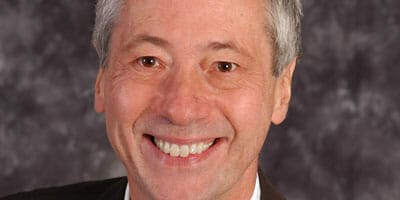
State Street’s Probyn into 2013

The current equity rally is not predicated on a shift in economic performance, according to chief economist at State Street, Chris Probyn, who says it would be reasonable to say the market may “pause for thought”.

Probyn says the move from fixed income to equities has been fostered by some of the “economic areas for concern” being eliminated.

These include the avoidance of a hard landing in China, and a disorderly breakup of the euro, proactive policy responses in Japan and the avoidance of the US fiscal cliff.

“These have all been ticked off,” he says. “But still growth is not great. The fourth quarter earnings reports have been good, with the notable exception of Apple, so there is some fundamental support for equities. But there is no fundamental upshift, so the size and speed of the rally is a little surprising.”

Probyn’s outlook for 2013 is for 0.25 per cent global growth, driven by a 0.5 per cent growth in emerging markets.

His economic outlook for developed markets is zero growth, which he partly attributes to fiscal policy decisions.

Sponsored Content

“We have reinvented economics, when the economy is weak we stop government spending, it is a failure of policy and we are repeating the mistakes of the 1920s,” he says.

Probyn also attributes the equity rally to a certain psychological behaviour.

“People have worry fatigue, they are tired of worrying about the same things,” he says.

State Street doesn’t have a big economics department, three people in fact. One emerging markets specialist plus two who look at the G8, defined as the G7 plus Australia (because of State Street’s presence in that country).

Probyn believes that in order to understand certain asset classes there needs to be an understanding of the global economic story, such as the relationship between resources and China.

He admits that for most economists it is difficult to predict exact growth numbers, but it’s more important to get “the overall story right”. Last year that overall story was further growth moderation, and that is the outlook for 2013 as well.


 

Leave a Comment

Sort content by

Future Fund takes big step for corporate governance

The A$58 billion ($46 billion) Australian Future Fund has made a number of corporate governance-related decisions, including bringing its proxy voting for domestic shares in-house and the creation of an environmental, social and governance risk management function. mrec4inarticleinline Sponsored Content scnative1 scnative2 scnative3

Carbon risks reduced by good stock selection

Asset managers can dramatically reduce the carbon footprints of their funds through stock selection without the need to alter sector weightings or their overall investment strategy, according to a report by Mercer and Trucost for the WWF, that also found asset owners could encourage the active management of carbon risk in portfolios. mrec4inarticleinline Sponsored Content

Institutional influence shaping hedge fund investments

Janine Baldridge, Russell Investments’ global head of consulting and advisory services, talks to Kristen Paech about the new terms pension funds are demanding from their hedge fund managers – including lower fees and more control – and how managers are responding. mrec4inarticleinline Sponsored Content scnative1 scnative2 scnative3

$38b UN fund to review ALM

The investments committee and committee of actuaries of the $38 billion UN Joint Staff Pension Board will recommend the introduction of new asset classes, including emerging markets equity and debt, real return assets and private equity in a presentation to the board in July. mrec4inarticleinline Sponsored Content scnative1 scnative2 scnative3

CIC to invest 6% in hedge funds by 2010

The $200 billion China Investment Corporation (CIC) will have between $4 and $6 billion invested in hedge funds by the end of this year, and will develop in-house expertise including long/short under Felix Chee, special adviser to the CIO, as part of a wider recruitment drive which includes more than 30 new positions. mrec4inarticleinline Sponsored

Timor’s SWF awards first external mandate, begins global equities search

The $4.7 billion Petroleum Fund of Timor-Leste has diversified its portfolio away from US Treasuries by appointing, for the first time, an external manager to invest $1 billion in high-grade, diversified fixed income, while undertaking a search for global equity managers. mrec4inarticleinline Sponsored Content scnative1 scnative2 scnative3

Previous



