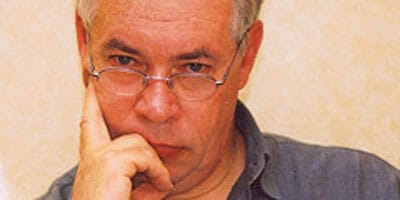
Kay calls for philosophical shift

In an interview with conexust1f.flywheelstaging.com, John Kay, economist and author of the UK government-commissioned enquiry into long termism and the UK equity markets, has said it is “fanciful to imagine large number of trustees will have the skills and knowledge to have long-term relationships with corporates”.

Kay says the key players in the UK equity chain are funds managers, and while 20 years ago the role of pension and insurance companies would have been emphasised, that is not so today.


Embrace the complexity of ownership


In Kay’s review, the emphasis was on funds managers, who he says have a critical role in the buy-and-sell decisions of shares as well as voting.

He says semantics around the word “owner” are not particularly helpful and get in the way of the discussion.

Sponsored Content

“There are different characteristics of ownership,” he says, adding that funds managers need to see themselves more as owners in order to alter their behaviour.

The recent so-called Shareholder Spring, when many institutional investors and funds managers voted down executive-pay issues, was a step in the right direction, according to Kay.

However, he says, in the long run he would like to see more engagement.

“Corporate governance has become about stopping people doing bad things. The Shareholder Spring was prompted by the excesses of executive pay, but I’d like to see more focus on things like concentrated portfolios that are differentiated from each other.

“There is a high degree of closet indexation and pre-occupation with tracking error. I’d like to see a a different structure in funds management.”


The culture of singular excess

The number of intermediaries and the cost of intermediation in the UK market is excessive, he says.

One of the findings he emphasised was a move to reduce the role of transactions and trading, and move to a relationship-based culture.

“This is a philosophical shift that will take place over a long time. But I’d like institutions to feel more comfortable giving long-term mandates, for example.”

Kay believes one of the more important recommendations from his review is to form an institutional investors’ forum in the UK to facilitate collective action.

“There needs to be an emphasis on fiduciary duty to encourage asset managers to change their actions. This could be through giving asset owners the ability to give long-term mandates that are more absolute-return focused.”

The next step in the reform process is for the government to respond to the review. This is expected to happen in November.


 

One response to “Kay calls for philosophical shift”

  1. Tim MacDonald

    Mr. Kay is right that Institutional trustees cannot be expected to manage relationships with the enterprises their Institutions are invested in. These Institutions are trusts chartered to provide for the present and future financial security of their beneficiaries in the prescribed ways. The trustees need to be focused on their charters of trust.

    So, we do need a large class of skilled investment professionals who can present choices and make selections on behalf of chartered trusts, just as we need lawyers, accountants, auditors and other knowledgable experts to apply their specialized skills for the benefit of these Institutions within their respective domains.

    Mr Kay’s idea that we impose the duties of a trustee on those professionals seems to me problematic. Like all professionals, we must hold these actors to high standards of competency and integrity when applying the knowledge and skills of their profession for the benefit of their clients. But they are professional service providers, not chartered trustees.

    There is more promise in the move to reduce trading activity using money obtained from institutions of chartered trust.

    All trading is speculative, and speculation has from the very beginning been seen as inappropriate for institutions of chartered trust. We have been experimenting for some decades now with Modern Portfolio Theory as a pattern for making speculation on share prices — and the prices of other financial assets — appropriate for Institutions. The results of this experiment are less-than-expected.

    We need to discover and develop new investment choices that can give Institutions the equity-like returns they need to realize their charters of trust, with debt-like protections of principal in perpetuity, evolving their portfolios as the economy evolves, through change and adaptation to change that is the real story of human history, and the true engine of our prosperity.

    And we need investment professionals skilled and experienced in using those architectures. Some professionals will need to specialize in applying these architectures to construct new investment choices that are purpose-built to meet the multiple needs of a chartered trust, including: principal protection; programmed performance; threshold returns; constancy; transparency; alignment of interest; sustainability; and social responsibility. Others will need to specialize in selecting from among the available choices.

    You cannot be both judge and advocate. These roles have to be kept separate.

    This is problematic when the blind pool construct popular for selecting institutional investments in Public Equities gets ported over to what are called today “alternative asset classes”. Too often, these pool operators become both judge and advocate of the investment opportunities they themselves originate. That is not be good. Witness, the debacle with the Spanish toll roads.

    There are other complications associated with the construct of the blind pool that need to be addressed, but Mr. Kay is right. None of the new architectures we choose to will eliminate, or even reduce, the need for investment professionals.

    The world that we live in has changed. We need to adapt.

    These are exciting times!

Leave a Comment

Sort content by

US state funds all dire despite allocations: Wilshire

There is no connection between asset allocation and the funding level of US state retirement systems, according to Wilshire’s 16th annual survey of the funds, which reported a dire funding situation for 99 per cent of plans.mrec4inarticleinline Sponsored Content scnative1 scnative2 scnative3

Chinese landing could be hard … or soft

One of the more interesting numbers behind the last Chinese GDP growth headline figure is the proportion of that growth which is due to domestic demand. Fiduciary investors have been getting set for the domestic demand theme in China for some time, of course. Well, it’s here in a big way.mrec4inarticleinline Sponsored Content scnative1 scnative2

Rotman school launches governance program…

Enhancing board effectiveness and governance of pension funds and other “long-horizon investment institutions” is the focus of a new program at the University of Toronto’s Rotman School of Management.mrec4inarticleinline Sponsored Content scnative1 scnative2 scnative3

… while CFA Institute publishes trustee guide book

The CFA Institute has published “A Primer for Investment Trustees”, a free publication to educate trustees on governance, investment policy, investment objectives and risk tolerance using simple laymen’s terms.mrec4inarticleinline Sponsored Content scnative1 scnative2 scnative3

Private equity moves to centre-stage

Tomas Hricko, product manager at global private equity fund-of-funds manager, Adveq, tells Amanda White why private equity should be the core of an institutional investor’s portfolio, not a satellite.mrec4inarticleinline Sponsored Content scnative1 scnative2 scnative3

Gaddafi SWF investees revolt and freeze funds

As tensions in Libya increase, a leading authority on sovereign wealth funds has urged investee entities of the Libyan Investment Authority (LIA) to freeze its holdings, until such time as they are needed to rebuild an independent Libya.mrec4inarticleinline Sponsored Content scnative1 scnative2 scnative3

Previous




