
CalPERS’ sustainability initiative drives investment beliefs

Launched this week, CalPERS’ Sustainable Investment Research Initiative (SIRI) will drive the development the $250-billion fund’s first set of investment beliefs. While difficult to believe a fund of its size, reach and history could invest without a set of investment beliefs, it is encouraging to see that sustainability will be a core part of that development. The SIRI aims to drive innovative thought leadership to advance CalPERS’ understanding of sustainability factors and the impact they have on financial performance.

At CalPERS sustainability has expanded beyond the notion of the environment to stabilisation in capital markets, and in the past couple of years it has undergone a comprehensive review of sustainability culminating in the board adopting a total-fund approach last year.

Three kinds of capital

Within three forms of economic capital – financial, human and physical – the fund has identified the strategic themes of alignment of interest, human capital and climate change that set the framework for the fund’s environmental, social and governance integration.

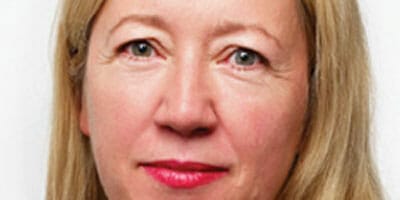
“We came up with the framework for CalPERS in the financial capital, physical capital and human capital. The question is what does that mean for strategy for allocating capital? Through this enquiry, and looking for thinking, research and debate, we will set out investment beliefs in July,” Anne Simpson, senior portfolio manager and director of global governance at CalPERS, says.


“When I arrived this was defined as corporate governance and was in global equities. That has moved to a portfolio-wide strategy integrating ESG into sustainability and linking it into financials. That has not been done before, at least not in the US. Our job is to be breaking ground. This is a significant moment.”

The fund is also calling for papers to contribute to a debate on ESG and long-term value creation and capital market stability. It will work with the University of California Davis Graduate School of Management to assess the papers, which will co-host a Sustainability and Finance Symposium on June 7 with Columbia Law School’s Millstein Center for Global Markets and Corporate Ownership. Following the symposium, the board will review the findings and finalise its investment beliefs for a July deadline.

“There is a huge amount of anecdotal ad-hoc conclusions and we need definitions of what is relevant. Once we have decided what the relevant factors are, we want to know how to allocate capital. Investment beliefs need to be something on which you are willing to act.”

Sponsored Content

Governance transformed

In the three years that Simpson has been at CalPERS, the governance program has been transformed. It has stopped calling the program corporate governance, and is looking at the governance agenda in a broader way, reflected by its new name, global governance.

“When I arrived this was defined as corporate governance and was in global equities. That has moved to a portfolio-wide strategy integrating ESG into sustainability and linking it into financials. That has not been done before, at least not in the US. Our job is to be breaking ground. This is a significant moment,” she says.

Simpson has previously said that investors need to put the “F into ESG”, referring to the integration of financial and ESG analysis, a point that many institutional investors globally need to overcome. They want to integrate ESG factors, and see the value of a sustainability lens, they just don’t know how to do it.

Simpson says that for CalPERS, sustainability is simply defined as the “ability to continue”.

“If you start to take on board the view that you’re a century of liabilities, then you look at risk and return through a different lens,” she says. “If you believe risk is always rewarded, then you will behave in a certain way. We have never had investment beliefs.”

While CalPERS has been vocal and influential with regard to legislative change such as the Volcker Rule and derivatives reform, Simpson says that has not been done within a wider framework.

In addition, CalPERS has started its triennial asset-liability modelling, a process that will take all year. “We pay pensions in cash but invest over a very long term; it’s an interesting debate about assets and liabilities,” Simpson says.

The seven tenets of investment 
In May last year the risk management group at CalPERS presented a list of seven recommended investment beliefs to the investment committee of the board. They were:

  1. Strategic asset allocation is the dominant determinant of risk and return
  2. A return premium is required to take on risk
  3. Premium is required for illiquidity
  4. Long-term investment horizon is an advantage
  5. Inefficiencies in the market create investment opportunities
  6. Costs matter
  7. Risk is multi-faceted and not fully quantifiable.


For more information on the Sustainability and Finance Symposium and to submit a paper, click here.

For an academic view on the importance of investment beliefs and how, in particular, beliefs relating to risk can impact performance, click here.

Leave a Comment

Sort content by

Slavery victims look to financial world

Speaking at the PRI in Person in Paris in a panel to highlight the role of finance in addressing social issues, Ghanaian James Kofi Annan, sold into slavery at the age of six, told his story.

Pizza and diversity: How funds move dial

Empowering long-term influential asset owners to invest responsibly is the key to hastening take-up in responsible investment. Delegates heard how some leading asset owners are doing this through their diversity and ESG practices.

Responsible FI promotes good markets

Responsible investment has assumed an increasingly central role in fixed income portfolios and in the experience of Jørgen Krog Sæbø CIO, fixed income, and Lars Tronsgaard deputy managing director at Folketrygdfondet, which manages the Government Pension Fund Norway, one part of Norway’s Government Pension Fund, adopting a responsible investment focus builds more integrated understanding and deeper insight into companies.

At a glance: FIS Cambridge day three

An overwhelming number of delegates at the Fiduciary Investors Symposium said the funds management industry was not doing well in innovationMartin Gilbert, who started Aberdeen Standard Investments in 1983 and is now chair, said industry participants needed to innovate and disrupt themselves.

Climate change risk to spur stress test

Mercer has quantified a ‘low-carbon transition’ premium in the sequel to its seminal climate change report, showing that a 2⁰C scenario equates to 11 basis points per annum to 2030 in a typical growth portfolio.

ATP’s approach to ESG

The giant Danish fund, ATP, takes a comprehensive approach to ESG including voting and engagement, as well as a large investment in green bonds. Ole Buhl is vice president and head of ESG at ATP explains.

Previous




