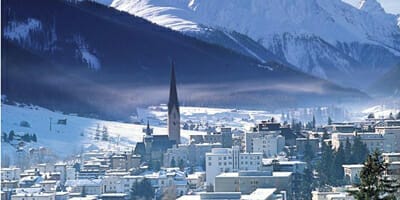
A sustainable financial system on the agenda at Davos

The United Nations Environment Programme’s Inquiry into the Design of a Sustainable Financial System will present its interim report in Davos this week. The report has been initiated to advance policy options to improve the financial system’s effectiveness in mobilising capital towards a green and inclusive economy, and the interim report profiles innovations in five areas including institutional investment.

Here it explores policy changes in three broad areas: capital allocation, investor governance and market incentives in order to align the assets of institutional investors with sustainable development.

The report’s authors are positive about progress, saying that 2015 is poised to be the year of sustainable development, with growing focus on innovative policies to mobilise the trillions of dollars needed for long-term inclusive wealth creation.

The report identifies a number of high potential areas which could contribute to this shift including three major asset pools – banking, bond markets and institutional investors – as well as two emerging policy tools – monetary policy and ‘environmental stress tests’.

The UNEP Inquiry into Design Options for a Sustainable Financial System, now entering the second half of its two-year work program, was created to explore emerging changes and reforms to the financial system that would improve its alignment with sustainable development. Its investigations to date have revealed many innovations in financial and monetary policy, regulation and financial market standards.

The Inquiry is now half way through its work program and will complete its research and engagement at the end of 2015.

Sponsored Content


To access the report, Pathways to Scale, click below

 Inquiry – Pathways to Scale

Leave a Comment

Sort content by

Defining fiduciary duty

What constitutes fiduciary duty is an ongoing discussion in the pension sector. The UK Law Commission has weighed in on the debate with its own interpretation.     Pension funds mulling the definition and obligations of their fiduciary duty can now refer to a consultation paper from the Law Commission, Fiduciary Duties of Investment Intermediaries.

Investors call for conflict of interest code

As an outsourced provider, fund managers make a series of promises to investors. Anything that tempts the promise to be broken is a conflict of interest, according to chief executive of Carne Group, John Donohoe, whose organisation has conducted a survey of institutional investors’ attitudes to conflicts of interest. In a survey of global allocators

Stock exchanges ‘need nudge on sustainability disclosure’

 A study ranking the world’s stock exchanges against disclosure on sustainability themes ranks the BME Spanish Exchange at the top. But the study’s author managing director of CK Capital, Doug Morrow, says stock exchanges need a nudge by regulators to enforce tougher disclosure standards.   The world’s stock exchanges “need a bit of a nudge”

Dry up: how investors assess water risks

The world is running short of water, but what does that mean for investors? Asset owners in the Netherlands and Norway assess and manage the water-related risks in their portfolios, including the measurement of portfolio companies’ water dependence and water security. The drought hitting South Africa’s North West Province sounds another warning shot around the

Serving itself: why the financial services industry needs reform

What would the financial services industry look like if it was structured to service the non-financial services sector, rather than itself? Economist John Kay, author of the Kay Review into short termism in UK equity markets, aims to find out.   In an ideal world there would be one, maybe two, intermediaries between the saver

Lepelmeier: interest rates ruin German strategy

German institutional investors face an urgent need to reconsider their bond-heavy investment strategies, argues Dirk Lepelmeier, a former investment head at one of the country’s largest pension funds. Herr Prof Dr Dirk Lepelmeier, to use his appropriate German titles, would rather be addressed as Dirk. That might be of no surprise to many, but it

Previous




