

Sweden’s investment community is proud that their organisation, Swedish Investors for Sustainable Development, SISD, has been part of the inspiration behind the UN’s Global Investors for Sustainable Development, GISD.
With approximately $650 billion in assets under management, SISD has developed ideas around how investors can help achieve the UN’s Sustainable Development Goals, SDGs, since June 2016.
SISD consists of 18 pension funds, insurance groups and asset managers and was convened by the Swedish International Development Cooperation Agency, SIDA.
Some of our members compete against each other on daily basis, but still see the advantage of cooperation when it comes to the large sustainability challenges that are ahead of us, as well as the new possibilities that the Agenda 2030 offers.
The work within the Swedish alliance has resulted in new learnings, new investments, corporate governance actions and reporting in line with the SDGs.
SISD members have gathered around a “joint commitment” to the SDGs with a focus on corporate governance. This commitment and common ground that we all stand on has really been our “baseline” to come back to over the last three years.
Indeed, our joint commitment has become so important that we think it is a crucial success factor. The SISD partnership has resulted in new investment mandates related to the SDGs, new investments in green bonds and new products being launched related to the SDGs.
In 2018 four of our members invested $250 in a World bank bond raising awareness for SDG 11 (Sustainable Cities.)
Elsewhere, the group convened a study looking at investment in the water sector in Swedish communes, as well as studying water policies within the food, beverage, garment and mining sectors.
The target here is to push for better water management, focusing on SDG 6 (Clean Water and Sanitation.)
AP7 has also been active in climate issues, working to influence companies that are not aligned with the Paris Agreement.
For example, with others we are targeting corporate climate lobbying that is counteracting the Paris Agenda.
One working group within SISD is also engaging in best practice regarding Decent Work (SDG 8).
GISD Now it is time for the global investor community to take on more responsibility for the sustainable development of society, and become a clear voice in public discourse on the challenge humanity is facing.
“We face widening inequality, increased devastation from conflicts and disasters and a rapidly warming Earth. These leaders have seized our sense of urgency, recognizing that our pace must be at a run, not a crawl,” stated UN Secretary-General António Guterres on October 16 when he announced the launch of the GISD, informed by our initiatives in Sweden.
GISD consists of 30 influential financial companies who will work together over the next two years in a bid to free up trillions of dollars from the private sector to finance the SDGs.
There is great potential to make substantial progress. Figures show that only 25 per cent of global assets under management have ESG-strategies related to them. GISD’s aspiration is to catalyse real, impactful change through investments, including a focus on passive mandates where there is real potential to include more sustainable strategies.
The establishment of the GISD Alliance acknowledges the scale of the challenges we face collectively, and the role that the finance sector must play in meeting these challenges.
The development needs are estimated at trillions of dollars per year, and even if funding from all public sources is maximized, there will still be a significant shortfall, making financing from the private sector imperative.
The UN’s research suggests that there is no shortage of money from the private sector to be invested in sustainable development.
However, a combination of factors, including the policy environment, incentive structures and institutional conditions, tend to discourage the kind of long-term commitment that is needed.
Investors are important for financing the SDG-agenda. They can also lead on promoting corporate governance in companies where they are large owners.
Furthermore, Agenda 2030 offers investment opportunities with both good financial and impactful returns. Properly applied, acting and investing in line with the SDGs can be a win-win-win. As we have experienced with our own Swedish alliance, SISD.
Corporate governance is also an important tool that should be highlighted within the GISD.
The corporate governance dimension of Agenda 2030 is not yet fully developed and something we will push for within GISD, via working papers and working groups.
For active owners it is not only a question of new investments, but an opportunity to influence companies to become more SDG-aligned and to support the Paris Agreement.
Investors can act now and begin investing in line with the SDGs. We know most of the participants in the GISD are already using the SDGs.
With a group of actors like the GISD we can take the Agenda to a new level, working with policies, incentives and regulations, since we are committing to cooperate across borders, across financial sectors and with competitors. I think we all need to lean-in to make the GISD work and challenge ourselves and others to come up with new solutions.
We have a great opportunity to make a difference here, for the planet and future generations. SISD CEOs are very engaged and have a lot of enthusiasm for this.
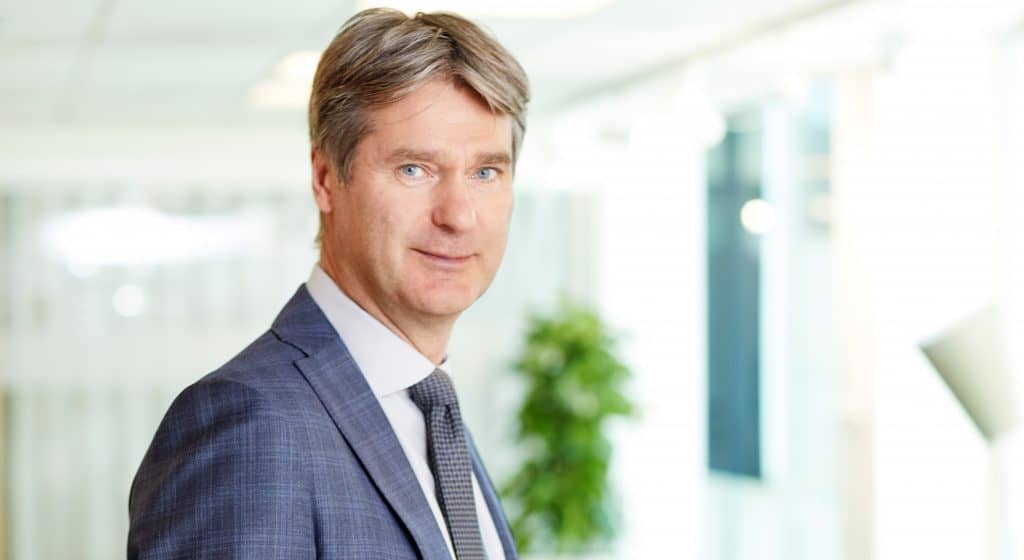
Richard Gröttheim is chief executive of the AP7 Swedish National Pension Fund.








Leave a Comment
You must be logged in to post a comment.
Login