
Sustainability to create
new drivers of return

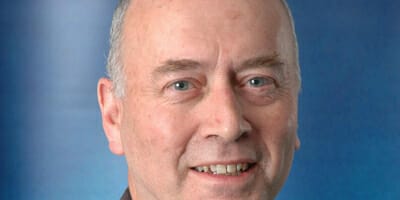
Sustainability is constructing a portfolio today on the earnings of the future, according to global head of investment content for Towers Watson, Roger Urwin. Not all performance is born equal, he says, and sustainability is performance with purpose. A cap-weighted portfolio is made up of an earnings stream based on today’s conditions, Urwin explains, with any externality unpaid for. He believes ESG is one of those unpaid-for externalities.

“If you played through a decade, then new operating conditions apply, such as carbon pricing, and those externalities will be internalised. Environmental, social and corporate governance is not priced in yet, but it will be,” he says. “This creates the potential to do sustainability alongside fiduciary duty, as you are doing it for finance reasons: buying on tomorrow’s earnings today. People are suspicious of the argument.”

Urwin believes in “sustainability beta” because he believes sustainability is a return driver.

“Take a portfolio long good ESG and short bad ESG over the long term, it will inherit more fair conditions but also a better pricing structure for those investors a decade way.”

The abnormal pricing argument supports smart beta, and anything outside cap-weighted has the potential to perform better than the market. That includes examples such as emerging wealth and sustainability.

Missing the change of generations

Urwin says institutional investors have lost sight of one of their purposes, which is the intergenerational transformation of wealth and risk, and are focused too much on capital formation.

Sponsored Content

“I’d like to have an industry that is stronger on scores of those dimensions,” he says. “Asset owners are there to pursue their true purpose. The last decade has been all about the financial capitalists, the next decade is about the fiduciary capitalists.”

Urwin doesn’t have a title on his business card. In function he is the global head of investment content at Towers Watson and sits on the Thinking Ahead Group. He’s also an advisory director at MSCI and a board member of the CFA Institute.

He is a mathematician and actuary, graduating from Oxford in 1977 with two degrees: a Master of Science majoring in Applied Statistics and a Master of Arts in Mathematics.

The softer side

But these days he’s more concerned with the “softer” side of institutional investment, looking at behaviour and decision-making, governance and transformational change, rather than a quantitative orientation.

“Finance in many respects came out of a physics-envy model, but behaviour plays a big part,” he says. “These days I’m more interested in the soft stuff, behaviour and decision making, and the effectiveness of asset owners.”

Urwin thinks that asset owners have fallen behind other parts of the financial sector, due in part to the fact they are not driven by the “creative destruction” of competition.

Urwin leads Towers Watson’s research and thought leadership on sustainability, and last year the consultant released its seminal work, Telos, which came to some conclusions on how to invest sustainably.

“Resource scarcity, demography, economic growth and climate change all add up to think about investments in a decade, not a year, but the industry is built on the short term,” he says.

“The sustainability theme has a performance edge so long as you have the resilience to deal with the challenges that can exist of putting you out of line with others.”

There are certain behavioural challenges this presents, and Urwin says that most trustees exercise predictable behaviour when it comes to their fiduciary duty: if they don’t have proof of something then they won’t do it.

“The record of innovation is held back by that,” he says. “Fiduciary is a scary term to many. But it is a powerful term for representing the greater good and we see it as more expansive than the financial return of your direct beneficiaries. There are externalities in any portfolio and you can claim responsibility for that.”

Decency in ownership

To some extent Urwin says personal values are at the heart of this shift, and the “decency that we are owners and have to think about the responsibilities that come with that”.

“The world is so complex, and costs will be shifted on to others, for example carbon/climate risk is not paid for. We need a situation where managers and owners start to have responsibility.”

One of the practical ways to do that is to set long-term mandates, something Towers Watson championed with actual client mandates almost 10 years ago.

“Unconstrained long-term, long-only are the preferred vehicles for Towers Watson,” he says, adding the bulk of its mandates are moving that way. “Mandates that stretch out in time, and have long-term optimisation.”

Towers Watson “believes” in active management, and the move to smart beta is complimentary with that, he says. “Cap-weighted is beatable. Price takes you to a misallocation of capital, you put a lot of money to work on the most expensive stuff.”

In January, presenting at a CFA India conference, Urwin said alpha and beta can be thought of as a continuum differentiated by capacity and skills: there will be reduced expectations for “bulk beta” and pressure on other return sources.

To this end smart beta makes sense, and there is a duality between something that has risk in it and can be turned around as a return driver.

Leave a Comment

La Caisse’s oil exit pays off as renewables portfolio pulls ahead of fossil fuels

La Caisse’s oil exit pays off as renewables portfolio pulls ahead of fossil fuels

Divesting from the oil sector has been a boon for La Caisse’s performance, as the Canadian pension giant says its energy investments have earned billions in value-add compared to the benchmark since the inception of its climate strategy. Head of sustainability Bertrand Millot unpacks the fund’s approach in an interview with Top1000funds.com.

Sort content by

Can we ‘circle’ our way out of this mess?

A circular economy keeps materials circulating in their highest value use. Co-founder of the Thinking Ahead Institute, Tim Hodgson, recently hosted a working group who debated whether it is a necessary – or even possible – component of the climate transition.

LGPS Strathclyde invests more in impact; boasts highest funded level ever

LGPS Strathclyde, the £31 billion ($41 billion) pension fund for public sector employees in the Glasgow area is planning to increase its impact allocation to 7.5 per cent, after also celebrating its highest funded level ever.

Exploring the interconnectedness of biodiversity and climate change

Biodiversity loss is one of the top global risks in terms of its impact and likelihood, yet it is completely overshadowed by climate change and is not well understood. Anastassia Johnson, researcher at the Thinking Ahead Institute, explores the intersection of both issues and what investors should do about them.

USS calls time on emissions reporting

USS has steadily reduced the carbon footprint of its portfolio but real world carbon intensity and global emissions have climbed relentlessly higher. Now the investor says it is going to focus more of its effort on engagement with policymakers than reporting its emissions.

Can artificial intelligence (AI) help stewardship resourcing?

Jessica Gao, associate director of research at the Thinking Ahead Institute, outlines how asset owners can use AI to solve a growing resource gap in stewardship activities.

Piecing together the impact investing puzzle

Ben Thornley, co-founder at Tideline, looks at how value creation practices bring a manager’s impact credentials into sharper focus, the strong positive correlation between impact and financial performance, and the role of allocators in incentivizing and enabling managers to deliver impact value.

Previous




