

If you believe what you read in the media, a massive shift to ESG investing is taking place. This shift to focusing on environmental, social and governance factors promises to enhance investment returns while making the world a better place. Is this true or fake news?
I am proposing a simple test to answer this important question: carefully study how asset owners tell their value-creating stories to their stakeholders. Unless these stories are clearly credible, the ‘shift to ESG investing’ is just another case of investment-industry hype triumphing over reality.
Why focus on the behaviour of asset owners? Because regardless of whether they are pension, endowment, or sovereign wealth funds, asset owners have a fiduciary duty to create value for their stakeholders. Collectively, they sit on top of the financial food chain and where they go, others follow. How can we assess whether their value-creating stories are credible? My January 2019 Ambachtsheer Letter to clients answers the question: by using the Integrated Reporting Framework (IRF) promulgated by the International Integrated ReportingCouncil (IIRC) in December of 2013. While the original context of the framework was value creation in the corporate sector, the Letter shows it is an equally powerful guide in the asset-owner sector.
Why is the IRF so powerful? Because it requires asset owners to explain clearly why they exist and what value creation means for them and their stakeholders. It further requires them to:
- Explain how their governance structure and processes contribute to the organisation’s efforts to create value
- Explain the business model used to create stakeholder value and the types of capital at their disposal (e.g., financial, human, IT, physical, natural) to get the job done
- Explain the risks and opportunities that must be addressed
- Report the actual value-creation that has been achieved, focusing especially on longer timeframes
- Explain the strategies and resource allocations that will be employed to create value in the years ahead, and the associated challenges that will entail. Think this through not only at an organisational level, but also across organisations (for example, how asset owners’ decisions collectively affect the financial markets, capitalism, and the environment).
Looking through this lens, it will quickly become clear whether an asset owner is serious about creating stakeholder value or is faking it. For example, have the implications of ESG action really been integrated into the asset owner’s governance structure and processes, its business model, and how it describes its risks and opportunities? If that is the case, its reporting will include clear explanations of how the organisation assures its own ongoing board effectiveness, how ESG dimensions are integrated into its business model and risk/opportunity assessments, how it assures its human and intellectual capital are fit for purpose, and how compensation structures are aligned with intended outcomes.
Can asset owners be persuaded to incorporate the frameworkinto how they tell their value-creating stories? Early responses to my integrated reportingproposal, from chief executives of leading asset owners, are promising. Here are six:
- “A nice reporting framework for asset owners….and for asset managers, too.”
- “Great idea, the concepts of integration and story-telling are super important to us.”
- “We would be forced to address our strategic challenges if we adopted the [IRF].”
- “Use of the [IRF] would create greater asset owner comparability across organisations and across time.”
- “The [IRF] initiative is sound and asset owners need to lead if we are going to hold our investee corporations to this standard.”
- “I am on board to implement what you propose…but will need to bring my colleagues with me.”
The IRF looks like an idea whose time has come. It forces asset owners to address their strategic challenges, including how the ESG factors are integrated into addressing them. Are you and your organisation on board to join the move to an IRF? If so, I would love to hear from you.
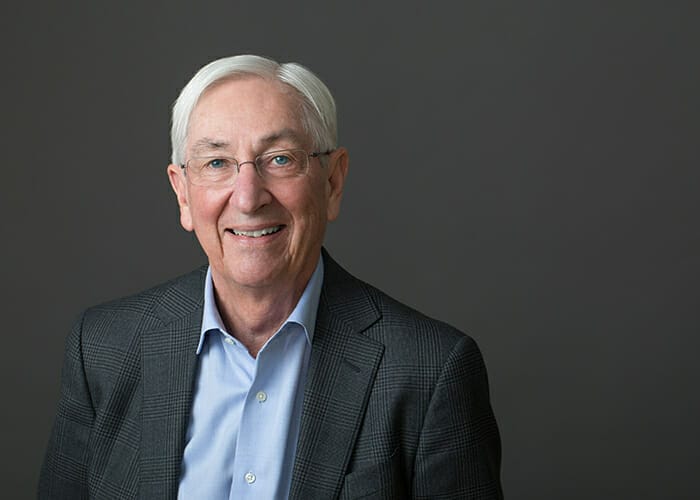
Keith Ambachtsheer is director emeritus of the International Centre for Pension Management, Rotman School of Management, University of Toronto, and president of KPA Advisory Services. He is the author of four books on pension management.








Leave a Comment
You must be logged in to post a comment.
Login