

Our five million members as well as our different stakeholders and Danish and international NGOs all have expectations, sometimes diverging, regarding how ATP should act responsibly.
Institutional investors are also faced with their own constant dilemmas in terms of responsible investment, including their assessments of specific companies. ATP takes this responsibility seriously and our two frameworks ’Policy of Responsibility in Investments’ and ’Policy of Active Ownership’ allow us to navigate an area characterised by diverse expectations, dilemmas and complex issues.
Responsibility in investments
To ensure management ”ownership” of responsibility across ATP’s investment process, the responsibility efforts are coordinated by a committee for responsibility. That committee is chaired by our CEO Bo Foged. Other members are the CIO and the CRO, as well as relevant investment managers.
We believe that sustainable development is the precondition for good future returns and sustainable business value creation. Therefore, it is important that the companies in which ATP invests establish long-term goals and take responsibility for the societies in which they operate. By acting responsibly, businesses maintain their legitimacy and licence to operate, which is fundamental to continued growth and development.
Investee companies’ long-term growth contributes directly to generating solid returns for the benefit of ATP’s members. At the same time, experience has shown that better investment decisions are made by integrating ESG information with knowledge of other business aspects, into the decision-making basis.
Institutional investors are faced with constant, embedded dilemmas in terms of their responsibility in investments, including in their assessments of specific companies. As an investor with a global, diversified portfolio, ATP has investments in various sectors and geographical locations. As a result, ATP’s portfolio companies are exposed to a variety of risks and opportunities associated with, say, the UN’s Sustainable Development Goals or specific themes related to human rights, labour rights, environment and climate, anti-corruption and corporate governance.
ATP may find that a portfolio company contributes positively to one goal, says SDGs, but negatively to another. For instance, companies that construct hydroelectric power plants contribute to achieving SDG 7 on stable and sustainable energy. However, hydroelectric power plants, especially in developing countries, are known to present challenges in terms of contributing to the protection of the rights of indigenous peoples and biodiversity – SDG 15.
As a long-term investor whose purpose it is to provide good pensions to its members, ATP has a strong interest in the sustainable social and environmental development of the planet and the economy. Therefore, ATP takes an active position on this type of dilemma in its efforts to integrate ESG into its investment processes and active ownership.
Our policy of responsibility in investments constitutes the overall framework for the work on responsibility across asset classes and investment processes. The policy establishes basic principles and minimum criteria for the conduct of portfolio companies. Among other things, the policy states that ATP does not invest in companies that deliberately and repeatedly violate the rules and regulations of the countries in which they operate. The policy also states that the portfolio companies must act in accordance with the standards that follow from the international conventions adopted by Denmark.
Policy of active ownership
ATP’s policy of active ownership establishes the principles and processes that guide ATP’s active ownership activities. As a responsible long-term investor, ATP has an interest in being able to understand and control the overall actions of the listed companies it holds, thereby promoting the companies’ long-term value creation.
We give our active ownership activities a high priority and engage in direct dialogue with the companies we hold. Two processes are used to exercise active ownership activities: We vote at the AGMs of all of our equity investments and we are in continuous dialogue with many of the companies in which we have major holdings.
2018 special measures
In 2018, ATP increased its investments in green bonds. At year-end, ATP owned green bonds worth approximately DKK 10 billion ($1.5 billion.) Transparency is important to ATP, and our dialogue with issuers of green bonds is ongoing. Specifically, ATP wants to enhance the quality and volume of data from bond issuers to provide investors with detailed information about the projects and climate and environmental improvements financed by the bond. Ultimately, ATP wants investors to be able to follow the exact projects funded by purchasing specific green bonds as well as the purpose of these projects.
We have also carried out systematic work on climate-related financial risks. In 2018, ATP continued its work on the Task Force on Climate-related Financial Disclosures’ (TCFD) recommendations for investors. Through its active ownership activities, ATP has engaged in dialogue about sustainability and green transformation with electricity producers that rely on coal for more than 50 per cent of their electricity generation. Based on this dialogue, ATP sold its shares in a number of companies with no realistic plans for phasing out coal in the long term. Moreover, as part of its voting process, ATP also contacted 69 companies to influence them to monitor climate risks and report data on their carbon emissions.
ATP also included the TCFD recommendations in its own efforts. In 2017, for the first time, we published the carbon footprint of our equity investments and in 2018 ATP also calculated the footprint of its corporate bonds. In 2018, as part of its work on implementing the TCFD recommendations on climate-related financial risk disclosures, ATP began the process of trying to understand how scenario analyses can provide inputs and new insights for the investment processes. ATP has been focusing particularly on the UN climate panel’s RCP scenarios and the CMIP5 climate model data. ATP has applied these data to the forests owned by ATP through ATP Timberland Invest K/S.
We are also working on creating more transparency in our active ownership activities. In 2018, ATP implemented a range of transparency initiatives, including the publication of its portfolio of corporate bonds. Here we also calculated the carbon footprint of the corporate bond portfolio. Moreover, ATP publishes the names of companies with which ATP has engaged in ‘thematic engagements’. We also publish names of companies that have received voting intentions.
When we issue a voting intention it means that we want to explain to a company how our vote should be interpreted. ATP always seeks to inform the company of its intentions and motivation ahead of the general meeting if, on one or more voting items, ATP intends to vote against the board of directors and the company’s own recommendations. Finally, we also publish names of specific projects funded by ATP’s green bonds, ensuring issuers report on these projects in a transparent manner.
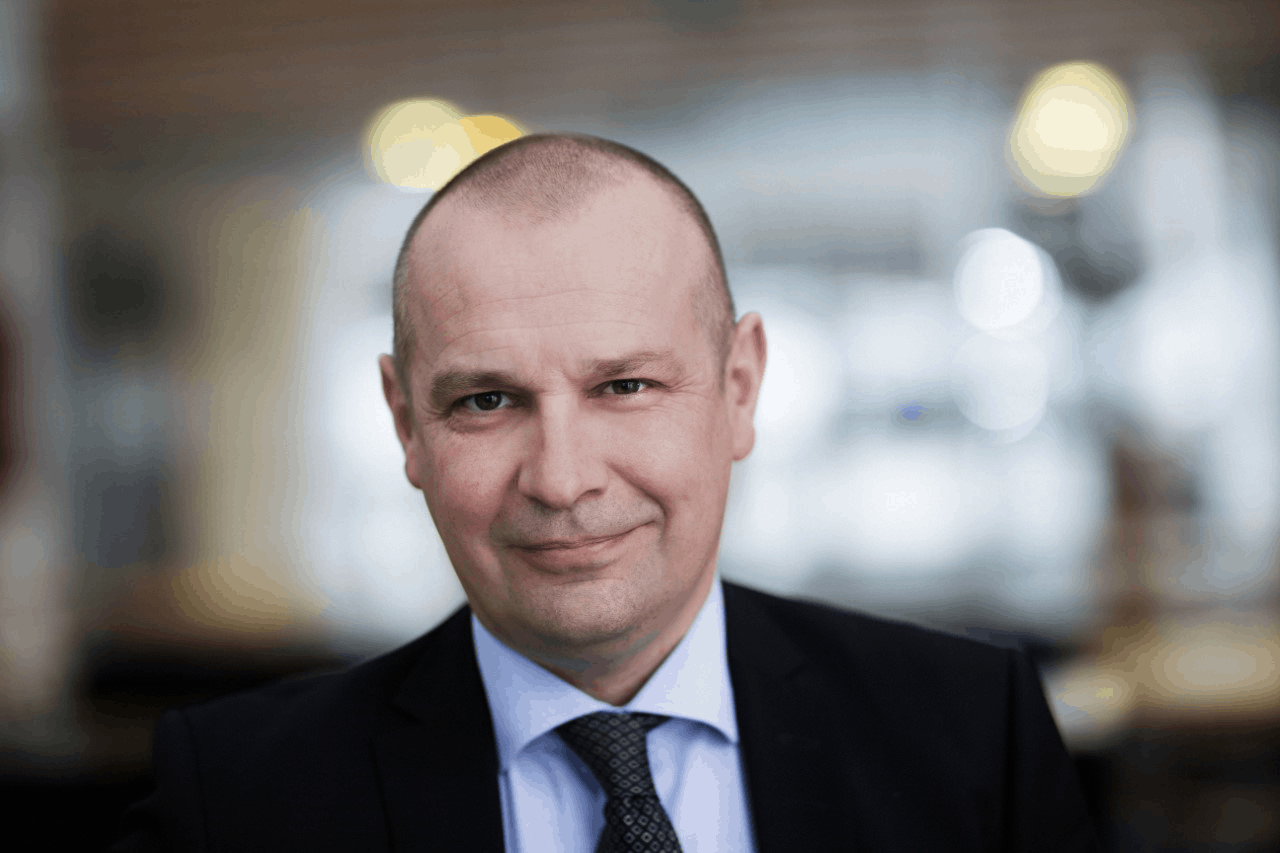
Ole Buhl is vice president and head of ESG at ATP.
ATP’s latest ESG report in English can be found here: https://www.atp.dk/sites/default/files/esg-rapporrt-2018_gb.pdf








Leave a Comment
You must be logged in to post a comment.
Login