
Why Sunsuper likes hedge funds

One of Australia’s largest superannuation funds, the $27 billion Sunsuper, is adamant that it gets value out of its large hedge fund program. This is against the grain in Australia, where many large funds (with the exception of the Future Fund) choosing not to invest in hedge funds. So why does Sunsuper favour hedge funds?


Sunsuper’s hedge fund program has comfortably beaten global equity returns after fees since 2007.

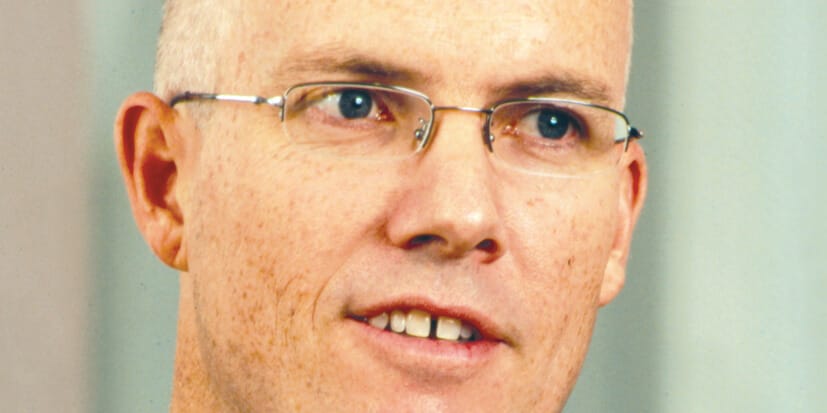
To Bruce Tomlinson, portfolio manager for Sunsuper’s $1.6 billion hedge fund program, this is all the justification he needs for a 16 manager hedge fund program, but who in the industry is paying attention?

Anecdotes of hedge funds that did not diversify portfolios in 2008 and made the same losses as equities are so common it has become very easy for investors to justify why they do not invest in them.

Tomlinson feels a lack of true understanding, not least the perception of poor value for money, is driving such attitudes.

Sponsored Content

“You see some very modest, even zero allocations for many large super funds, and that for me is a lost opportunity,” he says.

It is telling that Sunsuper’s experience of hedge funds in the global financial crisis was the opposite of the apocryphal tales of funds suddenly aligning with equity market valuations, tales of fund meltdowns and trapped investments.

“Our program not only acted as a hedge, which is what it should have done,” says Tomlinson, “but it did not have the big draw down that others did.”

In 2008/9 this meant that less than 4 per cent of the funds Sunsuper invested in were frozen or gated. This initial success has led the program to build up from its first hedge fund in 2006 to the use of 16 separate managers now (including names such as Bridgewater Associates, Brevan Howard, Nephila Capital, BlueCrest Capital and Manikay Partners).

The strategy is employed across Sunsuper’s four main funds. The Growth fund allocates 10 per cent of assets to hedge funds, the Balanced, Retirement and Conservative funds each hold 7 per cent strategic allocations.

A desire for defensive strategies rather than aggressive growth has been the approach.

“We are aiming for 10 per cent not 15 per cent return,” says Tomlinson. “We do not reach for a return that means too much leverage or directionality. We definitely do not want that. We have been strict on focusing on a market neutral approach.”

In this way the only long-short equity strategies followed are market neutral.

He explains the distinction: “Many people had or still have equity long short that is net long the market. It does not protect them when the market falls, so they are directionally long.”

The hedge fund role in Sunsuper’s asset allocation is that of a defensive alternative.

The strategy is not only lowly correlated to equities, but less volatile, achieving returns of 5-6 per cent above cash net of fees with volatility of 3-5 per cent and an equity beta of 0.1-0.2.

A common perception Tomlinson is glad to dispel about hedge funds is that all agreements are based on standard fees of 2 per cent, plus a 20 per cent share of returns.

Six of the hedge fund managers used are only paid performance fees above return hurdles of between 4-8 per cent depending on the strategy and what can be negotiated.

There are also two managers with performance fees below 15 per cent. The discounts, says Tomlinson, are not so much due to Sunsuper’s relative stature and size, but due to negotiation.

“We do try and negotiate our own share class or preferential terms if we can, but many times we cannot, because managers do not need our capital. To an extent the best managers can set the price.”

One way fees can be negotiated is through locking into longer investment commitments.

“With only 7 per cent in hedge funds and a positive cash flow we do not need quarterly liquidity for every single investment,” says Tomlinson, “so we are happier to have a longer lock up and lower fees for a portion of the portfolio. This has the added advantage of opening up a greater set of opportunities.”


Hard work

If this account all sounds a little rosy, Tomlinson is quick to point out the hard work that goes into the program, not least in negotiating fees.

“It is not the sort of thing you can do part-time. It is a complex area like all alternatives. You either roll your sleeves up and do the hard yards or you don’t do it.”

Part of the work ensures a growing fund such as Sunsuper has enough capacity in its chosen hedge fund managers to maintain its strategic allocation.

Around 40 per cent of the funds it employs are closed to new allocations and clients and another 30 per cent only take limited increases for existing clients.

Tomlinson and his analyst Laurence Marshbaum, are in charge of researching and choosing new hedge funds but they are assisted by the New York headquartered hedge fund advisory specialist Aksia.

They in turn employ 40 analysts to run reports on hedge fund managers that include an assessment of investment strategies, but also operational due diligence.

“Our process for every asset class at Sunsuper is to have independent due diligence,” says Tomlinson. “For hedge funds I have taken that a step further, I will not do an investment without operational due diligence as well as investment due diligence.”


Leave a Comment

Nest favours institutional-first managers as retail exodus pressures private credit

Nest favours institutional-first managers as retail exodus pressures private credit

Nest, the largest workplace pension in the UK, says that private credit managers who prioritise institutional clients will be more favourably viewed. The £61 billion ($82 billion) fund has awarded a £450 million ($605 million) US direct lending mandate to Crescent Capital this month, citing the manager's institutional-client-first approach as a key attraction.

Sort content by

PME’s path to recovery

PME, the €18.8 billion (US$25.6 billion) industry-wide pension fund for the mechanical and electrical engineering sector in the Netherlands, has seen its funding ratio fall 45 per cent over the last year. Kristen Paech talks to the fund about its recovery plan, including the decision not to rebalance equities, and the benefits of using a

ESG in emerging markets comes of age

Gaining Ground is a report by Mercer, in conjunction with the World Bank’s International Finance Corporation, examining the integration of environmental, social and governance factors into investment processes in emerging markets. It includes the first ever rating on ESG practices in China, India, South Korea and Brazil. mrec4inarticleinline Sponsored Content scnative1 scnative2 scnative3

Unlisted infrastructure on pension fund radar

Global pension fund allocations to unlisted infrastructure have grown in recent years but Australian pension funds continue to lead the way when it comes to actual investments according to a report published by the Organisation for Economic Cooperation and Development (OECD), which also called for more help from governments in enhancing the investment environment. mrec4inarticleinline

Beware of PE secondaries “rubbish” as dealflow rises, valuations drop

Investors in the private equity secondaries universe must be selective as more assets, including distressed assets, come to market and valuations seem set to head south. mrec4inarticleinline Sponsored Content scnative1 scnative2 scnative3

US funds favour global equities allocations

The home country bias of US public pension plans is diminishing, with the average allocation to US equities, falling from 42.3 per cent to 38.1 per cent from 2003 to 2008. mrec4inarticleinline Sponsored Content scnative1 scnative2 scnative3

Reducing risk not risky asset classes: AP3

Sweden’s Third National Pension Fund, AP3, has rejigged its long-term strategic asset allocation and increased its exposure to alternatives. Kristen Paech talks to chief investment officer Erik Valtonen about the reasons behind the changes. mrec4inarticleinline Sponsored Content scnative1 scnative2 scnative3

Previous



