
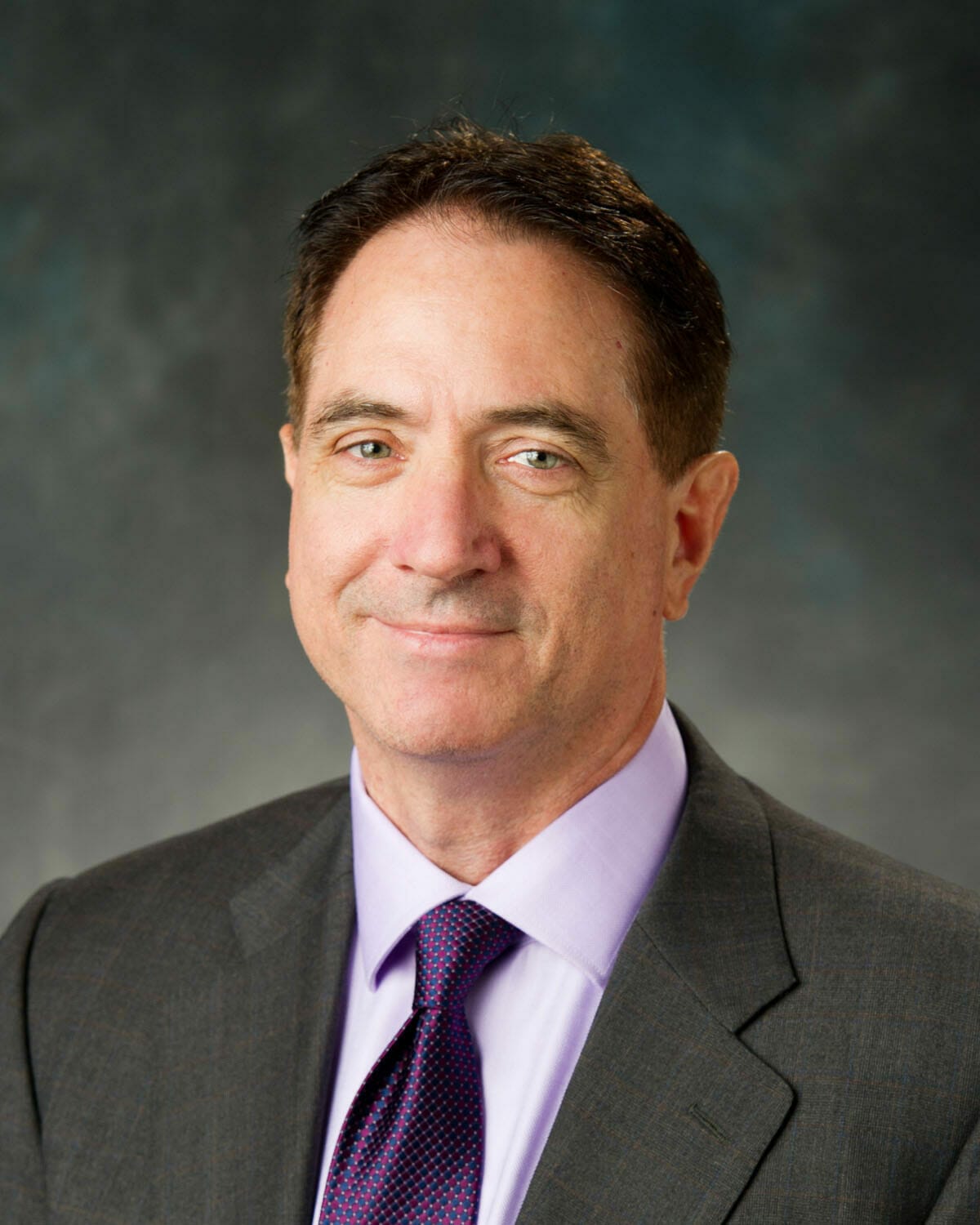

The $10 billion corporate pension fund for US aerospace and defence giant Textron is providing seed funding to asset managers seeking capital for new strategies.
The offer is only for the pension fund’s most trusted managers, but it is proving a lucrative way to drive product design. The fund pays lower fees, and Textron can push specific liquidity conditions, benchmarks or volatility risk tolerance, explains Charles Van Vleet, Textron’s assistant treasurer and chief investment officer, speaking from the fund’s headquarters in Providence, Rhode Island.
Most recently, Textron seeded Lee Capital Management’s US large cap quantitative fund, which invests based on stock signals gleaned from data mining by investment research experts Value Line, and is benchmarked against the S&P 500.
That investment follows on from the pension fund providing $100 million to a short-duration convertible bond strategy run by New Jersey-based Palisade Capital. Textron helped develop the strategy, which now has $200 million in assets under management and five clients.It invests in unrated, CCC or B securities with a short duration and an average equity beta of 0.2-0.3, Van Vleet explains.
“If the stock market goes up, I get 0.3 per cent of the upside and if the market goes down, I will still get a CCC or B type of coupon. It’s one of the few ways we can be long volatility with positive carry.”
Van Vleet offers seed capital via separate managed accounts or co-mingled products, although he says he prefers the former.
Seeding new funds is just one example of Van Vleet’s dynamic strategy, shaped around the application of carefully managed doses of complexity, leverage and illiquidity. Adding too much of any of them can quickly turn poisonous, but so far Van Vleet has proved adept at getting it right. The pension fund targets a 7.75 per cent return, inclusive of 100 basis points of alpha. Since Van Vleet joined Textron in 2013, after being head of pension benefits for United Technologies Corporation’s $24 billion pension plan, the fund has posted three-year and five-year returns of 7.6 per cent and 8.5 per cent, respectively.
Belief in active
All management is outsourced in active strategies; Van Vleet equates passive to abdicating his key responsibility to find the managers and strategies that will bring home returns. Rather than work in asset-class silos, his team of five are experts across the total portfolio. He uses 30 managers in public markets, adding and subtracting about two a year, and 56 in private markets, most of which are private equity general partners. Assets are split between a 50 per cent allocation to equity, 30 per cent to fixed income, 11 per cent to direct real estate and 8 percent to private equity, with the remainder on hand for liquidity purposes, including cap calls, margin calls, benefit payments and tactical trading.
Over the last 18 months, Textron has pared back its public equity allocation from 55 per cent to 50 per cent, all taken from US large caps. Van Vleet predicts neither a recession nor even a downturn in corporate earnings; instead, he believes price/earnings multiples will de-rate. A contraction in S&P 500 P/E multiples, from 16 times to 14 times, will knock 10 per cent to 12 per cent off total returns, he says.
“You can have a good economy, and great earnings, but if the market is not willing to pay the same or higher multiple, you won’t make money. A P/E multiple de-rating is normal at the end of a stock market cycle, as interest rates normalise.”
Given this outlook, Van Vleet has sold equities to invest higher up the capital structure, re-allocating to fixed income in ways that include collateralised loan obligation equity (CLOs), publicly listed business development companies (BDCs), special situation fixed income funds, short-duration convertible bonds and high yield.
“Year to date, these trades have performed exceptionally well,” he enthuses.
He is also preparing the fund for rising interest rates in other ways. He expects the US dollar to strengthen and has hedged a considerable amount of the fund’s non-US dollar exposure.
“There is a Trump discount on the dollar right now,” Van Vleet explains. “It will strengthen as the US normalises interest rates more quickly than the rest of the world.”
He is also focused on seeking out tail hedge strategies that will give him upside while protecting the downside. He’s not a fan of S&P put options because of the price, but believes convertible bonds are a good way – along with being long the dollar – of accessing this kind of protection.
“In equity market corrections, the dollar, yen and Swiss franc are the better performing currencies. Being long the dollar is a positive carry trade that serves as tail-risk insurance.”
SPACs are back
Van Vleet is also exploring opportunities in investments that, like fashions, are making a comeback. Special purpose acquisition companies, SPACs, so-called ‘blank check’ companies or ‘cash shells’, seek to raise capital by listing shares on a stock exchange. Each SPAC has its own experienced management team, investment criteria and focus, such as a specific industry. At the time of the initial public offer, the SPAC is empty, but the idea is that it will identify attractive acquisition targets over the ensuing years. Failure to do so leads to liquidation and investors getting their money back. SPACs could offer a win-win, Van Vleet says, either via ease of exit with money returned, or through liquid shares in the market in the event of a successful acquisition.
“It is an interesting space because the investment you end up with is a five-year warrant,” he says. “It is, effectively, a five-year call option. It could be an inexpensive way for us to gain a long-dated portfolio of call options.”
New approach to hedge funds
Textron is unwinding its portable alpha program and redefining hedge funds as an asset class. The pension fund will still invest in hedge funds, but they will be rolled-up into traditional rate, spread or equity allocations. The new approach is driven by Van Vleet’s belief that hedge fund strategies are never truly uncorrelated.
“Hedge funds have a lot more spread and rate beta than people are honest about,” he says.
Nor does he think hedge funds have enough skin in the game, with most of the risk left on the investor’s table.
“There is better alignment of interest in drawdown, private equity structures,” he argues. “In a PE structure, you invest as partners for 3-5 years, exit the investment, then split the spoils. With hedge funds, the spoils are split every year, on a mark-to-market basis, rather than at the exit of the investment.”
He does note, however, that some hedge funds have adapted their offering to include more drawdown structures to tap the 3-5 year, lock-up capital that gives more revenue and stability for the firm.
“Hedge fund managers that allow quarterly redemptions are at risk,” Van Vleet says. “Smart hedge fund managers diversify their revenue streams by launching drawdown structures.”
The portfolio is 11 per cent real estate, 70 per cent of which is in core US, invested across 21 different properties spanning multi-family living, warehouses and grocery stores. The balance of the real-estate allocation is in value-add drawdown structure funds.Textron is overweight real estate – it’s beyond its internal benchmark and two times its peer group – but Van Vleet has no plans to scale back, despite real estate’s sensitivity to rising rates and volatility.
“My core real estate portfolio is like a bond; it makes a 5 per cent coupon and I have control over the asset.”
He also believes pockets of value will remain because demand for affordable housing in specific cities or geographies isn’t going to disappear, even if the US economy slows.
“It is not a monolithic market; it is very geographic specific,” he concludes.








Leave a Comment
You must be logged in to post a comment.
Login