
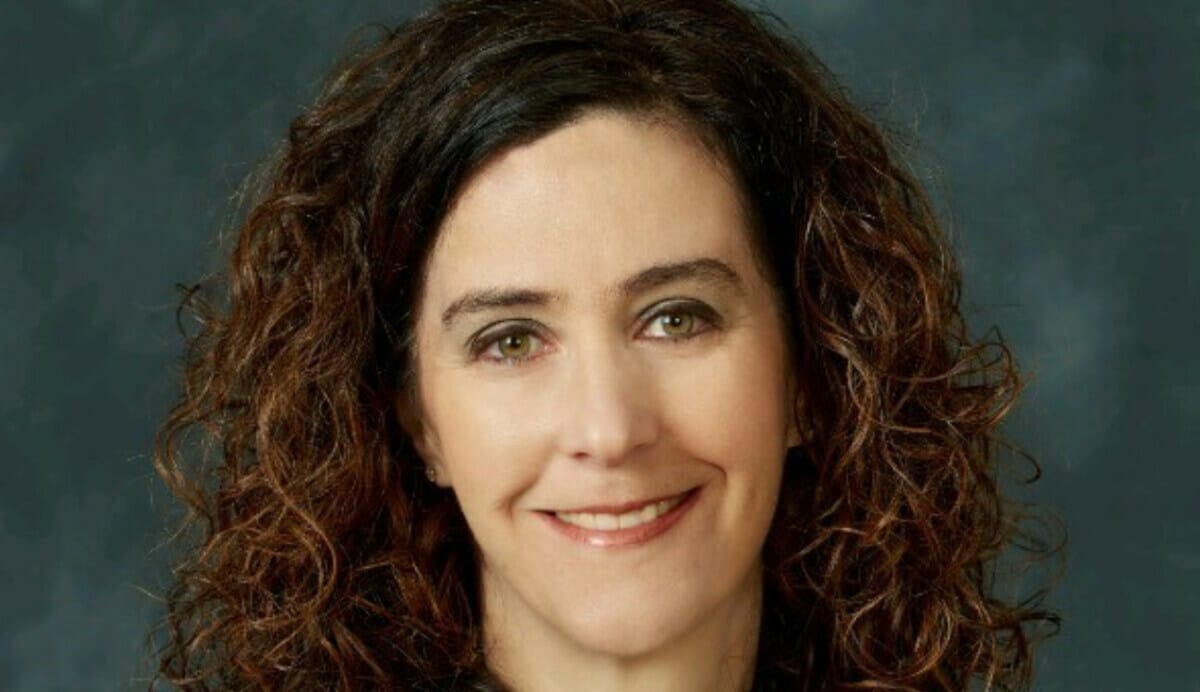

Since Alison Romano joined the $33 billion San Francisco Employees Retirement System (SFERS) in the middle of last year, she has spent most of her time working with the team to ensure the fund’s celebrated long-term performance continues in the face of today’s shifting market environment.
Romano joined SFERS after a 13-year stint at Florida’s State Board of Administration and tells Top1000funds.com that she began by approaching her new dual role as both CIO and CEO by focusing on SFERS core principles. This meant outlining SFERS objectives, and how the team should design a repeatable process to meet those objectives. Alongside better-defined objectives, she’s enhanced the investment policy statement, liquidity needs and risk guardrails for each asset class, and talked a great deal on portfolio construction.
“With a refined framework in place, we can better evaluate the return/risk profile of strategy types and individual strategies and, in doing so, put capital to work in a way that is aligned with our objectives. We continue to evaluate our geographic tilts and exposures toward growth and innovation,” she says.
SFERS sophisticated and experienced investment team, who oversee an active public market allocation, top-performing private market exposure and exposure to growth themes such as technology, constantly evaluate new opportunities, debating where to trim or change the allocation.
Currently, a key focus is the fund’s exposure to China in the public equity allocation in light of what she calls “elevated risk.” In recent years, SFERS has sought to increase excess returns in public equity by investing with specialised managers with competitive advantages that has included those with expertise in China. Although exposure to China has added value over the benchmark in the last 3-5 years, concerns have grown with respect to China equities given economic conditions and COVID-19 policies.
As for equity opportunities, she’s assessing value and global mandates to complement existing strategies.
In fixed income, the team added multi-sector credit managers in 2022 and is now researching strategies in the higher yielding multi-sector credit space.
“Across every asset class, I want to make sure with each investment or tilt, we evaluate the risk/return profile in today’s environment and consider all the objectives of the strategy, from return, liquidity, diversification, downside protection, and more,” she says.
Private markets expertise
Other areas she is focused include private credit where SFERS is building out the target allocation to 10 per cent from current levels of 6.5 per cent. With a eye on relative value and risk-adjusted returns, she is looking at de-risking where possible through strategies like lower leverage, higher seniority in a capital structure, or lower jurisdictional risk while also keeping a look out for credit opportunities and distressed opportunities that may be attractive.
SFERS has been actively investing in private markets for years and has notable exposure across private equity, real assets, as well as private credit.
“We are long-term investors, and in long duration assets, maintaining discipline in pacing is important. That said, we may lean-in or out of certain exposures or look for managers with certain expertise based on our market outlook, the risk/return dynamics, and the positioning of the overall portfolio,” she says.
For example, whereas in the recent past multiple expansion was a key driver of private equity returns, today operational improvement is increasingly important. SFERS is particularly seeking GPs that have the expertise to facilitate operational change in both good and challenging economic environments.
Reflecting further on private equity, she notes that the prolonged period of low rates, easy monetary policy, strong economic growth and secular trends in technology that created tailwinds prior to 2022 have now changed.
Of course long-term opportunity persists, and private equity continues to have an important role in the asset allocation. But at the moment her particular focus is on growth as a theme, expressed in part through SFERS notable exposure to venture capital.
The portfolio also has an overweight to technology and an increased focus on healthcare, she says. “While our themes will drive portfolio weighting over time, we will remain opportunistic in pursuing top-tier managers across strategies and geographies.”
“We continue to evaluate exposure outside of the US, buyouts, and lower middle-market,” she continues. As for secondaries, whether SFERS is buying or selling assets, it will apply a similar lens as any investment decision – what is the risk/return trade-off, the opportunity costs, the liquidity needs, and impact on the overall fund.”
With respect to real assets, the team hunts for areas supported by population demographic and migratory trends and assets with strong long-term market fundamentals, including areas like industrials and the digital and energy transition.
A review of absolute returns
This year she has also undertaken a thorough review of the $3.5 billion absolute return portfolio, taking into account the role of the asset class in the total plan. Once again, this process took her back to defining SFERS’ key objectives for the allocation.
In this case those goals are preserving capital relative to global equities during equity market downturns while outperforming global fixed income over a full cycle; producing returns that are independent of the performance of the equity and fixed income markets and providing a secondary source of liquidity.
After defining the objectives, the team then categorised different absolute return strategies as core/diversifiers, risk mitigators, return drivers, and high beta.
“We will continue to emphasise core strategies, such as multi-strat, market neutral, or quantitative. These will be complemented with risk mitigators like systematic macro and opportunistic return drivers. We are leaning away from strategies driven by equity or credit beta,” she explains.
This coming year SFERS plans to complete a full asset liability study. Part of the process will include considering current capital market assumptions, liquidity needs today and into the future, a multifaceted view of risk and the fund’s current funding status of 96 per cent.
Perhaps most pertinent is liquidity, particularly in the context of the forecast increase in liabilities – projected to grow considerably faster than the 7.2 per cent discount rate – exposure to private markets, and the slowing of fundraising and distributions.
“We continue to focus acutely on liquidity so that we can manage cash flows and retain the flexibility to be nimble when opportunities present themselves.”
SFERS targets a 7.2 per cent actuarial rate of return over a full market cycle (subject to liquidity needs and other risk considerations) and assets are divided between a target 60 per cent exposure to growth assets (public and private equity), 20 per cent to diversifying assets (real assets and absolute return), and 23 per cent to income/capital preservation that comprises fixed income and private credit. SFERS has the option to employ leverage up to 5 per cent.
Building the team
Romano’s role as both CEO and CIO take her responsibilities beyond just investment. She oversees a team of 125 “talented and hardworking individuals” that includes the 25-person investment team. Her focus is on fostering a strong culture so that SFERS can attract and retain talent across all areas of business, from investments to benefits administration and beyond.
“I aim to create an environment in which our mission, goals, and priorities are clear so that everyone knows how their responsibilities and efforts relate directly to the mission. I strive to reinforce a culture in which individuals and teams acknowledge successes, learn from mistakes, support active problem-solving, and take ownership at every level of the organisation.”
The key to achieving this type of culture is strong communication, particularly when navigating a hybrid work structure. And this often means listening rather than speaking, she explains.
“There are many things I’ve learned over the course of my career that impact how I work, communicate, and lead. Leaders are often expected to be the first to speak, the first to suggest the answers. However, good leadership comes from listening, from asking good questions of the experts on the team, and from creating an environment in which good ideas can be heard and debated.”
“This is also an environment in which I, as a leader, can make well-informed decisions about risks and opportunities. Hopefully, when I lean into the Socratic elements of this management approach, I can empower the team to develop their own solutions and buy into the approach. Of course, communication is two-way, and I am responsible for engaging with the team, sharing information, and providing context for decisions. ”
Alison Romano is a speaker at the Fiduciary Investors Symposium on campus at Stanford University from September 19-21. Click here for the program.








Leave a Comment
You must be logged in to post a comment.
Login