
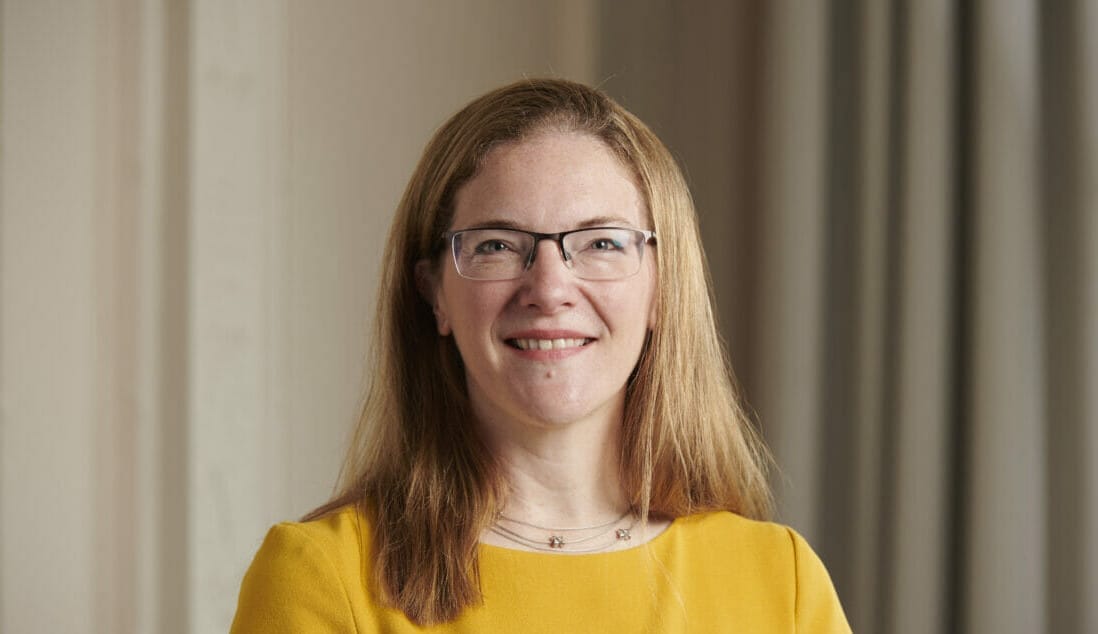

As Border to Coast approaches its 5th birthday chief executive Rachel Elwell reflects on the achievement of building a sustainable organisation, what investment capabilities are still to develop and the priorities for the underlying partner funds.
When Border to Coast became an entity in July 2018 the initial five-year strategy was focused on building a sustainable corporate function and the capabilities for funds to pool assets. In that time it has gone from an organisation with zero to 130 employees and £47 billion of pooled assets.
“It was a complex project to deliver,” chief executive Rachel Elwell says. “It’s going pretty well. COVID slowed us down a little bit, so it will be a couple more years to get there.”
The fund is the result of 11 local government funds pooling their assets, and of the £60 billion in total funds between the underlying partners, about £47 billion has been pooled with Border to Coast responsible for £38.3 billion.
Already the pooling has resulted in net cost savings of £20 million, with a total savings target of £145 million over 10 years and £340 million over 15 years. But more than just cost saving it allows the underlying partner funds to access asset classes that would be difficult to invest in without pooling.
In the past year alone Border to Coast has launched a multi-asset credit fund, a listed alternatives fund, a £1.35 billion climate opportunities investment proposition within private markets and increased allocations to private markets to £10 billion with fee reductions of 24 per cent.
“The cost savings show one of the benefits of pooling,” Elwell says. “It is understandable at the beginning that people focus on that cost saving, that is important. But over time we need to move the conversation towards what value we are producing, which is generating returns and opportunities the partner funds didn’t have before. We need to really judge ourselves on whether we are adding value for money with the scale we have got and whether we are delivering well on what our partner funds set out to do.”
Private markets
Private markets are a good example of the value add of the pooled vehicles.
“We bought forward that build, recognising quickly that our partner funds were looking to get exposure there,” Elwell says. “One of the things we were keen to do is understand what our partner funds needed, rather than rush in and build something. We spent a lot of time understanding the key features and needs, and really honed in on the important things from a risk, return, income and liquidity perspective. This will stand us in good stead in the future, we are in it for the long term.”
The offering is a combination of external managers and internal capabilities which were cultivated from the existing capabilities of three of the partner fund internal teams.
About a third of assets ae managed internally, a third externally and a third in a hybrid model for private markets where Border to Coast is selecting funds but acting as a fund of funds managers.
“We could bring in people with experience in deploying capital through funds and co-investments so we are not paying fees to fund of fund managers, we are the fund of funds. And we are deploying more scale so could get better fees.”
Other advantages include allowing some of the smaller partner funds to access private markets for the first time; and for all the partner funds it allows for new and tailored investment opportunities.
The newly launched Climate Opportunities Fund is an example of that. The fund will be invested over a three-year period across private equity, infrastructure and private credit focusing on clean energy, technology, transport, industry (such as low carbon cement and steel production), agriculture and carbon sequestration.
“Talking to partner funds they are really excited to deploy capital to help the transition and more actively contributing to that not just taking out carbon,” Elwell says.
While infrastructure investments were already targeting some of those areas, including a recent €100m commitment to the Clean Hydrogen Infra Fund, the Climate Opportunities Fund allows for smaller and different types of investments.
“It is hard to get into the smaller funds doing niche things, so we are exploring doing something aimed at different types of investments not just big wind farms, there is a massive interest in that.”
Roadmap to net zero 2050
The fund recently published its roadmap to net zero 2050 which includes clear interim plans. It targets a 53 per cent reduction in financed emissions across its portfolios by 2025 and a 66 per cent reduction by 2030, reaching net zero by 2050 at the latest.
Currently about 60 per cent of the assets are covered by the plan’s emission reduction targets and Elwell says a big focus is to try and figure out how to get the rest of the portfolio covered as well.
The focus will be working with industry to improve data quality and methodologies to enable the remaining 40 per cent – made up of private market and some fixed income assets – to be brought into scope over time.
“We want to be working with the industry on private markets and how to get a recognised standard. If we can get a standard then GPs can consistently provide the data that is needed. The industry needs to work together to get the information to understand the risks,” she says, pointing to the ESG data convergence initiative.
Of the total assets about £2.5 billion is in emerging markets, with about £1.5 billion of that in emerging market equities and a bit more in a multi-asset credit and private markets.
“One thing close to my heart is supporting the just transition in emerging markets,” Elwell says. “Knee-jerk reactions to divest from emerging markets doesn’t feel the right way to go. It can be harder to engage in and influence some of those markets but we really need to collectively think about how to do that as asset owners. For emerging markets where there is such a reliance on coal we need to understand the transition.” Border to Coast is one of the founding members of the £400bn Emerging Markets Just Transition Investor Initiative.
The fund is also working on collective action and involved with Climate Action 100+ and the TPI transition initiative.t
“It’s really captured people’s imaginations internally and the purpose we have is very important, and means a lot for us,” Elwell says. “It motivates us all to try and do the right thing for the 1.1 million members we have.”
What next ?
The fund is also looking to invest in some green, social and sustainability bonds as well as develop a few more equities capabilities.
But the big area of focus over the next 12 months will be real estate.
“The single biggest capability we are still to build is real estate. It’s a complex asset class and particularly because we are looking to go direct.”
Another focus over the next little while will be how best to support partner funds with their passively managed holdings, which are managed outside of Border to Coast. Historically these have been market cap traditional passive mandates, however Elwell says that over the past couple of years there has been interest from partner funds to introduce an ESG tilt.
“As partner funds start to think about overlaying responsible investment into these, we are exploring how to ensure appropriate oversight and the most effective way for partner funds’ objectives to be achieved, as usual nothing is off the table,” she says.
And finally as the local government funds have been challenged by central governments to invest money in the United Kingdom, Border to Coast will help partner funds with that proposition and launch a UK Opportunities Fund.








Leave a Comment
You must be logged in to post a comment.
Login