
PMT builds out its ESG screening and engagement program

Pensioenfonds Metaal & Techniek (PMT), the $112 billion Dutch fund for metal and technical workers, has integrated ESG via bespoke equity and bond indexes across all its developed and emerging market liquid allocations. The strategy, which began gradually in 2018, now applies to its €35.9 billion equity allocation and €21.5 billion bond allocation, comprising high yield (€6.6 billion) and IG Credits (€14.9 billion)

Now, in the most recent evolution of the strategy, the pension fund has introduced two additional screens barring ESG laggards from the indexes and raising the threshold to entry. Companies that score poorly (in the lowest 20 per cent) in MSCI’s low carbon transition score are removed, as are all non-metallurgical coal producers.

The latest development of the strategy is enshrined in PMT’s new climate strategy which outlines how the fund will tighten its net zero commitments for companies in the portfolio, and expand its climate engagement program, in an approach shaped by consultation with its beneficiaries, the sectors they work in, and wider society.

It has also been spurred on by sister fund ABP’s decision to sell its entire €15 billion-worth of holdings in fossil fuel companies last year.

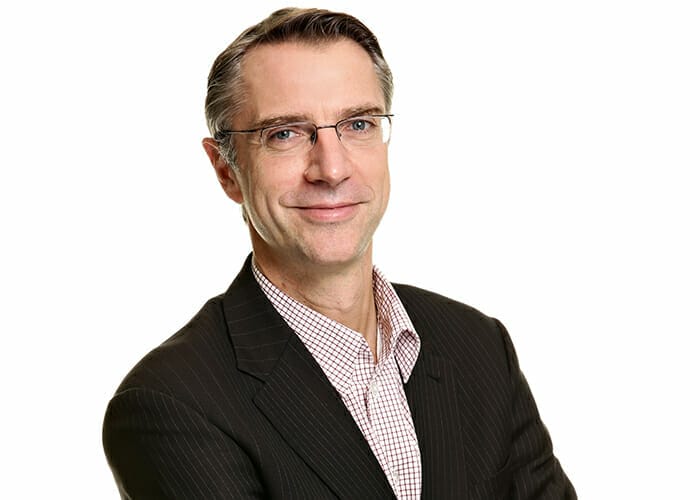
“We thought we should also step up and do more,” says PMT’s chief investment officer Hartwig Liersch, who sees the growth in ESG investment at the fund as the most significant and thrilling evolution of his five-year tenure . “Ten years ago, investment was all about the trade-off between risk and return. Now it’s about how you want to achieve that return in a much more data driven approach.”

Data: the biggest challenge

The biggest challenge to the strategy is data. Not only access to data, but deciding which data providers best fit the strategy, how many data providers to use (PMT uses one – MSCI ESG) or whether to use PMT’s own data.

Sponsored Content

“At the moment we buy in all the data, but we are exploring how efficient it would be to use our own data and if this is something we could or couldn’t do.”

Another key challenge is devising the right boundaries around companies entering and falling out of the index. Companies can always get back into the index if their score improves when the universe is annually re-set.

The challenge around data accuracy and quality is amplified in emerging markets. It’s one of the reasons why PMT has also introduced a country framework that screens out countries according to factors like human rights and corruption. It means many SOEs (classified as where a government has more than 10 per cent of the voting rights) fall out of the emerging market equity and bond indexes, he explains.

“If we exclude a country, we also exclude the SOEs of that country.”

Diversification

The approach has roughly halved the number of companies in PMT’s indexes compared to a the MSCI World Index.

“We’ve dropped a lot of names,” he says. Still, given the size of a traditional passive universe he insists PMT still has well above a thousand companies in which to invest ensuring the diversification benefits of passive aren’t harmed.

“We have excluded companies with a higher risk profile. The risk of the whole portfolio is actually lower and the returns we make are comparable to the general index.” PMT has a long-term excess return target of 1.5 per cent a year above the change in the value of its liabilities.

The strategy is accompanied by annual back testing as new sectors and layers are applied.

“This is our fifth year of back-testing. The longer we do it for the easier it is to learn from back-testing,” he says.

Costs

Liersch says the strategy retains the low-cost benefits of passive.

“The key difference is the cost of buying in the data but we buy in data for the whole fund on a centralised basis which reduces the cost bulge. We do have the cost of the research work, but we think it’s worth it because we want to see this in our portfolio.”

The strategy also comes with more transaction costs as companies adjust to the new index.

“There are more transactions as you adjust to the benchmark,” she says. “But the actual fee is the same as passive and very low.”

The strategy has been built in partnership with MN, PMT’s fiduciary manager and strategic partner alongside MN’s other client fund PME, also developing the strategy.

“We discuss all these topics as a three,” he says. MN also back tests the strategy and runs analysis with other asset managers and members of its network in another element that marks the strategy apart from a traditional passive allocation.

“Our mandate is to work together and keep on learning; there is an added component to work together on our research.”

Engagement

PMT’s strategy doesn’t just stop with screening. The pension fund actively engages with companies via MN in a new, beefed-up strategy. In the past, PMT’s climate engagement was risk-based targeting the top ten carbon emitters. Now engagement targets the companies it seeks to change of which oil and gas companies and utilities that remain in the portfolio after the screening process make up the majority.

“All together there are 50 companies in the program,” he says.

In the first year, engagement focuses on companies net zero ambitions and utilities’ plans to phase out coal. A second year of engagement will involve ensuring companies meet set reduction targets based on Climate Action 100 + and IIGCC.

“We use these standards because it means we are working with other investors. If you do it yourself, it is not nearly as efficient. It’s difficult achieving something on your own.”

In contrast to other investors dialling down engagement, he reiterates the importance of persuading companies to put in place climate strategies.

“Companies have to accept the consequences that if we don’t see changes we will divest,” he concludes.


Leave a Comment

The twin forces rewriting the rules of investing

The twin forces rewriting the rules of investing

Portfolios built for the old world will be severely tested as emerging forces rewrite the rules of investing. The Fiduciary Investors Symposium heard that geopolitical and macroeconomic upheaval, together with the disruption wrought by AI, should force asset owners to rethink the structure and composition of portfolios.

Sort content by

Fordham University dials up growth equity, cools on private credit

Fordham University CIO Geeta Kapadia is cutting back on private credit, calling it an asset class “less able to financially engineer returns” in a higher-rate world. She’s instead redirecting the $1.1 billion endowment to venture and growth equity and entrusting larger mandates to a smaller roster of high-conviction managers.

Resilience: Abdicating from transformational change?

Will the relentless pursuit of efficiency undermine our ability to build a resilient and sustainable future? Andrea Caloisi, a researcher at the Thinking Ahead Institute at WTW, explores how complex systems, driven by short-term optimisation, may be fuelling long-term fragility.

The People’s Pension on volatility and weak demand for long end gilts

Three years on from the UK's gilt crisis, Charlotte Vincent, co-head of fixed income at the £36 billion ($48 billion) People’s Pension, reflects on enduring investor concerns about bond market volatility as the government continues to struggle to balance the books.

APG’s answer to aligning government and investment goals in infrastructure

An increasing push to invest in home markets means asset owners need better frameworks for aligning government expectations with investment goals. APG’s three-pronged approach for public infrastructure investments could act as a guide for other investors looking to balance fiduciary duty with political demands.

CalPERS touts fixed income wins, gears up for TPA

At the annual review of its fixed income portfolio, CalPERS staff explain how active management, value-add strategies and the hunt for alpha are paying off, with ESG integration giving it a valuable edge and informing it to invest in companies under pressure like Boeing at the right time.

Condoleezza Rice: Globalisation’s borderless era is coming undone

Condoleezza Rice, the 66th US Secretary of State and current director of Stanford University’s Hoover Institution, said the new world order will have several characteristics of which there are already signs: more protectionist trade policies, a redistribution of security burdens, and louder voices for those marginalised in globalisation. 

Previous



