
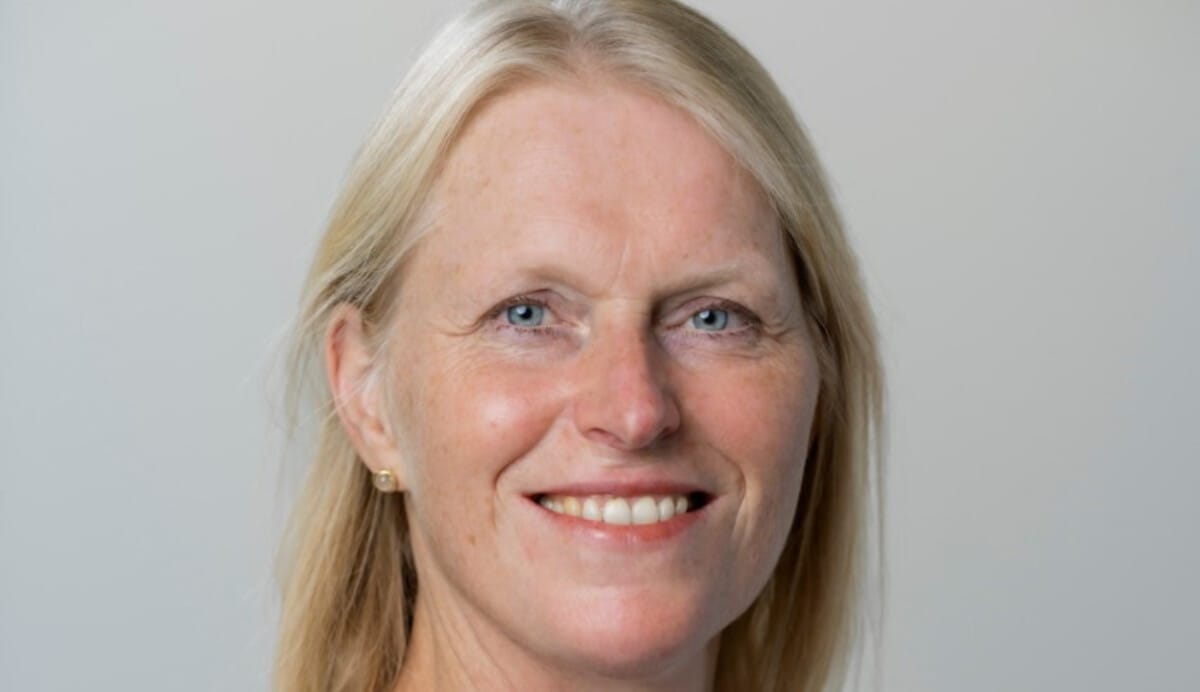

Diane Griffioen, the new head of private equity at €228 billion PGGM, asset manager for the Netherland’s second largest pension fund PFZW, has a clear vision for the €23 billion portfolio in the years ahead.
More co-investment, sweeping Paris-alignment and a boosted allocation to 3D portfolios that incorporate risk, return and impact promising a shake-up in PGGM’s 90-odd GP relationships.
“Our GPs know that just because we have invested in one fund with them, we won’t automatically invest in another,” she says in her first interview with Top1000funds.com since joining PGGM, describing a highly critical, rigorous process of partner selection.
Co-investment
Around 70 per cent of the private equity allocation is invested in some 180 funds where PGGM typically pays fees of 1.5-2 per cent (depending on the fund) plus carried interest. The co-investment sleeve of the portfolio is currently around 20 per cent, below its 30 per cent target.
“We want to increase our co-investment exposure because it means we can have a direct influence on where we invest and it lowers our cost base,” she says. “The universe is too big for us to invest directly, but we can increase our direct exposure through co-investments.”
She says one of the biggest obstacles to increasing co-investment is finding capacity within the team to analyse attractive co-investment opportunities that come through the door.
Paris Alignment
In another strand of portfolio transformation underway, PFZW targets Paris-alignment across private equity by 2040 that includes all underlying portfolio companies.
“It means that from 2030 we will not commit to any GPs that are not Paris-aligned as it will take GPs many years to ensure their portfolio companies are net zero. In practice, this is a really high ambition,” she says.
None more so than for PGGM’s GP relationships in the wider allocation outside niche impact and SDI sleeves where Paris-alignment is an easier fit with GP ambition and strategy. She notes “a handful” of predominantly European GPs are Paris-aligned, but says the vast majority of PGGM’s relationship GPs are not, particularly in the US.
“There aren’t enough GPs out there who are Paris-aligned. That’s why we are engaging with them.”
Things are beginning to change, evident in GPs’ ESG scores improving. In another example, over the last year the asset manager has engaged with GPs to join the ESG Data Convergence Initiative. Developed with other investors, it asks GPs to use the same format to report ESG data in portfolio companies, developing a standardized set of ESG metrics and a mechanism for comparative reporting. “75 per cent of our GPs are now complying with the project,” she says.
Impact
She is equally determined to boost the impact allocation. Around 5 per cent of the private equity portfolio is currently invested in a specific impact seam focussed on four core themes (climate, health, water, and food security) and she says the aim is to increase it to 10 per cent.
The challenge is finding the right GPs to partner with. Although she notices a growing number of impact investments within private equity, aligning fund structures with impact is challenging due to the wide variation of impact goals amongst LPs and a lack of common standards on impact measurement.
“It’s much harder to do impact,” she says. “Setting financial KPIs is much easier – it just involves money!”
Still, changing the structure of PGGM’s relationships so that KPIs are linked to impact rather than just financial metrics is an area she is determined to develop.
“The fee structures are too focused on financial alignment. It would be nice if we could also use impact metrics.”
Looking to the future, she expects impact to become much more central. PGGM (and its client PFZW) have high impact ambitions for the total portfolio, she says.
For example, a commitment made in 2020 to have 20 per cent of PFZW’s investments SDG-aligned by 2025 has already been met.
“Things go faster than you think,” she says. “We thought that 20 per cent would be difficult but now we are thinking about what to develop and how to innovate to 2030. Things go fast in our society, and pension funds should work hard to catch up. PFZW wants to play a leading role in this area.”
Influence
The ability to influence corporate behaviour was one of her key motivations for joining PGGM’s private equity team.
A seasoned investor, Griffioen was CIO at ABP for four years until 2022, before which she spent much of her career in the listed market where small ownership stakes equate to much less influence. Private equity is better suited to steer corporate behaviour via ownership rights and an LPAC seat than listed investment, she says.
Moreover, in the listed space she notes investors are increasingly seeking active strategies over index funds.
“Active ownership is increasingly more important,” she said. “You can see that many investors aim for a more focused strategy – ten years ago a majority moved to index products, but this has now shifted to a demand for focused strategies.”
She also believes that private companies are closer to the real economy and hold many of the solutions to the climate crisis.
“Innovation doesn’t tend to come from the listed space. I joined private equity because of the growth and sustainable innovation possibilities in this segment.”
Her 30-strong team is grounded in principles of autonomy, involvement (“everyone belongs and everyone is welcome”) and competence. She describes a culture where people can work on their own and “handle things, take initiative and don’t wait” and where diversity (she counts ten nationalities) and the absence of silos, allowing juniors to learn from everyone, are engrained.
Going forward
The private equity allocation is overweight (10 per cent) its 6 per cent target allocation. It means PGGM will allocate slightly less to funds this year compared to previous years, currently targeting €2.5 billion in dispersions.
Although she stresses the importance of continued, steady investment and not “missing a year” she is also mindful that in the current climate, drawdown times have got longer and she is increasingly aware of the risk of too much leverage.
“Nowadays, leverage is more expensive with higher interest rates, so returns are likely to come down a bit.” Elsewhere, she is concerned that the slowdown in IPOs and exits will impact liquidity. “This is really on the radar for our funds, and we notice the environment is a bit more difficult. But we are a long-term investor.”
Half the portfolio is invested in the US; 40 per cent in Europe and 10 per cent to the rest of the world. Diversification ensures the portfolio isn’t over or under-allocated and that different segments are tapped, she concludes.








Leave a Comment
You must be logged in to post a comment.
Login