
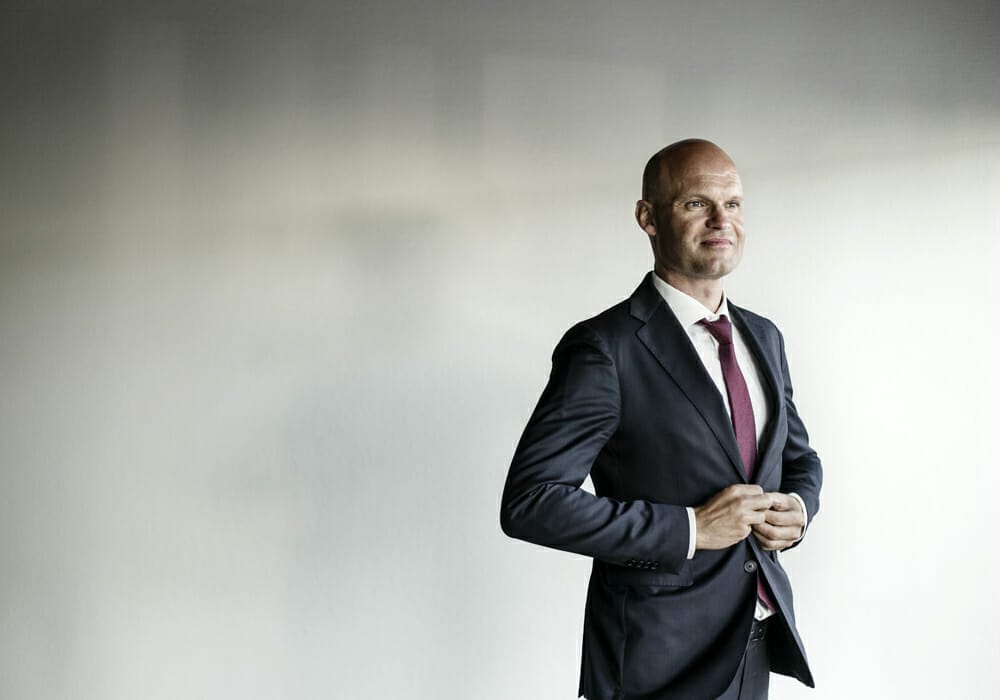

Henrik Nøhr Poulsen joined Denmark’s biggest commercial pension fund PFA Pension three months ago, poached from local rival Industriens Pension.Over the course of his tenure at Industriens, Poulsen grew the alternative portfolio to 21 per cent of assets under management from 1.6 per cent when he first joined.
Given that PFA’s current alternative allocation accounts for just 2 per cent of the DKK550 billion ($82.1 billion) fund, coupled with Poulsen’s track record and expertise, it’s no surprise to hear alternatives will be a top priority at PFA in coming years.
“Over the next five years we will target a 10 per cent alternatives allocation,” says Poulsen, chief investment officer equities and alternatives at PFA Asset Management.
“Pension funds around the world are facing the same challenge: assets in fixed income are going to yield a return close to nothing in the short term, yet increasing equity allocations is not the solution because the risk is too high,” he says. “We expected interest rates to go up but the opposite happened.”
As the fund ventures further into alternative investments it will extend its risk analysis, which Poulsen aims to achieve via ESG integration across the entire direct, unlisted portfolio.
“Listed companies are covered by analysts and ESG screens. In the private side you have to do your homework much more thoroughly,” he says.
It will mean a bigger team, which Poulsen will build from two to five by the middle of this year, ultimately aiming for a ten-strong head count.
The unlisted focus will be on private equity, infrastructure – where the fund has so far “only dipped a toe” – and real estate.
PFA will also boost its private credit allocation via direct lending and broad, asset-backed investing.
“We want to be closer to the corporates we invest in on the equity and debt side.”
The real estate portfolio is well established but the “pricey” Danish market, where PFA has pushed into the local buy-to-let market, means it will increasingly look abroad for opportunities.
Along with alternatives, there are other areas where the fund is finding attractive risk-adjusted returns – namely, its equity portfolio.
The fund applies alternative risk premia to approximately one-fifth of its equity portfolio, with an in-house team working to systematically harvest equity premia around value, small cap and momentum.
“The equity portfolio has been boosted by active stock picking. Our returns here have been stable rather than shooting through the roof but they have been very successful,” says Poulsen.
Within the equity allocation the amount portioned to Danish stocks will be reduced gradually.
“Danish shares have performed very strongly and we will use the strong market to reduce the allocation; strong Danish companies have been taking up too much space in the portfolio,” he says.
The fund’s emerging market allocation in listed emerging market equity and debt isn’t changing for now.
“We are currently underweight emerging markets and will sit on the fence for a while still. We will eventually move into the unlisted, private space when markets pick up,” he says.
Poulsen is also quietly optimistic about European growth prospects.
“European corporations are doing well and there is the potential for good equity returns: we are overweight Europe versus US.”
The different market-based portfolios account for one-third of the total assets under management.
Eighty per cent of the fund’s current annual income, around euro 3.5 billion ($3.8 billion), flows into these portfolios.
The guaranteed portfolio accounts for the remaining two-thirds of the scheme’s assets and is closed.
Customers in the guaranteed schemes have the option to take on more risk if they want to.
Returns from the guaranteed portfolio are set between 4 per cent for long-standing members down to 1 per cent.
The market-based scheme has four different return profiles that are fashioned according to the risk appetite of the individual and the number of years until retirement.
In the market-based portfolio the typical asset allocation is a 75 per cent allocation to equity, high-yield bonds and private equity, with the remaining 25 per cent in bonds and investment grade real-estate and infrastructure.
About 90 per cent of the fund is managed in-house.
“It is much more cost efficient when you are a big fund to have internal rather than external management. It strengthens the know-how and competence in an organisation, but the main reason is cost,” says Poulsen for whom internal management is one of the most exciting aspects of his new job.
“The culture is the same but the team, and assets under management, is much bigger, and we also manage a lot more internally.”








Leave a Comment
You must be logged in to post a comment.
Login