
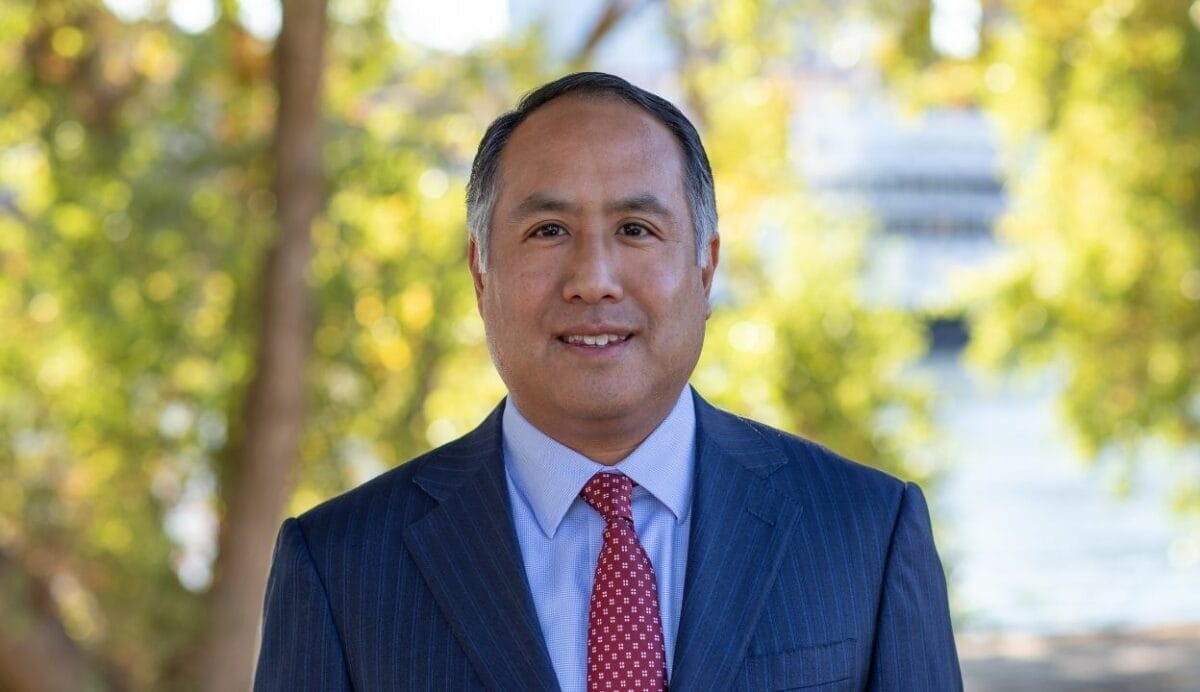

In an interview with Top1000funds.com, CalSTRS chief investment officer Scott Chan says the one fund approach has already started to produce alpha. Sarah Rundell looks at the drivers of success including the ability to move more dynamically and cross-asset class collaboration to take advantage of opportunities.
The impact of dynamic asset allocation, made possible through a one-fund approach, was manifest in CalSTRS’ recent annual results and will be an increasingly important seam to investment strategy going forward according to chief investment officer, Scott Chan.
At the beginning of this year, the $367.7 billion fund adjusted its portfolio defensively, adding more to risk-mitigating cash and fixed income strategies to ensure above average liquidity to position the portfolio ahead April’s volatility. [See Cashed-up CalSTRS positions for opportunities in volatile markets]
The ability of the team to underweight or overweight in the context of total portfolio risk is the fruition of Chan’s determination to form a total fund management division – CalSTRS’ version of a total portfolio approach that is also under consideration at CalPERS, its neighbour across the river – to leverage insights from each division, see where opportunities sit and what kind of returns can be made.
“For the first year we have generated alpha based on a more dynamic asset allocation,” says Chan in an interview with Top1000funds following the fund’s latest results.
Chan says the pension fund produced about 8 basis points of alpha last year, contributing to a figure of 76 basis points over the five years. This year in addition to the team selecting the right assets and beating the benchmark to do better than average, they also created value through dynamic asset allocation, he says.
“If we hadn’t [done this] we wouldn’t’ have produced positive alpha,” says Chan.
The ability to invest tactically to position the portfolio to benefit from volatility has required putting in place cultural and organisational structures, notably a total fund team that maps a common language of risk, and how portfolio risk is shifting.
Different teams need to be able to collaborate to truly understand where the return opportunity sits and how returns might fall in the future, continues Chan.
For example, the early 2025 decision to overweight fixed income and underweight hedge funds contrasted to previous years when fixed income was forecast to return less because interest rates were zero and hedge funds do better, took a new level of collaboration.
“It required one team to say we believe we will make more returns on a forward basis, and another to say we think we will earn less.”
One team one dream
A successful one fund approach also involves making sure CalSTRS takes advantage of its scale.
For example, three different divisions at the pension fund – real estate, infrastructure and sustainability – share expertise in data centres. By working together, they can create a level of expertise that supersedes acting individually to find the best long-term value creation.
Looking ahead, Chan believes this kind of collaboration will position the portfolio to benefit from opportunities in AI like data centres, but also the net zero build and the “huge” transfer of the banking system to long term investors in the form of private credit. Collaboration has already informed a strategy whereby CalSTRS has shifted its direct lending focus to opportunities in Europe and in asset-backed private credit in response to squeezed premiums in the US.
“This kind of collaboration is a growing element of the one fund approach. In a broader strategy than just moving the portfolio more dynamically, we are also moving our partnerships more dynamically at scale. These will both be important value drivers for CalSTRS.”
He says the one fund approach signposts a new type of portfolio construction focused on greater diversification, risk and liquidity management, and dynamic asset allocation, and is a response to an investment environment now characterised by different geopolitical and trade relationships and a new interest rate environment.
He also doubts that growth will continue as it has in recent years. Global equity has led returns at CalSTRS for the last three years in a row, most recently returning 16.4 per cent.
“[Global equity] doesn’t do that year-in year-out. If we have reached the point where valuations are high and we hit pause, it wouldn’t surprise me.”
A new interest rate environment means interest rates are more likely to be higher going forward than they have been in the last decade. This flags opportunities in private credit and infrastructure, which will also become more interesting in an inflationary environment stoked by deficit spending.
“A lot of what we are doing is finding out where the environment is providing the best opportunities in a different world,” he says.
Still, he is hesitant to call an inflection point in real estate where the increase in interest rates and the lingering impact of the pandemic continues to hit hard. But in a reflection that the market might finally be “closer to the bottom” he notices that for the first time investors are beginning to deploy more capital back into debt portions and write equity cheques.
The 8.5 per cent net return for the fiscal year ending June 30 contributes to strong long-term five-year (9.4 per cent) 10-year (8.1 per cent) 20-year (7.4 per cent) and 30-year (7.8 per cent) numbers.
“It’s important to remember that one year is a mile in a marathon,” concludes Chan.
Scott Chan will be speaking at Top1000funds.com’s Fiduciary Investors Symposium on campus at Stanford University from September 16-18. For the program and more information click here.








Leave a Comment
You must be logged in to post a comment.
Login