
Behind AustralianSuper’s global expansion

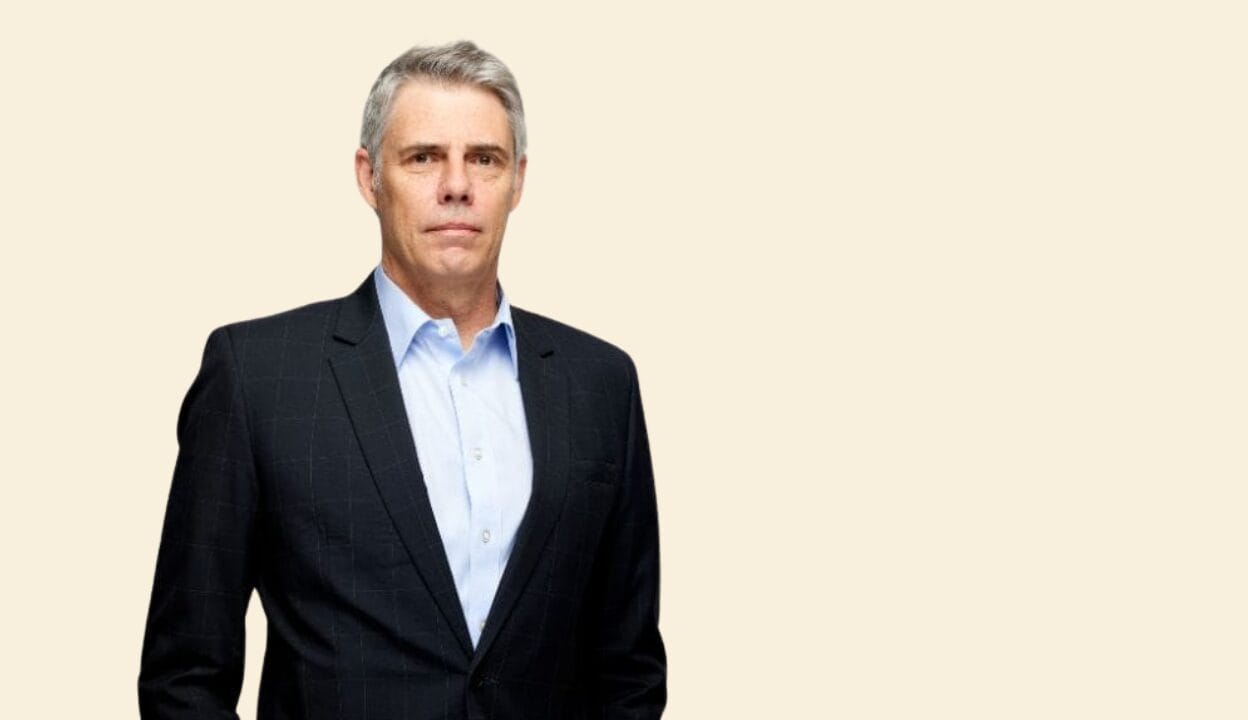
London-based AustralianSuper deputy CIO Damian Moloney oversees the global expansion plans of Australia’s largest superannuation fund. While a global presence has clear benefits for the fund and its members, Moloney’s advice to others contemplating the same is to plan extensively and build early.

When AustralianSuper opened its first offshore office in Beijing in 2012 it had A$46 billion in assets, cashflows of A$8 billion a year and 39 investment staff.

Fast forward to 2024 and around half of the fund’s A$341 billion ($228 billion) is invested offshore, it has offices in London, New York and Beijing, and is growing exponentially.

Part of the genesis of the offshore expansion is the pace of growth of the fund. Fuelled by Australia’s mandated superannuation system (11.5 per cent inflows per year, regardless of investment returns or new membership) the fund is projected to grow to A$700 billion by 2030 and $1 trillion not long after. It is expected that 70 per cent of new flows will be invested offshore.

Deputy chief investment officer Damian Moloney, who joined the fund in 2018, heads the strategic direction, governance, oversight and enablement of the fund’s global investments program from London.

Moloney explains how the offshore strategy has evolved, with the success of the operations refocussing strategy from the initial expectation that the international offices would simply manage in region assets.

Sponsored Content

“Because we have been successful in recruiting the right people and teams, and the AUM is much bigger, we decided to manage outside the region. So that platform can be leveraged to manage offshore across the board, that’s what we are doing in London,” he tells Top1000funds.com in an interview.

The 150 people in the London office, about half of whom are in investments, is expected to triple by 2030. The fund also recently committed to doubling the assets it invests in the UK in that timeframe, to around A$26 billion.

The London office manages real assets where it has made some significant investments including a 74 per cent interest in the King’s Cross Estate, which it calls home. From London it also manages fixed income, global equities and private credit where it has invested around A$4 billion – including a £375 million ($488 million) subordinated facility to support Heathrow Airport during the pandemic – although the fund’s head of private credit, Nick Ward, recently relocated from Melbourne to New York.

The new-ish head of international equities and private equity, Mark Hargreaves, who was appointed last year, is also based in London overseeing expected growth of global equities from A$69 billion to A$255 billion, and private equity from A$14 billion to A$55 billion in the next four years.

About 30 per cent of the fund’s assets are invested in North America, where a team of 60 is headed by new head of Americas, Mikaël Limpalaër who will oversee the expected doubling of the team within two years. Most of the assets managed from New York are unlisted.

At the same time the fund’s Australian investments have doubled in the past five years and by 2030 the expectation is they will exceed A$260 billion, which is the equivalent of about 9 per cent of the country’s forecasted GDP. Pushing assets offshore is a natural diversification, and opportunity.

It has been, and continues to be, a huge undertaking for Moloney to build the teams and the infrastructure (the London office numbered six when he arrived). The experience has made him acutely aware of what is required for a successful global business build, and his advice to others is to plan extensively and build early.

“One big learning is we didn’t design the build early enough,” he says. “We should have worked harder and better on technology, the architecture and have the systems and structures in place earlier. Invest in that upfront is what I’d say.

“Clarity around plans is important: what do you want to do and where do you want to do it? Building from the top down is easier than the bottom up. And recruit for the future, making sure when those people arrive they are suitably delegated.”

A new 10-year plan is about a year away from being finalised, but already he says having people on the ground in the key financial centres is paying dividends for manager relationships and access.

“We are particularly seeing this in private equity with Terry [Charalambous] going to New York there has been a substantial uptick in the relationships as he is on the ground,” Moloney says, adding there have been notable improvements in access to GPs, co-investment and deal flow.

On the asset management side, the fund is also now more easily able to have representatives on the boards of various investee companies and to work directly with management and non-executives on the ground.

“You have to be present to be part of the conversation,” Moloney says. “When I came here we were about $150 billion. Now we are over $350 billion and are a lot more interesting now.”

Global decision making

Of a senior team of eight people, half are now offshore. And Moloney admits there is an internal discussion about the shifting centre of gravity at the fund.

“We are transitioning from Melbourne-based decision-making to more global, and having delegated decision making within region,” he says.

“It’s iterative. If most of your team and investments is offshore, you should be offshore, but there is no hard and fast rule”.

He adds that the bulk of the investment support remains in Australia.

“The support to run the investment portfolio is in Australia and that will be the case, they are experienced and mature at what they do,” he says.

The fund has global portfolio management systems and other technologies that all teams globally are hooked into.

“It is a bit of an effort with decision-making, coordinating the three offices, but we just work it out as we go,” he says.

Some delegated authority is in Australia, and some offshore, such as private markets; but mostly internal approvals go to chief investment officer Mark Delaney in Melbourne and, if needed, to the investment committee.

“Performance was good and the portfolio looked good and worked well, so we didn’t want to disrupt the delegation too much,” Moloney says. “We just work through the time zones.”

Continued internalisation

Generally speaking, the fund’s investment strategy is focused on long-term investment themes including digitisation and the energy transition.

Just this month it made a A$2.2 billion investment in US data centre, DataBank adding to its A$60 billion real assets portfolio that includes digital infrastructure across Australia, EMEA and South America. Last year it made a A$2.5 billion investment in DigitalBridge Group for a significant minority stake in Vantage, which at the time was the fund’s largest infrastructure investment in Europe.

Philippa Kelly, chair of the investment committee, says growing the investment team outside Australia an anticipated fourfold over the next decade is part of the fund’s internalisation strategy.

“This reflects our long-term approach to internalisation, and that, wherever possible, investments should be managed by those with local insights and proximity to the deals and target assets,” Kelly says in the fund’s latest annual report.

“We expect that more than 75 per cent of the portfolio will be managed internally by 2030.”

The good news for members is an expectation that by building these teams out the fund expects to “save more than $1.3 billion per year by the end of the decade”.

Moloney says he expects about another two to three years of work to build out the capabilities in the London and New York offices to support that internalisation effort.

“We expect to extract some real efficiencies as we internalise, we reduce external costs, and we can maximise what we have and expect to deliver some of that benefit to members,” he says.

In addition, Moloney says the investment committee and board is keenly focused on how to hold the internal team accountable to the same standards as external managers.

A recent $A1.1 billion equity and credit write-off connected to venture capital investment in Pluralsight attracted front page news in Australia.

After the write-down the fund took a very close look at what happened and what could have been done differently, Moloney says.

He also welcomes the growing public scrutiny of funds investing more directly into private markets.

“I think personally, as a member as well, scrutiny on funds in this area… could do with ongoing focus and I don’t think we should shy away from it.”

He says the fund needs to deliver on its promise to deliver an outcome for members that is better than just passively investing the money, and to be accountable for that.

“So I think it is actually a good thing that we get constant scrutiny, it just needs to be balanced across the sector,” he says

“Not every model is the same, and capabilities are being built differently, but the ultimate test of it all is the performance numbers.

“There will always be issues in a portfolio, we are so big now with so many assets and geographies, I don’t mind the scrutiny personally. I think it is a good thing. And our members should expect that. It’s all part of being a good business and doing a good job, being open to scrutiny and being up for the challenge.”

AustralianSuper’s balanced fund 10-year performance was 8.07 per cent and one-year to June 30 was 8.46 per cent.

Disclaimer: Amanda White is a member of AustralianSuper


Damian Moloney is a speaker at the Fiduciary Investors Symposium to be held at Oxford University from November 19-21. The event is for asset owners, for the program and registration click here.


Asset Owner:AustralianSuper

Leave a Comment

How CPP is evolving risk management for a faster, more interconnected world

How CPP is evolving risk management for a faster, more interconnected world

In an environment where multiple risks are emerging and their effects are compounding on the portfolio, CPP Investments' chief risk officer Priti Singh says the $572 billion fund is rethinking risk management from the ground up, shifting from reaction to preparation and embedding risk thinking earlier in investment decisions. She speaks to Amanda White about the fund's risk approach.

Sort content by

Why West Virginia’s CIO is worried about its China divestment directive

The $28 billion West Virginia Investment Management Board will divest from Chinese state-owned companies and CIO Craig Slaughter has reservations about the decision. He outlines in an interview with Top1000funds.com about why the directive is an extension of a big threat facing investors: a decline in liberal democracy. 

TRS strikes gold: Tiny allocation crushes its benchmark

This year, TRS doubled its tiny allocation to gold via a special fund that buys gold ETFs and mining companies. The strategy returned nearly 60 per cent, thanks to market conditions including inflation, geopolitics, government debt levels and de-dollarisation pushing gold higher.

LGPS Central doubles in size; looks to add more alternatives

In a rare interview, Jayne Atkinson, chief investment officer of the £100 billion ($132 billion) UK pool LGPS Central, reveals the plan to scale up its offering after almost doubling its assets under management, including expanding alternatives to new allocations in hedge funds, diversified growth funds and insurance-linked securities.

CalPERS bets on outperformance from growing climate allocation

CalPERS' Peter Cashion tells Top1000funds.com how the pension fund's strategy to allocate to climate mitigation, transition and adaptation strategies is allowing it to access an untapped corner of the US market where many investors have retreated because of the policy environment.

Alaska’s APFC mulls the positives of growing its small crypto exposure

The $84 billion Alaska Permanent Fund Corporation is weighing the benefits and risks of increasing its less than 1 per cent allocation to cryptocurrency following positive returns for the sovereign wealth fund. Despite the current policy tailwinds, the investor is wary about the asset class's liquidity and value drivers. 

TPA just a new acronym for ‘common sense’: Pennsylvania PSERS CIO

As CalPERS becomes the first US pension fund to adopt a total portfolio approach, Ben Cotton, CIO of $80 billion Pennsylvania PSERS suggests TPA is just another acronym for something investors should already be doing: making decisions for what is best for the whole portfolio.

Previous



