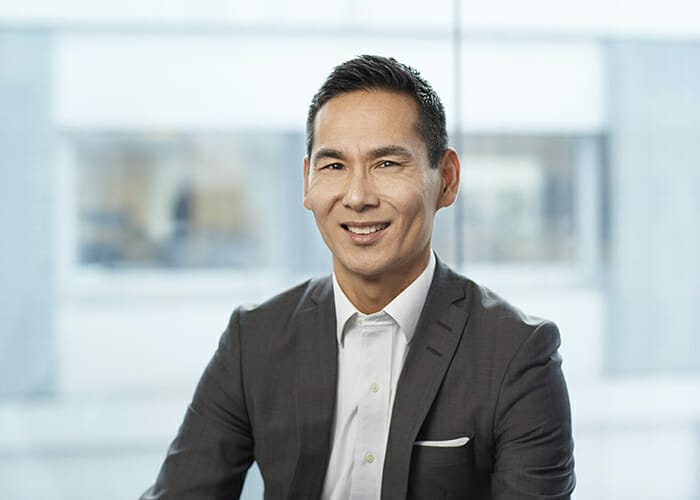

AP3 explores equities and alternatives

Listed equities and alternatives remain the strongest performers at the SEK303 billion ($36.1 billion) Third Swedish National Pension Fund, AP3, one of the five AP Funds that manage the capital buffer of Sweden’s state income pension system.

“We have gradually increased our exposure to alternatives. This allocation has done as good as listed equity,” says chief investment officer, Mårten Lindeborg, who joined AP3 in 2009 as head of strategic allocation, from previous roles in portfolio management and tactical asset allocation.

The fund’s biggest risk exposure comes via some 50 per cent equity allocation, mainly tilted towards market cap indices. Yet Lindeborg ensures diversification through strategies that include following alternative indices and pursuing thematic investments like, for example, stocks with high direct yields and pharmaceutical and biotechnology companies.

A new focus will seek more precision when it comes to harvesting risk premiums such as quality and small cap companies in the European portfolio, which has been close to 7 per cent of total fund assets.

“The illiquidity premium you are paid in small caps is similar to alternatives. It’s risky and potentially expensive, so you have to consider valuations and where we are in the credit cycle,” he says.

Other changes underway in equities include plans to halve AP3’s carbon footprint in listed equities and credits by 2018, compared to 2014 levels; the fund will also triple its holdings of green bonds from $0.5 billion to $1.7 billion by the end of 2018.

Sponsored Content

“The fund is Co2 positive, as in we are absorbing carbon via our timberland holdings, but we still want to improve the footprint of our listed equity and credit portfolio. Part of the strategy is of course to understand which sectors have the most negative impact on Co2 emissions, but also consider the prospect of the sector in respect to future return and risk.”

As 2018 approaches, the challenge is finding clear business cases for jettisoning the assets that produce most carbon-like energy and utility groups. Lindeborg says it was easy to see the business case for divesting from coal before the fund shed all its shares in coal mining companies from April to June 2015.

“Coal was expensive, dragging on the whole portfolio, and only accounted for a small part of the fund.” In contrast, applying a similar strategy to AP3’s other carbon holdings would not necessarily make sense.

“We know that our energy and basic materials holdings contribute most to our carbon emissions. We could sell them, but we need a clear business case for selling them and basic resources are one of the best performing sectors in Europe. The second best is oil and gas. It’s very easy to have zero carbon emissions but it will cost you at some point if you exclude carbon producing sectors”.

He believes the answer to the problem will come as companies themselves increasingly change, something AP3 actively encourages through stewardship and engagement.

“Companies are not deaf. Companies will become more sustainable and that will help us,” he says.

Pragmatic approach to costs

It’s a pragmatic, business-focused attitude that Lindeborg also applies to costs. He’s grown weary of the constant pressure on costs, believing that sometimes costs are worth it.

“The cost side is attacked because it is more transparent than returns. We are a government entity and we are aware of our costs. It is easy for our constituents to compare our costs to other funds and we are always trying to improve on our costs and keep them low. But you have to consider if low costs are always the best thing for pension funds. The best thing is good returns.”

In 2015 costs of AP3 were 0.12 per cent of assets under management, which is very low for a modern pension fund investing in listed and unlisted securities.

Alternative investments, including private equity, timberland, Swedish real estate and infrastructure, now comprise around 18 per cent of the total portfolio in a growing inflation-hedging allocation born from the restricted returns in fixed income.

“The allocation to different asset classes also depends on how they perform against each other. If listed assets do well, then we have to buy more alternative assets to keep up the share of the allocation,” he explains.

Private equity returns have averaged 14.5 per cent annually over the past three years and ideally Lindeborg would be overseeing a much larger allocation.

Yet strategy is limited by government restrictions which cap private equity investment at 5 per cent of the portfolio.

The fund is also required to hold at least 30 per cent of assets in liquid fixed income. In reality, AP3 has to keep well below the 5 per cent ceiling to allow for headroom, given that some allocations to other asset classes are often embedded within private equity funds.

“Take credit market opportunities – we often have to consider them as private equity because they are wrapped in a private equity fund,” he says.

“We have to work with this limitation from the Swedish Parliament. We should be able to make decisions ourselves and consider the costs. We would have more than a 5 per cent allocation if we were able to.”

All private equity investment is via funds. AP3 currently uses between 30-40 private equity managers that together manage around 100 funds of different vintages.

“If we want to invest directly we would need more in-house skill,” he says.

Currently 69 per cent of the fund is managed internally, with an asset management staff of around 30.

He describes the AP funds as siblings in a relationship that combines healthy independence with co-operation.

Co-operation comes in infrastructure and real estate – together with AP1, AP2 and AP4, AP3 owns and manages Vasakronan, Sweden’s largest commercial real estate company – as well as through the development of sustainable polices via the ethical council, a collaborative venture between AP funds 1-4.

“We all have the same mandate but different strategies; there is no one view that fits all of the funds.”

Last year Sweden’s government cancelled reforms to reduce the number of buffer funds to three, following fierce resistance from both the funds and others opposed to the decision.

Brexit’s long term uncertainty

Lindeborg flags ongoing market uncertainties. AP3 has profited from the dollar strengthening against the krona in a currency exposure that is beneficial, given many of Sweden’s corporations are exporters.

“Our currency exposure has contributed to our total return based on the fact that the dollar has gone up against the krona. It’s nice, but it won’t go on for ever.”

He also believes that Brexit poses long-term uncertainty despite the short-term benefits with which it was initially weathered.

“The short term impact of Brexit was positive for the fund but the longer-term implications are uncertain, like the kind of agreement the UK will have with the EU, and the results of coming elections in Italy, Germany, and France.”

He also notes that the European central bank has limited policy options, what he calls “zero ammunition,” with rates so low. It means more decisions will be taken by politicians through fiscal policies, he says.

Leave a Comment

Nest favours institutional-first managers as retail exodus pressures private credit

Nest favours institutional-first managers as retail exodus pressures private credit

Nest, the largest workplace pension in the UK, says that private credit managers who prioritise institutional clients will be more favourably viewed. The £61 billion ($82 billion) fund has awarded a £450 million ($605 million) US direct lending mandate to Crescent Capital this month, citing the manager's institutional-client-first approach as a key attraction.

Sort content by

Why credit ratings need to reflect ESG

ESG relevance scores and ESG-dedicated sections in ratings commentaries are examples of how ratings agencies are addressing demand for analysis of such risk factors in fixed income, the PRI’s Carmen Nuzzo says. Managing data for good comparisons will be a challenge going forward.

There’s still alpha in public markets

There is still alpha in public equities markets, says Ron Mock, chief executive of the Ontario Teachers’ Pension Plan, who supports the fund’s allocation to hedge funds. Mock’s “faith” in active management extends to quantitative strategies – with the right managers.

Dutch trio launches PE co-investment

The Netherlands’ Achmea Investment Management, Blue Sky Group and SPF Beheer have teamed up on a joint investment platform designed to lower fees and expand opportunities in private equity. Jos van Gisbergen, senior portfolio manager for private equity at Achmea, explains how it works.

Coal bucks trend with focus on income

The £21 billion Coal Pension Trustees is targeting income and shoring up cash flows. CIO Mark Walker has a new bond portfolio in the works and is examining private debt and property closely. He’s also targeting onshore equities in China.

Austrian APK smells equity opportunities

Top-performing APK Pensionskasse is examining different regions and sectors, looking to increase its allocation to equity if markets decline in the second quarter. Chief executive Christian Boehm expects technological developments and geopolitical influences to affect markets, including in Europe’s financial sector.

Illinois looks inward for new portfolio

The $42 billion Illinois Municipal Retirement Fund is using its enhanced internal management capabilities to start a quantitative portfolio applying multifactor strategies. The strategy is designed to build some downside protection into the fund’s equities allocation.

Previous



