
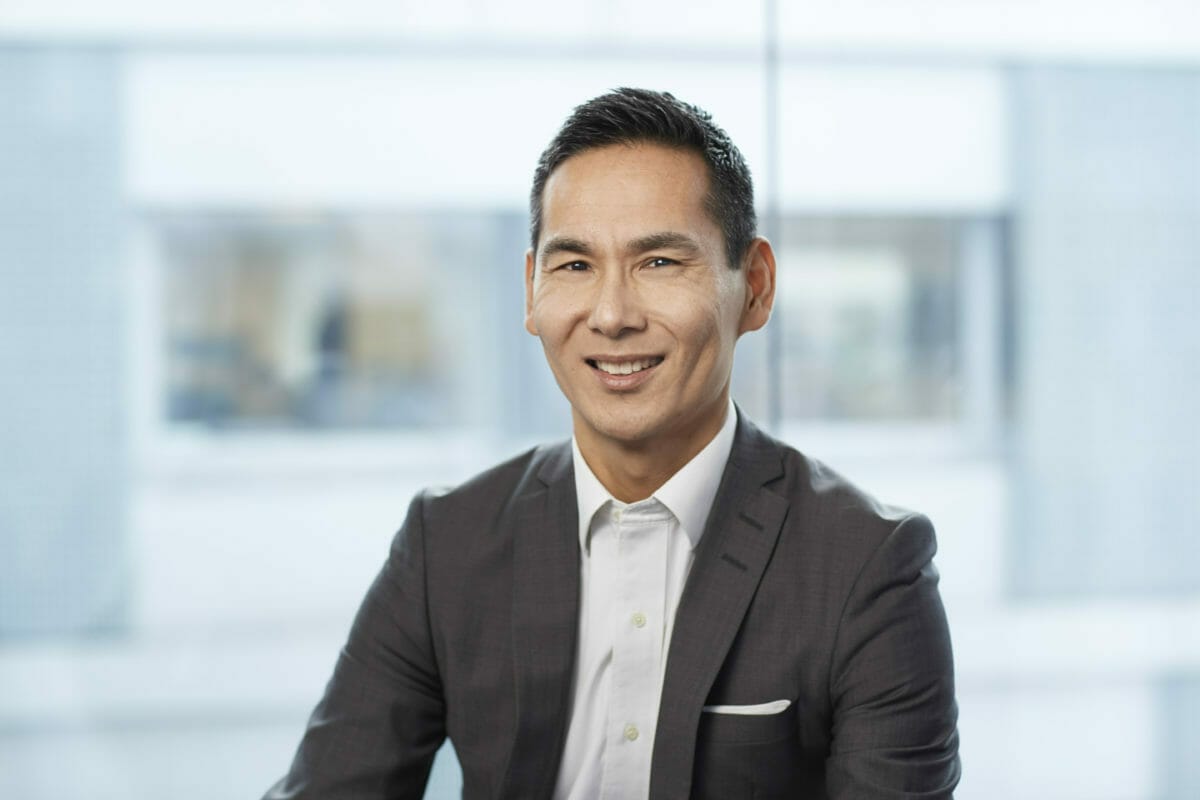

Through the course of the last year, AP3, the SEK345.2 billion ($42.2 billion) Third Swedish National Pension Fund, scaled back on hedge funds and boosted its internal portfolio construction capabilities. The fund also continued steadily building its alternatives portfolio, where chief investment officer Mårten Lindeborg sees a stronger risk/return ratio than in equity.
But it was the fund’s absolute return strategies – accounting for 4 per cent of assets under management and encompassing internal and external hedge funds plus risk premium strategies – that underwent the most change last year. AP3, one of five AP funds that manage the capital buffer of Sweden’s state income pension system, introduced volatility risk premium back in 2010 and has since added other premia, such as value, quality, momentum and carry, all designed and run by external managers until recently.
Although the fund still uses what Lindeborg refers to as “external building blocks”, it has now internalised all construction of the risk-premia portfolio. The decision was motivated by a desire to increase internal capabilities and reduce the over-diversification AP3 had in the absolute return portfolio.
“We have the internal resources to cope with these kinds of decisions, and we also have the necessary platform,” Lindeborg says. “We haven’t seen the proof in the pudding yet. We need to wait a couple of years to judge if it has been a good adjustment or not.”
Seeking more from hedge funds
Lindeborg has also overseen a reduction in the number of hedge fund managers in the portfolio to less than 10, retaining those with the strongest track record, in a decision motivated by cost and a frustration with poor returns.
“Global hedge fund indices are at the same level they were 10 years ago,” Lindeborg says. “Of course, some hedge fund strategies have done well, but others have done badly, and we need to consider the cost side. The cost pressure on our fund, and all AP funds, is high. AP3’s asset management cost ratio was 0.10 per cent in 2017,” including 0.06 per cent from operating expenses.
The fund can replicate some hedge fund strategies in-house, via its risk-premia strategies.
“Obviously, some hedge funds are extremely successful, and it’s hard to analyse what the real performance maker, or alpha, is,” he says.
It means AP3’s relationship with hedge funds has become increasingly strategic. Lindeborg now looks for additional contributions from these managers, such as research, thoughts on portfolio construction or other insights.
“We can’t significantly increase our hedge fund exposure, but we will always look for strategic partnerships within this area. The hedge fund industry has a lot of work to do. It has to prove it’s a good vehicle for diversification, performance enhancement and other complementary benefits,” he explains.
Equity allocations
AP3 has close to 50 per cent of the portfolio in equity, including private equity, and the allocation returned 17 per cent for the year. Of this, a quarter is invested in an active allocation to Swedish stocks, run internally, which continues to be highly successful.
“The Swedish stock exchange has been one of the best performers globally, if you go back 100 years,” Lindeborg says.
The fund has active allocations to European and emerging-market equities – managed internally and externally, respectively – and has passive, low-tracking error allocations to the US, Europe, Asia and Japan with BlackRock.
In addition, the equity portfolio harvests several risk-premia strategies, including small-cap risk premium.
“In some areas, it is better to implement risk premia in the beta portfolio, instead of the long/short portfolio, in order to reduce overall transaction costs,” Lindeborg says.
The fund has returned 8.8 per cent for 2017, against its long-term 4 per cent real return target. But Lindeborg predicts modest returns in the years ahead, while acknowledging that six years ago he anticipated lower returns around now and today’s returns are stronger than ever.
Steady rise in alternatives
He notices an increasing need to move quickly and react to short-term factors to achieve alpha. Also, since 2010, he has steadily increased AP3’s allocation to alternatives, in line with his belief that the risk return is better than in equity. About 20 per cent of the fund is now in alternatives.
“We are not the only fund that thinks alternatives are good, so they are expensive. But from time to time there are opportunities,” he says.
Investing in alternatives also requires chipping away at the equity allocation. Rules dictate that all the buffer funds invest at least 30 per cent in liquid fixed income, which restricts alternative investments if they don’t cut their equity allocations. AP funds 1-4 are also capped at a 5 per cent allocation to private equity.
Real estate has been one of the best-performing alternatives, where strategy is focused on ownership stakes in successful property companies like Vasakronan, Sweden’s largest real estate company, which owns, develops and manages commercial real estate throughout the country. AP3 owns it, in partnership with sister funds AP1, AP2 AND AP4.
AP3 is also the main shareholder in Hemsö, Sweden’s leading owner of community service buildings, spanning care, nursing and education facilities. The fund is developing and building-up other majority-owned property businesses, focusing on office and commercial buildings and residential real estate.
“In our experience, owning a company is a very good way to implement a strategic view in alternatives, especially if we are a majority stakeholder in the company. It means we can make decisions around the strategic direction,” Lindeborg says. AP3 also has a distinct advantage over the competition, due to access to cheap finance. Companies the fund owns can implicitly borrow under the Swedish Government’s AAA status.
“It means our financing cost are lower than many competitors’.”
But the strategy has pros and cons. While building up companies can be better than investing in funds, where fees can eat up expected returns, running a company requires a board, a chief executive and putting processes in place.
“If we take the route to build up a company, the equity allocation should be a considerable size to make the effort worthwhile,” Lindeborg says.
AP3’s other alternatives
The allocation to alternatives includes infrastructure, private equity and insurance risk. There is also a 1.5 per cent allocation to timberland – which is proving big enough to be a worry.
Strong returns from forestry in Sweden, Australia and New Zealand have not been matched by timberland assets in the US and emerging markets. Lindeborg attributes this to emerging-market currency issues.
“We are not that highly exposed to emerging markets, but on aggregate, we have to reconsider and rethink our timber strategy,” he says.








Leave a Comment
You must be logged in to post a comment.
Login