
Under-priced climate risk plagues pension portfolios

Climate risk remains systematically under-priced, the world isn’t on course to meet net zero and investors must prepare for the risks of climate and environmental change.

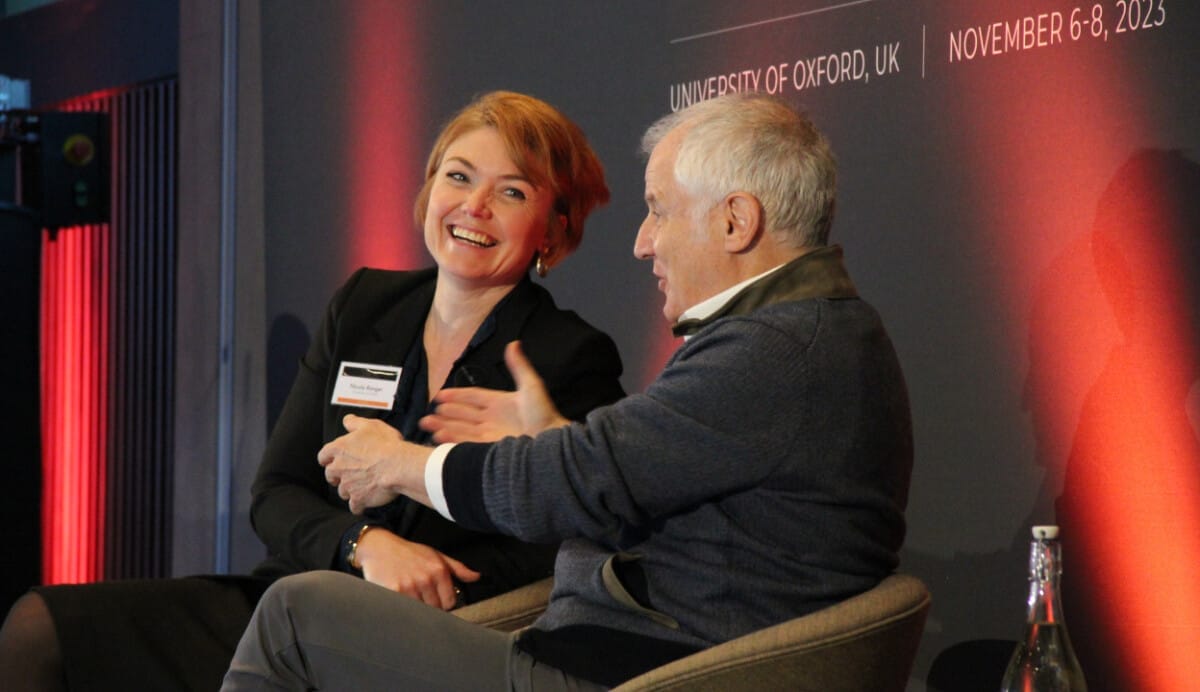
So warned Nicola Ranger, executive director of the Oxford Martin Programme on Systemic Resilience and a senior research fellow at the Institute for New Economic Thinking at Oxford Martin School, opening the second day of Sustainability in Practice at the University of Oxford. She said that climate risks are coming thick and fast, with a direct impact on assets, labour productivity, patterns in demand, supply chains and markets.

Ranger urged asset owners to re-evaluate climate risk and bring this analysis into their decision-making. For example, few asset owners report on the physical risk of climate change in their portfolio.

“Not managing this risk means the wider economy is not getting the economic signals it needs to create changes. Financial institutions need to price risk properly, and signal to the wider economy that it needs to adapt.”

If governments and countries meet all their pledges, she predicted global warming could be capped at 1.8 degrees, below the threshold for catastrophic tipping points. But she also described a much more pessimistic view based on progress to date and the fact global emissions keep climbing and still haven’t peaked. “We are not on course.”

The risks of climate change are already visible. For example, high temperatures is causing deaths, disrupting transport networks and leading to floods and drought as rainfall patterns change, impacting agricultural systems. She flagged implications for water-dependent industries and big increases in volatility of commodity prices. “Sixty percent of our food comes from five countries,” she said, predicting shocks to supply chains and impact on sovereign credit ratings.

Sponsored Content

Investors have a role to mobilize finance across geographies, countries, sectors, infrastructure and agriculture. But she warned that many investment decisions are not building resilience. For example, new infrastructure investment doesn’t always consider climate-related risk. “We are still building physical infrastructure that economies depend on, but we are not doing it in a way that is considering climate risk, risking both investors and society,” she said. Similarly, she flagged the much of the estimated annual $6 trillion invested in agriculture doesn’t consider future climate risks.

Ranger urged asset owners to take a holistic approach to managing risk and align their portfolios with resilience. They should ensure they “do no harm” and manage risk in their own portfolio to ensure it doesn’t create risks for society. For example, she said water companies have a significant impact on water scarcity.  Elsewhere she noted that data centres are exposed to climate risk like heat, and they are also water dependent. Adaption can bring returns from investing in new technology, but adaptation also incurs long term costs. For example, retrofitting buildings requires upfront investment.

“We, as a society, are mismanaging climate risk. We are putting insufficient emphasis on our safety and not properly valuing the impact of climate change or logging or exploitation of the soil. Many things doing that are impacting environment that are impacting on us.”

Leave a Comment

TPA to usher in clearer accountability at CalPERS

TPA to usher in clearer accountability at CalPERS

CalPERS chief investment officer Stephen Gilmore said the $650 billion fund’s upcoming shift to a total portfolio approach will sharpen investment accountability and help it focus capital allocation decisions on fund-level objectives.

Sort content by

Resilience: Abdicating from transformational change?

Will the relentless pursuit of efficiency undermine our ability to build a resilient and sustainable future? Andrea Caloisi, a researcher at the Thinking Ahead Institute at WTW, explores how complex systems, driven by short-term optimisation, may be fuelling long-term fragility.

The People’s Pension on volatility and weak demand for long end gilts

Three years on from the UK's gilt crisis, Charlotte Vincent, co-head of fixed income at the £36 billion ($48 billion) People’s Pension, reflects on enduring investor concerns about bond market volatility as the government continues to struggle to balance the books.

APG’s answer to aligning government and investment goals in infrastructure

An increasing push to invest in home markets means asset owners need better frameworks for aligning government expectations with investment goals. APG’s three-pronged approach for public infrastructure investments could act as a guide for other investors looking to balance fiduciary duty with political demands.

CalPERS touts fixed income wins, gears up for TPA

At the annual review of its fixed income portfolio, CalPERS staff explain how active management, value-add strategies and the hunt for alpha are paying off, with ESG integration giving it a valuable edge and informing it to invest in companies under pressure like Boeing at the right time.

Condoleezza Rice: Globalisation’s borderless era is coming undone

Condoleezza Rice, the 66th US Secretary of State and current director of Stanford University’s Hoover Institution, said the new world order will have several characteristics of which there are already signs: more protectionist trade policies, a redistribution of security burdens, and louder voices for those marginalised in globalisation. 

‘So far so good’: Sweden’s FTN bags 150bps equity fund return improvement

In an endorsement of its hard work over the last year, Sweden’s Fund Selection Agency, which procures and monitors the funds on offer on the country’s premium pension platform, is already starting to see improved returns and lower fees from the wave of new equity funds it mandated.

Previous



