

The investment world is finally catching up to something that academics have been saying for decades — markets don’t stand still just because governance processes do. For years, many pension funds and other large investors have relied on the traditional model of Strategic Asset Allocation (SAA).
It’s a reassuring and almost comforting routine. Boards establish the strategic investment mix on a periodic basis, typically annually or over a multi-year horizon, and maintain disciplined adherence to that framework. This is a deliberate and methodical approach, designed for a world where stability is the norm rather than the exception. Enter the Total Portfolio Approach (TPA), a governance and investment model that sets investors up to be more adaptive in a time when economic regimes can turn quickly and unpredictably.
From an academic perspective, I’ve been working for several years with Redouane Elkamhi, a professor at the University of Toronto’s Rotman School of Management, to look at how TPA represents a fundamental shift in the way institutional investors think about and manage portfolios. But for me, this is no longer a purely academic exercise. I’m the head of the total portfolio group at the Healthcare of Ontario Pension Plan (HOOPP), a large global investor and Canadian pension fund. HOOPP officially implemented TPA to guide its investment approach at the start of 2026.
TPA at its core is not a new concept. Since the 1970s, a growing body of research — including work by Nobel laureate Robert C. Merton — has challenged the idea that markets offer a stable reward for taking risk. Instead, the evidence points to a simple reality: markets reward risk differently across time, a view later formalised in Andrew Lo’s Adaptive Markets Hypothesis.
For long-horizon investors, this reinforces the idea that investment opportunity is not static, and portfolios benefit from adapting as conditions evolve. TPA enables just that. It helps navigate changing markets by giving funds the ability to manage the entire portfolio as one unit. Decisions, incentives and resources are managed based on the total fund outcome, rather than individual asset-class silos. This approach encourages investors to look ahead, be prepared as conditions change and keep portfolios aligned with long-term objectives.
A traditional SAA structure can inadvertently constrain thoughtful adaptation of the fund. Given the importance of thorough review and governance, decisions often move through structured committee cycles. However, this can make it more challenging to respond to rapid shifts in markets or geopolitics that we are experiencing today. TPA shortens the distance between insight and action, giving CEOs, CIOs and their skilled investment teams the authority to adjust the whole portfolio in real time. TPA also recognises that in a world defined by uncertainty, rigidity is its own form of risk. The future will not reward funds that cling to what used to work.
A well-implemented TPA framework modernises and strengthens governance. The Board’s role becomes even more strategic — centred on defining outcomes, setting risk parameters and overseeing accountability — while enabling the investment team to act within a clear and well-defined mandate.
This shift should be seen as an upgrade. With better communication and transparency, boards actually gain a deeper understanding of the investment strategy. The license to operate given to a CIO hinges on a disciplined communication approach that proves how each decision is being made in support of the long-term, board-approved framework. If trust erodes, the board maintains the ability to dial back delegated authority.
A shift towards TPA also resolves one of the most persistent frictions in asset management, which is misaligned incentives. Traditional structures like SAA often reward teams for optimising their own slice of the pie, even when it’s suboptimal for the total fund. TPA turns that logic on its head. As one might say, when everyone rows in the same direction, the boat moves faster. By aligning incentives to total-fund results, TPA encourages collaboration rather than competition.
Sceptics of TPA often ask, does TPA truly work? The honest answer is that TPA doesn’t magically make an investment team and their returns better. What it does do is remove the structural barriers that prevent good teams from doing their best work. It creates an environment where skilled professionals guided by strong governance can make sound, long-term decisions for the benefit of the total fund. Simply put, if you trust and believe in your investment team, TPA lets them prove you right.
Some may fear giving management more discretion, but oversight isn’t weakened by allowing action. Oversight is strengthened by demanding continuous communication. In fact, transparency is the real safeguard. In a time when markets are moving faster and risks are increasingly interconnected, sticking to outdated processes can prove to be detrimental. The real risk isn’t giving skilled investment leaders the flexibility to act – it’s refusing to adapt while the world changes around you. As we’ve seen time and time again, the future won’t wait for your next committee cycle.
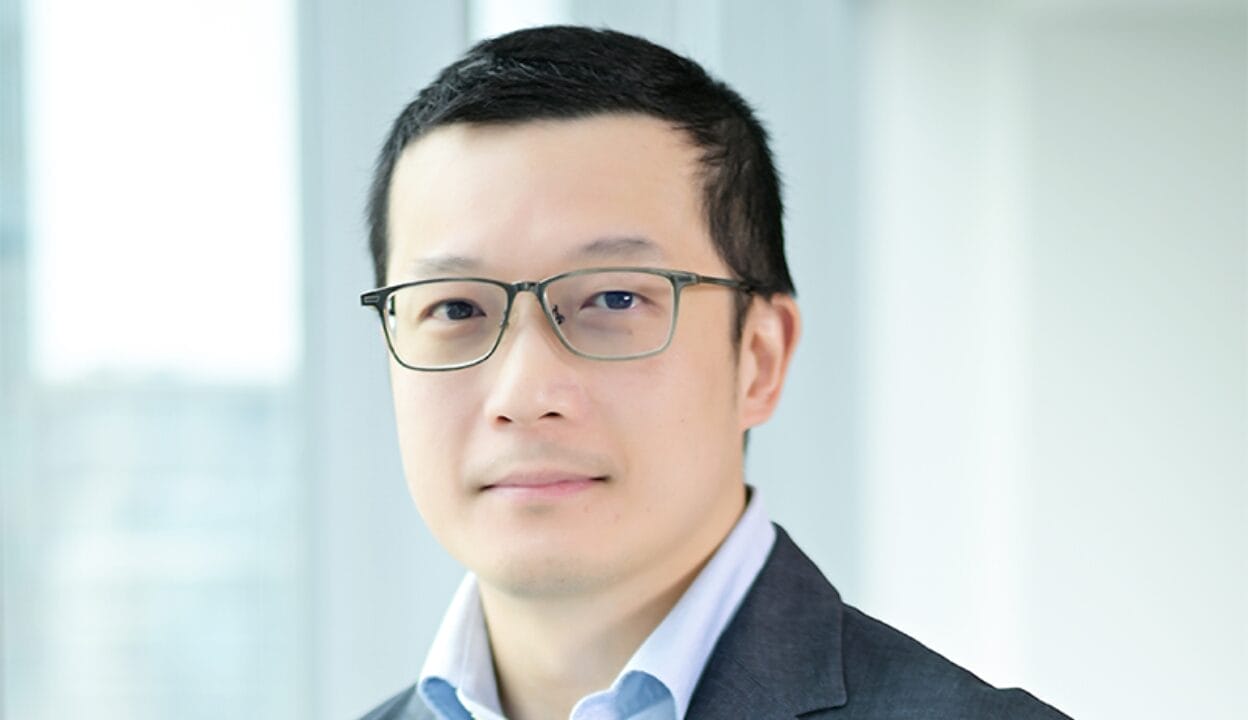
Jacky Lee is senior managing director and head of the total portfolio group at the Healthcare of Ontario Pension Plan (HOOPP).








Leave a Comment
You must be logged in to post a comment.
Login